Archipelagos

  • English
  • Ελληνικα
Who We Are
The TeamThe Team
Research BasesResearch Bases
Research BoatsResearch Boats
Our EquipmentOur Equipment
PartnersPartners
SupportersSupporters
Fields of Action
Marine ConservationMarine Conservation Fisheries Shipping Risks Seagrass Meadows Coralligene Conservation Littoral Ecosystems Invasive Species Jellyfish Sea Turtles
Marine MammalsMarine Mammals Dolphins and Porpoises Whales Seals
Terrestrial ConservationTerrestrial Conservation Island Fauna Forests & Flora Freshwater Ecosystems Aegean Seed Bank
Laboratory ResearchLaboratory Research Microplastics Water Analysis Soil Quality
Projects
Aegean Marine Life Sanctuary
Eco-Navigation
FIsh4Life
Save the Aegean
Join Us
Internships in the Aegean
Remote Internships
Interns Experiences
Field Courses
News
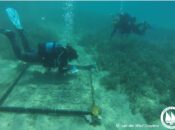
Planting Underwater Gardens of Posidonia seagrass- a new innovative planting process
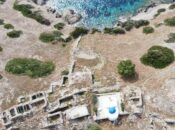
Aegean Islet Conservation Project in cooperation with the University of Toronto’s Faculty of Architecture
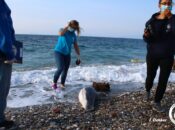
Mutilated Striped Dolphin Stranded on the shores of Samos Island
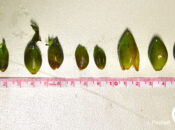
Posidonia Seagrass Fruits Wash up on Our Shores – A Rare Phenomenon
View All...
Contact us
Publications
Videos
Awareness Material
Donate
Menu

Brief Update: At Sea Destruction of Syria’s Chemical Weapons in the Mediterranean

Brief Update: At Sea Destruction of Syria’s Chemical Weapons in the Mediterranean

by Archipelagos / Monday, 05 May 2014 / Published in Destructive Industrial Practices, Marine Conservation, Press Releases

Last Friday we received another response from the President of the European Commission, Jose Manuel Barroso, about the forthcoming onboard Destruction of Syria’s Chemical Weapons. The answer comes as a result of the joint statement sent to the EU by Archipelagos, which was co-signed by dozens of specialized scientists and institutions from 14 countries, about the risk of the project.

Unfortunately, once again the answer shows the bureaucratic addressing of such a serious topic. The more response letters we receive, the more difficult is to identify who will ultimately bear the real responsibility of the project and who will take responsibility for potential pollution in case of a failure or an accident.

With assurances of the safety of the operation, the letter from the President of the European Commission says that the whole process is done with the supervision of the OPCW. But a recent letter sent by the OPCW to Archipelagos states that they act as an observer and have no responsibility for the process. Furthermore, it declares that the U.S. Navy has full control and responsibility of the project. Conversely, however, the official U.S. sources have stated repeatedly that the OPCW and the UN hold a responsible role in the process.

Still, a remarkable point of the letter sent by Mr Barroso states that “there is no intention to allow any leakage of sewage into the Mediterranean.” Of course, the question that arises is directly “So could there be such an intention?”

In addition, we received no answer as to why the Mediterranean countries play no role in the monitoring process, where even the most directly concerned have the infrastructure and expertise. Please note, as stated in the letter, that the Mediterranean countries have already contributed financially to the total amount of 17 million euros that European taxpayers will pay to support the project.

Finally, another conclusion that is extracted from this letter is the fact that there is a general lack of clarity as to the sea area where they will place the disaster, as it is clearly stated that it has not been calculated.

Once again, we unfortunately see that the information we have received from political players, who are planning or participating in the process, continues to be controversial. There also continues to be a maintained and generalized silence that from the beginning is trying to impose by much of the media, state authorities and government bodies, and the Greek environmental lobby. Certainly, we should mention the Cretan society, which to its credit, despite threats and political pressures, is leading the reaction against this dangerous prospect.

Archipelagos, in collaboration with networks of scientists and institutions from all over Europe and the Mediterranean, continues to closely monitor developments and make targeted actions aimed at continuous pressure to prevent this particularly dangerous Mediterranean seas venture.
0
0
0
0
0

What you can read next

Planting Underwater Gardens of Posidonia meadows
Important initiative by CIESM for the creation of Transnational Marine Conservation Zones
Microplastics Workshop
The Archipelagos Institute participates at the Microplastics Workshop 2022

HIGHLIGHTS

  • International Visitors at the Aegean Marine Life Sanctuary Project

    International Visitors at the Aegean Marine Life Sanctuary Project

    1 June 2021
    At Archipelagos Institute of Marine Conservation an important visit took …
  • The Efkranti Award was Granted to the Archipelagos Institute of Marine Conservation

    The Efkranti Award was Granted to the Archipelagos Institute of Marine Conservation

    27 July 2020
    It was a great honor but also great moral support …
  • The President of the Hellenic Republic’s visit to Archipelagos research vessel, the Aegean Explorer

    The President of the Hellenic Republic’s visit to Archipelagos research vessel, the Aegean Explorer

    30 June 2020
    Yesterday, during the President of the Republic’s visit to the …
  • Award to Archipelagos: Best Heroic Act of Environmental Stewardship

    Award to Archipelagos: Best Heroic Act of Environmental Stewardship

    19 February 2020
    The Short Documentary Film presenting the Aegean Marine Life Sanctuary, …
  • Award to Archipelagos Institute from the International Propeller Club of the United States

    Award to Archipelagos Institute from the International Propeller Club of the United States

    6 February 2020
    We would like to thank the International Propeller Club of …

Recent Posts

  • Photo-ID & Behavioral Assessments of Delphinus delphis in the Northern Aegean Sea

    Photo-ID & Behavioral Assessments of Delphinus delphis in the Northern Aegean Sea

    2 November 2023
    Yasas! Intern Alannah from the Marine Mammal Field here, currently …
  • Experiences After Work at Archipelagos

    Experiences After Work at Archipelagos

    2 November 2023
    Hi, I’m Ella and I completed a 6-week internship on …
  • Hands-on Projects with the Marine Mammal Research & Conservation Team

    Hands-on Projects with the Marine Mammal Research & Conservation Team

    2 November 2023
    My name is Sjoerd and I am in the last …
  • Planting Underwater Gardens of Posidonia seagrass- a new innovative planting process

    Planting Underwater Gardens of Posidonia seagrass- a new innovative planting process

    29 June 2023
    An innovative process of planting underwater gardens of Posidonia oceanica …
  • A special three-day research expedition to the Ikaria Trench

    A special three-day research expedition to the Ikaria Trench

    19 May 2023
    Archipelagos Marine Mammal Research team took part in a very …
  • Aegean Islet Conservation Project in cooperation with the University of Toronto’s Faculty of Architecture

    Aegean Islet Conservation Project in cooperation with the University of Toronto’s Faculty of Architecture

    17 May 2023
    A new cycle of interdisciplinary on-site research of the Aegean …
  • Mutilated Striped Dolphin Stranded on the shores of Samos Island

    Mutilated Striped Dolphin Stranded on the shores of Samos Island

    12 May 2023
    A mutilated striped dolphin was found stranded on the north …

Subscribe to Our Newsletter

Archipelagos Institute of Marine Conservation is committed to researching and defending the biodiversity of the Greek seas and islands.

Our action is possible only with your help!

donate
  • Contact us
  • Placements

Archipelagos - Institute of Marine Conservation © All Rights Reserved || Developed Fekas Brothers

TOP