
Archipelagos

  • English
  • Ελληνικα
Who We Are
The TeamThe Team
Research BasesResearch Bases
Research BoatsResearch Boats
Our EquipmentOur Equipment
PartnersPartners
SupportersSupporters
Fields of Action
Marine ConservationMarine Conservation Fisheries Shipping Risks Seagrass Meadows Coralligene Conservation Littoral Ecosystems Invasive Species Jellyfish Sea Turtles
Marine MammalsMarine Mammals Dolphins and Porpoises Whales Seals
Terrestrial ConservationTerrestrial Conservation Island Fauna Forests & Flora Freshwater Ecosystems Aegean Seed Bank
Laboratory ResearchLaboratory Research Microplastics Water Analysis Soil Quality
Projects
Aegean Marine Life Sanctuary
Eco-Navigation
FIsh4Life
Save the Aegean
Join Us
Internships in the Aegean
Remote Internships
Interns Experiences
Field Courses
News
Planting Underwater Gardens of Posidonia seagrass- a new innovative planting process
Aegean Islet Conservation Project in cooperation with the University of Toronto’s Faculty of Architecture
Mutilated Striped Dolphin Stranded on the shores of Samos Island
Posidonia Seagrass Fruits Wash up on Our Shores – A Rare Phenomenon
View All...
Contact us
Publications
Videos
Awareness Material
Donate
Menu

Unacceptable Articles about the Monk Seal in Samos

Unacceptable Articles about the Monk Seal in Samos

by Archipelagos / Monday, 11 July 2016 / Published in Marine Conservation, Marine Mammals, News, Press Releases

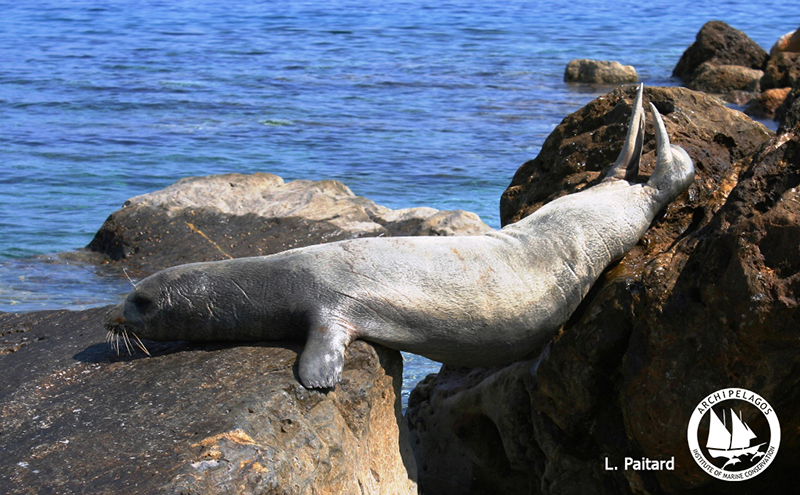
An unacceptable and dangerous article and photographs about the monk seal which the inhabitants of Samos call Argiro was released yesterday. The report presented photographs of people playing with the seal, something that is not only illegal, but also dangerous. What is not mentioned in the publication is that many people who wanted to do that had to be hospitalized because they were bitten. This happened not only to people who were harassing the seal, but also to others who were swimming nearby and were not involved in the harassment. It should be stressed that these incidents happened solely due to harassment of the seal, which is not aggressive but rather “playful”. It is inconceivable that someone wants to play with a carnivorous wild mammal which exceeding 130 kilograms in weight.
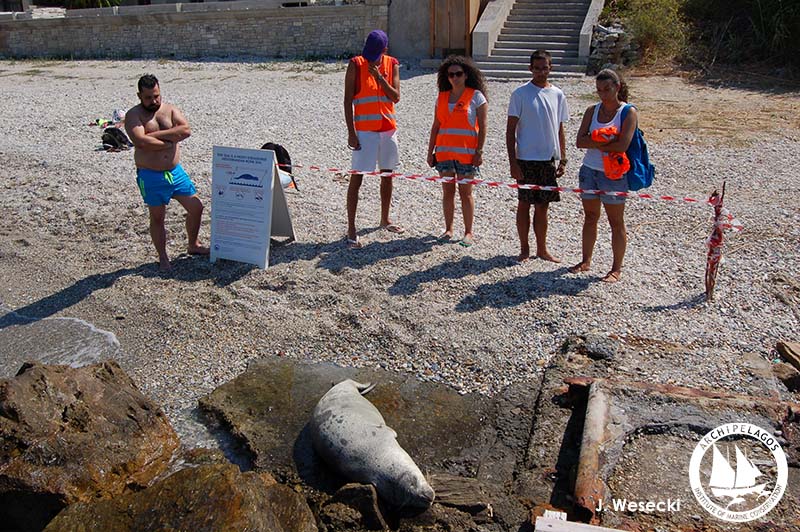
13.08.2015_M

The article makes an unauthorized mention of Archipelagos Institute of Marine Conservation, without ever consulting with us, showing the seal in an unacceptable way. This irresponsible misrepresentation of reality is accompanied by an old video presenting the situation from over a year ago.
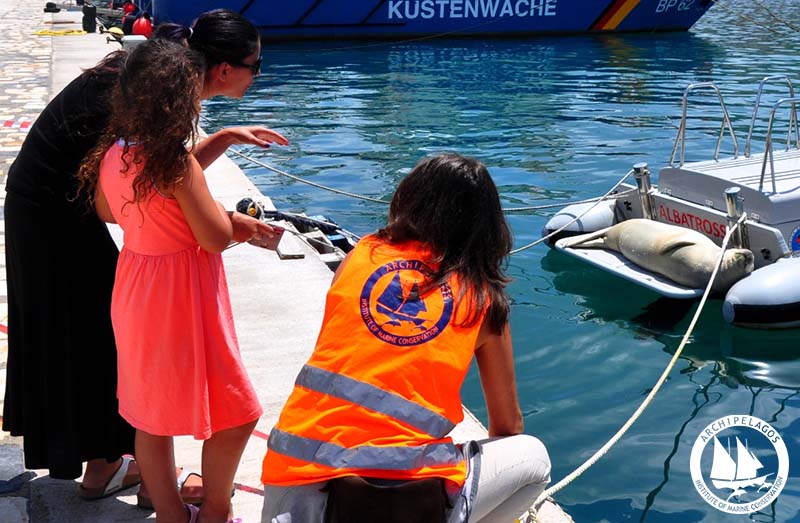
????????????????????????????????????

We should emphasize that outside of the tourist season, when the seal coexists only with the local community, such problems do not occur as the swimmers respect this animal and keep the required distances. Unfortunately, during summer months it is very difficult to avoid the harassment by visitors.
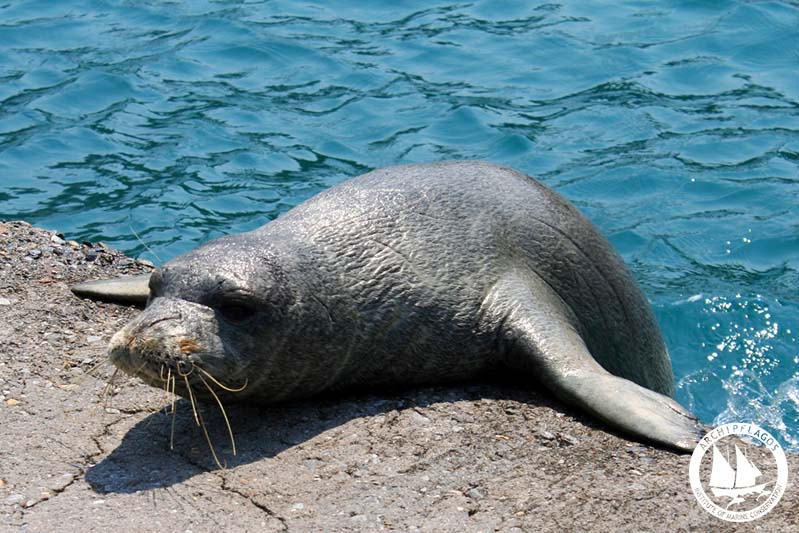
seal xmas

Archipelagos Institute of Marine Conservation identified this seal 2.5 years ago and has selflessly spent thousands of hours monitoring and protecting this unique animal and public safety. We have been doing this thanks to the tireless voluntary contribution of researchers and students, as well as a wide network of local volunteers comprised of fishermen, farmers, tourism professionals, students, teachers, etc., with the valuable assistance of the local port authorities.
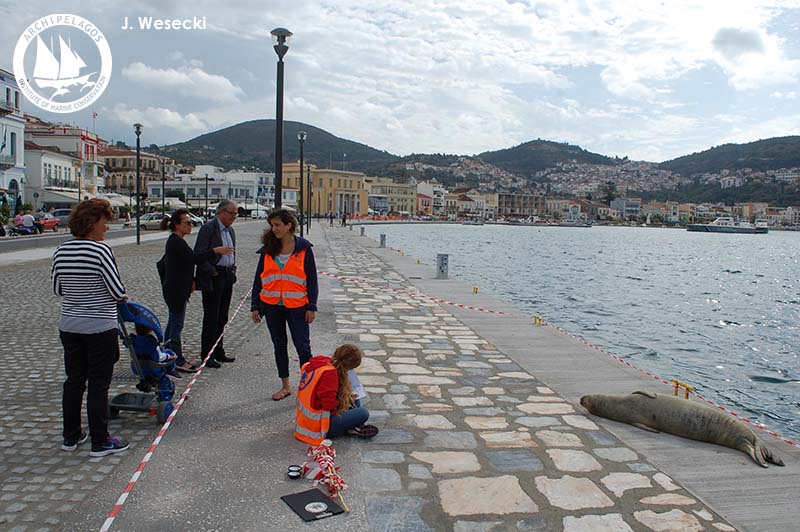
J_Wesecki_SAM_22_10_2015 (58)

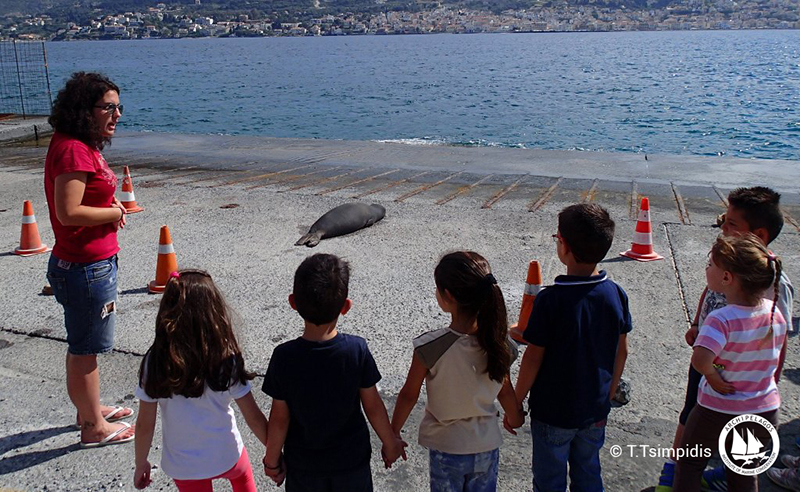
Our aim is to monitor the seal closely, while also to deter it from coming to beaches frequented by swimmers so that it remains in its natural environment away from people. We try to limit harassment incidents as well as general human interaction with this seal. This particular one is an adult animal, which we believe that will be naturally reintroduced to its natural environment and has no reason to coexist with humans.
OLYMPUS DIGITAL CAMERA

The seal travels along a coastline of 20 miles and therefore it is impossible to monitor it continuously. For this reason the responsible behavior of visitors but also of the media is essential.

This seal is not a mascot, but a wild animal belonging to a highly endangered species. It is soon going to reach sexual maturity and we expect it to be gradually reintegrated into its natural environment. This will happen only if people stop this unacceptable harassment.

In order to protect swimmers and seals we once again appeal to those who see the animal to contact Archipelagos directly (00302273061191) or the Port Authority of Samos. For the safety of all it is essential to prevent any forms of interaction with the seal.
0
0
0
0
0

What you can read next

Progress of the Aegean Marine Life Sanctuary
Request for the visitors of Samos island
Implementation of Aegean Marine Life Sanctuary on Lipsi Island

HIGHLIGHTS

  • International Visitors at the Aegean Marine Life Sanctuary Project

    International Visitors at the Aegean Marine Life Sanctuary Project

    1 June 2021
    At Archipelagos Institute of Marine Conservation an important visit took …
  • The Efkranti Award was Granted to the Archipelagos Institute of Marine Conservation

    The Efkranti Award was Granted to the Archipelagos Institute of Marine Conservation

    27 July 2020
    It was a great honor but also great moral support …
  • The President of the Hellenic Republic’s visit to Archipelagos research vessel, the Aegean Explorer

    The President of the Hellenic Republic’s visit to Archipelagos research vessel, the Aegean Explorer

    30 June 2020
    Yesterday, during the President of the Republic’s visit to the …
  • Award to Archipelagos: Best Heroic Act of Environmental Stewardship

    Award to Archipelagos: Best Heroic Act of Environmental Stewardship

    19 February 2020
    The Short Documentary Film presenting the Aegean Marine Life Sanctuary, …
  • Award to Archipelagos Institute from the International Propeller Club of the United States

    Award to Archipelagos Institute from the International Propeller Club of the United States

    6 February 2020
    We would like to thank the International Propeller Club of …

Recent Posts

  • Photo-ID & Behavioral Assessments of Delphinus delphis in the Northern Aegean Sea

    Photo-ID & Behavioral Assessments of Delphinus delphis in the Northern Aegean Sea

    2 November 2023
    Yasas! Intern Alannah from the Marine Mammal Field here, currently …
  • Experiences After Work at Archipelagos

    Experiences After Work at Archipelagos

    2 November 2023
    Hi, I’m Ella and I completed a 6-week internship on …
  • Hands-on Projects with the Marine Mammal Research & Conservation Team

    Hands-on Projects with the Marine Mammal Research & Conservation Team

    2 November 2023
    My name is Sjoerd and I am in the last …
  • Planting Underwater Gardens of Posidonia seagrass- a new innovative planting process

    Planting Underwater Gardens of Posidonia seagrass- a new innovative planting process

    29 June 2023
    An innovative process of planting underwater gardens of Posidonia oceanica …
  • A special three-day research expedition to the Ikaria Trench

    A special three-day research expedition to the Ikaria Trench

    19 May 2023
    Archipelagos Marine Mammal Research team took part in a very …
  • Aegean Islet Conservation Project in cooperation with the University of Toronto’s Faculty of Architecture

    Aegean Islet Conservation Project in cooperation with the University of Toronto’s Faculty of Architecture

    17 May 2023
    A new cycle of interdisciplinary on-site research of the Aegean …
  • Mutilated Striped Dolphin Stranded on the shores of Samos Island

    Mutilated Striped Dolphin Stranded on the shores of Samos Island

    12 May 2023
    A mutilated striped dolphin was found stranded on the north …

Subscribe to Our Newsletter

Archipelagos Institute of Marine Conservation is committed to researching and defending the biodiversity of the Greek seas and islands.

Our action is possible only with your help!

donate
  • Contact us
  • Placements

Archipelagos - Institute of Marine Conservation © All Rights Reserved || Developed Fekas Brothers

TOP