Archipelagos

  • English
  • Ελληνικα
Who We Are
The TeamThe Team
Research BasesResearch Bases
Research BoatsResearch Boats
Our EquipmentOur Equipment
PartnersPartners
SupportersSupporters
Fields of Action
Marine ConservationMarine Conservation Fisheries Shipping Risks Seagrass Meadows Coralligene Conservation Littoral Ecosystems Invasive Species Jellyfish Sea Turtles
Marine MammalsMarine Mammals Dolphins and Porpoises Whales Seals
Terrestrial ConservationTerrestrial Conservation Island Fauna Forests & Flora Freshwater Ecosystems Aegean Seed Bank
Laboratory ResearchLaboratory Research Microplastics Water Analysis Soil Quality
Projects
Aegean Marine Life Sanctuary
Eco-Navigation
FIsh4Life
Save the Aegean
Join Us
Internships in the Aegean
Remote Internships
Interns Experiences
Field Courses
News
Planting Underwater Gardens of Posidonia seagrass- a new innovative planting process
Aegean Islet Conservation Project in cooperation with the University of Toronto’s Faculty of Architecture
Mutilated Striped Dolphin Stranded on the shores of Samos Island
Posidonia Seagrass Fruits Wash up on Our Shores – A Rare Phenomenon
View All...
Contact us
Publications
Videos
Awareness Material
Donate
Menu

A hidden secret of the Aegean

A hidden secret of the Aegean

by Archipelagos / Tuesday, 17 July 2012 / Published in Marine Conservation, Press Releases, Seagrass & Coralligene

Coralligene reefs in Greece: unique natural heritage & a lifeline for fish stocks

A multinational team of scientists from 7 countries (Spain, Greece, England, Lebanon, Turkey, Croatia), who specialise in marine priority habitats, were invited to the island of Fourni in the Eastern Aegean Sea, Greece, by the Regional Activity Centre for Specially Protected Areas (RAC / SPA) as part of the United Nations Environment Programme (UNEP) and specifically the Mediterranean Action Plan (MAP), and Archipelagos Institute of Marine Conservation, to take part in the first regional training workshop on coralligene reef  mapping techniques.

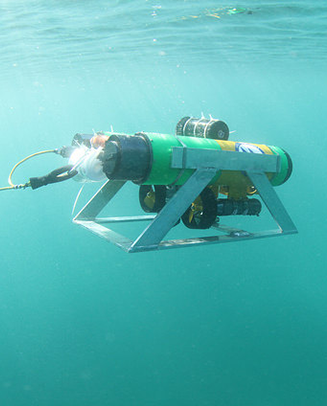
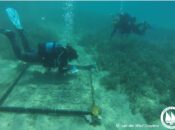
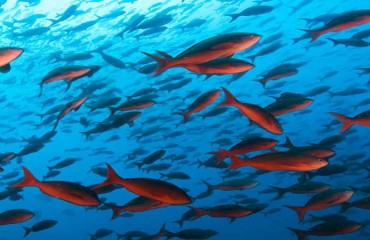
Through SCUBA diving and the use of a robotic underwater camera and sonar, the team recorded important coralligene reefs at depths of 40-100m. The coralligene reefs, are home to an extremely high biodiversity. It is estimated that about 1666 species including 300 species of algae, 1200 species of invertebrates, and more than 100 species of fish live within coralligene reefs. During the diving surveys, the scientists recorded 35 species of invertebrates and 36 species of algae. Highlights of these surveys included the recording of a large abundance of the rare algae Ptilophora mediterranea, as well as the exciting discovery of corals estimated to be well over 700 years old!

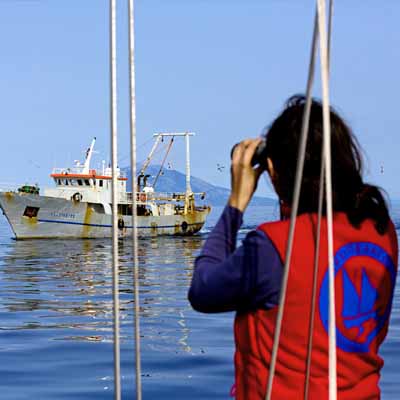
However, it has to be emphasised that the ongoing deterioration of such habitats is particularly alarming considering there very slow growth rate (0.006 – 0.83 mm / year). Greece as well as most other Mediterranean countries are bound by European legislation and international conventions to protect highly productive marine ecosystems such as coralligene reefs, and as such should have already carried out mapping of these habitats. However, this has not been done, and consequently these habitats are being destroyed. Authorities are unable or unwilling to prevent destructive fishing practices, such as trawlers, which drag heavy (up to one ton) iron “doors” across fragile ecosystems – causing devastation that will require many centuries to recover.

In an effort to remedy this problem, this workshop was held in order to standardize common methods for
recording these habitats so that they can be applied across Mediterranean. Members of the workshop worked alongside the local community to enhance cooperation with the fishing communities, increasing the role they play in providing information on the location of key marine habitats, as well as identifying and addressing the degradation factors.

A combination of empirical information and the application of modern economic methods for recording these habitats can significantly reduce the cost and time of data collection, but as yet, in most cases the methods used have been extremely costly and time consuming. This workshop in Greece will act as a pilot model that can be used in other Mediterranean countries, pending its success. The main goal of the workshop is the direct mapping of coralligene reefs and the submission of data and maps to the national authorities who are responsible for the adoption of specific management measures for the protection of these habitats. For  example, an immediate conservation measure would be to define no trawling zones where these habitats are identified.
0
0
0
0
0

What you can read next

The new boat of Archipelagos Institute
Deep sea Driiling is out of tune with Sustainable Development
EU Fisheries Ministers Complete Gruelling Common Fisheries Policy Reform Negotiations

HIGHLIGHTS

  • International Visitors at the Aegean Marine Life Sanctuary Project

    International Visitors at the Aegean Marine Life Sanctuary Project

    1 June 2021
    At Archipelagos Institute of Marine Conservation an important visit took …
  • The Efkranti Award was Granted to the Archipelagos Institute of Marine Conservation

    The Efkranti Award was Granted to the Archipelagos Institute of Marine Conservation

    27 July 2020
    It was a great honor but also great moral support …
  • The President of the Hellenic Republic’s visit to Archipelagos research vessel, the Aegean Explorer

    The President of the Hellenic Republic’s visit to Archipelagos research vessel, the Aegean Explorer

    30 June 2020
    Yesterday, during the President of the Republic’s visit to the …
  • Award to Archipelagos: Best Heroic Act of Environmental Stewardship

    Award to Archipelagos: Best Heroic Act of Environmental Stewardship

    19 February 2020
    The Short Documentary Film presenting the Aegean Marine Life Sanctuary, …
  • Award to Archipelagos Institute from the International Propeller Club of the United States

    Award to Archipelagos Institute from the International Propeller Club of the United States

    6 February 2020
    We would like to thank the International Propeller Club of …

Recent Posts

  • Photo-ID & Behavioral Assessments of Delphinus delphis in the Northern Aegean Sea

    Photo-ID & Behavioral Assessments of Delphinus delphis in the Northern Aegean Sea

    2 November 2023
    Yasas! Intern Alannah from the Marine Mammal Field here, currently …
  • Experiences After Work at Archipelagos

    Experiences After Work at Archipelagos

    2 November 2023
    Hi, I’m Ella and I completed a 6-week internship on …
  • Hands-on Projects with the Marine Mammal Research & Conservation Team

    Hands-on Projects with the Marine Mammal Research & Conservation Team

    2 November 2023
    My name is Sjoerd and I am in the last …
  • Planting Underwater Gardens of Posidonia seagrass- a new innovative planting process

    Planting Underwater Gardens of Posidonia seagrass- a new innovative planting process

    29 June 2023
    An innovative process of planting underwater gardens of Posidonia oceanica …
  • A special three-day research expedition to the Ikaria Trench

    A special three-day research expedition to the Ikaria Trench

    19 May 2023
    Archipelagos Marine Mammal Research team took part in a very …
  • Aegean Islet Conservation Project in cooperation with the University of Toronto’s Faculty of Architecture

    Aegean Islet Conservation Project in cooperation with the University of Toronto’s Faculty of Architecture

    17 May 2023
    A new cycle of interdisciplinary on-site research of the Aegean …
  • Mutilated Striped Dolphin Stranded on the shores of Samos Island

    Mutilated Striped Dolphin Stranded on the shores of Samos Island

    12 May 2023
    A mutilated striped dolphin was found stranded on the north …

Subscribe to Our Newsletter

Archipelagos Institute of Marine Conservation is committed to researching and defending the biodiversity of the Greek seas and islands.

Our action is possible only with your help!

donate
  • Contact us
  • Placements

Archipelagos - Institute of Marine Conservation © All Rights Reserved || Developed Fekas Brothers

TOP