Archipelagos

  • English
  • Ελληνικα
Who We Are
The TeamThe Team
Research BasesResearch Bases
Research BoatsResearch Boats
Our EquipmentOur Equipment
PartnersPartners
SupportersSupporters
Fields of Action
Marine ConservationMarine Conservation Fisheries Shipping Risks Seagrass Meadows Coralligene Conservation Littoral Ecosystems Invasive Species Jellyfish Sea Turtles
Marine MammalsMarine Mammals Dolphins and Porpoises Whales Seals
Terrestrial ConservationTerrestrial Conservation Island Fauna Forests & Flora Freshwater Ecosystems Aegean Seed Bank
Laboratory ResearchLaboratory Research Microplastics Water Analysis Soil Quality
Projects
Aegean Marine Life Sanctuary
Eco-Navigation
FIsh4Life
Save the Aegean
Join Us
Internships in the Aegean
Remote Internships
Interns Experiences
Field Courses
News
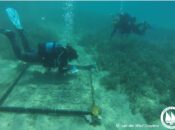
Planting Underwater Gardens of Posidonia seagrass- a new innovative planting process
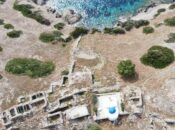
Aegean Islet Conservation Project in cooperation with the University of Toronto’s Faculty of Architecture
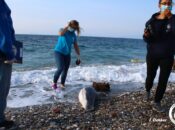
Mutilated Striped Dolphin Stranded on the shores of Samos Island
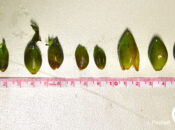
Posidonia Seagrass Fruits Wash up on Our Shores – A Rare Phenomenon
View All...
Contact us
Publications
Videos
Awareness Material
Donate
Menu

Behaviour of Delphinus delphis and Tursiops truncatus around Samos Island

Behaviour of Delphinus delphis and Tursiops truncatus around Samos Island

by Kleopatra Delaveri / Friday, 14 July 2017 / Published in Intern Experience, Marine Mammal Team, Work Journal

Ship traffic has been increasing in the oceans in recent decades, especially in the northern hemisphere, and very likely will increase exponentially in the future. Anthropic activities  produce diffuse and almost continuous noise that may affect very wide areas. Low-frequency (below 1,000Hz) ambient noise levels generated by ship traffic have increased in the northern hemisphere by two orders of magnitude over the last 60 years; their masking effect has therefore reduced  the potential for long-range communication in cetaceans species.
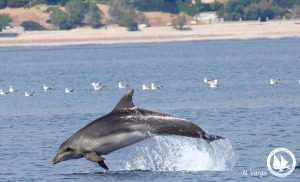
Ubiquitous and continuous noise may have chronic effects, degrading the quality of marine habitats; even subtle effects, such as avoidance and signal masking, may have long-term population consequences if exposure is continuous.
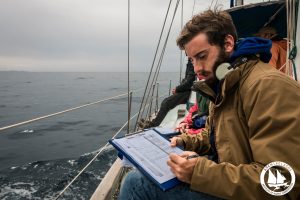
The effects of sea traffic on animals can be described by considering both short- and/or long-term reactions. Short-term  reactions are indicated by changes in behaviour and spatial movement away from the area of interaction.
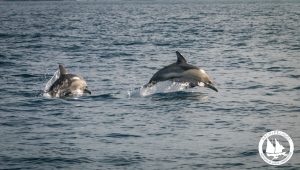
Studying the behaviour of the dolphin population of the resident population of Short beaked dolphin (Delphinus delphis) and the Common bottlenose dolphin (Tursiops truncatus) around Samos island could show if the boat traffic is affecting their presence.

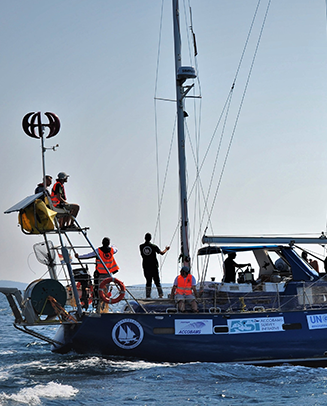
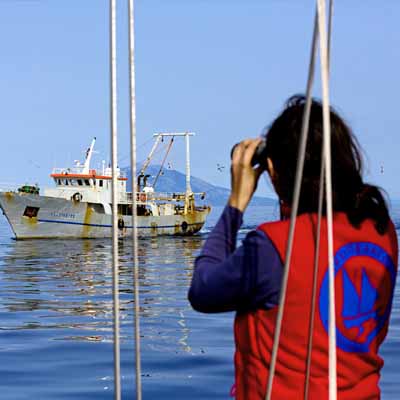
The Marine Mammal Team are conducting boat surveys every week to spot the dolphins and identify their behaviour. In a research initiated since 2016, Archipelagos is collecting year-round data with the aim to improve our understanding of these populations with knowledge that is essential for the conservation of these populations.
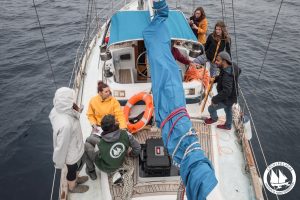
When dolphins are spotted, their behaviour is monitored each 3 minutes to assess changes, in relation to the presence of the various types of boats that are also in the area. The current results are showing a variegated ethogram about the two species. In these ethograms are included many surface behaviours that are no showing a negative impact on their presence. Even though this research is ongoing the waters of the NE Aegean are considered as a perfect habitat for the complex life of these amazing animals, which are important bioindicators of the health of the marine ecosystems.

Sebastien Saintignan (France)

MSc Observatoire des Sciences de l’Univers – Institut Pythéas Marseille

0
0
0
0
0

What you can read next

The Influence of Environmental Factors on the Spatial Distribution of Dolphin Populations in the Aegean Sea
Extensive Monitoring of Whale and Dolphin Populations
Remote program – preliminarily start analysing social organization and site fidelity of the Common Dolphin (Delphinus delphis) population

HIGHLIGHTS

  • International Visitors at the Aegean Marine Life Sanctuary Project

    International Visitors at the Aegean Marine Life Sanctuary Project

    1 June 2021
    At Archipelagos Institute of Marine Conservation an important visit took …
  • The Efkranti Award was Granted to the Archipelagos Institute of Marine Conservation

    The Efkranti Award was Granted to the Archipelagos Institute of Marine Conservation

    27 July 2020
    It was a great honor but also great moral support …
  • The President of the Hellenic Republic’s visit to Archipelagos research vessel, the Aegean Explorer

    The President of the Hellenic Republic’s visit to Archipelagos research vessel, the Aegean Explorer

    30 June 2020
    Yesterday, during the President of the Republic’s visit to the …
  • Award to Archipelagos: Best Heroic Act of Environmental Stewardship

    Award to Archipelagos: Best Heroic Act of Environmental Stewardship

    19 February 2020
    The Short Documentary Film presenting the Aegean Marine Life Sanctuary, …
  • Award to Archipelagos Institute from the International Propeller Club of the United States

    Award to Archipelagos Institute from the International Propeller Club of the United States

    6 February 2020
    We would like to thank the International Propeller Club of …

Recent Posts

  • Photo-ID & Behavioral Assessments of Delphinus delphis in the Northern Aegean Sea

    Photo-ID & Behavioral Assessments of Delphinus delphis in the Northern Aegean Sea

    2 November 2023
    Yasas! Intern Alannah from the Marine Mammal Field here, currently …
  • Experiences After Work at Archipelagos

    Experiences After Work at Archipelagos

    2 November 2023
    Hi, I’m Ella and I completed a 6-week internship on …
  • Hands-on Projects with the Marine Mammal Research & Conservation Team

    Hands-on Projects with the Marine Mammal Research & Conservation Team

    2 November 2023
    My name is Sjoerd and I am in the last …
  • Planting Underwater Gardens of Posidonia seagrass- a new innovative planting process

    Planting Underwater Gardens of Posidonia seagrass- a new innovative planting process

    29 June 2023
    An innovative process of planting underwater gardens of Posidonia oceanica …
  • A special three-day research expedition to the Ikaria Trench

    A special three-day research expedition to the Ikaria Trench

    19 May 2023
    Archipelagos Marine Mammal Research team took part in a very …
  • Aegean Islet Conservation Project in cooperation with the University of Toronto’s Faculty of Architecture

    Aegean Islet Conservation Project in cooperation with the University of Toronto’s Faculty of Architecture

    17 May 2023
    A new cycle of interdisciplinary on-site research of the Aegean …
  • Mutilated Striped Dolphin Stranded on the shores of Samos Island

    Mutilated Striped Dolphin Stranded on the shores of Samos Island

    12 May 2023
    A mutilated striped dolphin was found stranded on the north …

Subscribe to Our Newsletter

Archipelagos Institute of Marine Conservation is committed to researching and defending the biodiversity of the Greek seas and islands.

Our action is possible only with your help!

donate
  • Contact us
  • Placements

Archipelagos - Institute of Marine Conservation © All Rights Reserved || Developed Fekas Brothers

TOP