
Archipelagos

  • English
  • Ελληνικα
Who We Are
The TeamThe Team
Research BasesResearch Bases
Research BoatsResearch Boats
Our EquipmentOur Equipment
PartnersPartners
SupportersSupporters
Fields of Action
Marine ConservationMarine Conservation Fisheries Shipping Risks Seagrass Meadows Coralligene Conservation Littoral Ecosystems Invasive Species Jellyfish Sea Turtles
Marine MammalsMarine Mammals Dolphins and Porpoises Whales Seals
Terrestrial ConservationTerrestrial Conservation Island Fauna Forests & Flora Freshwater Ecosystems Aegean Seed Bank
Laboratory ResearchLaboratory Research Microplastics Water Analysis Soil Quality
Projects
Aegean Marine Life Sanctuary
Eco-Navigation
FIsh4Life
Save the Aegean
Join Us
Internships in the Aegean
Remote Internships
Interns Experiences
Field Courses
News
Planting Underwater Gardens of Posidonia seagrass- a new innovative planting process
Aegean Islet Conservation Project in cooperation with the University of Toronto’s Faculty of Architecture
Mutilated Striped Dolphin Stranded on the shores of Samos Island
Posidonia Seagrass Fruits Wash up on Our Shores – A Rare Phenomenon
View All...
Contact us
Publications
Videos
Awareness Material
Donate
Menu

Monitoring the Bird Populations in the Wetlands of Samos

Monitoring the Bird Populations in the Wetlands of Samos

by Aanastasia Miliou / Tuesday, 01 August 2017 / Published in Intern Experience, Terrestrial Conservation Team, Work Journal

The Psili Ammos wetland on Samos is a very valuable habitat for many different bird species, including breeding, migratory, endemic, and threatened species. However, for the past five years or so, there have been increasing human impacts including illegal bird hunting, illegal joyriding with quad bikes within the dry wetland in the summer months and more. This area is an important habitat for many different species of birds, including migratory, endemic, and threatened birds. As this rare island wetland habitat is protected under Natura 2000 framework, there are laws in place now that prohibit all destructive activities within this specified region, but many are perpetrated, sometimes out of ignorance and other times out of defiance.
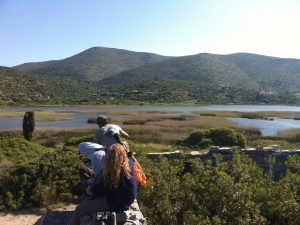
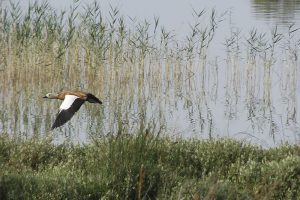
With the aim to promote the efforts for the protection of this rare habitat, in cooperation with the North Aegean District Authorities, Archipelagos’ Terrestrial Research Team is monitoring the bird species that are present in the region, determine each species’ population abundance and density, and to monitor long-term the populations. We are conducting this research in order to raise awareness to the local communities and visitors, about the importance of the birds in this region. There are many significant bird species found at Psili Ammos wetland, at different times of the year, with most impressive being the Greater flamingo (Phoenicopterus roseus) which is a key winter visitor of this site. The large number of threatened and protected bird species found here, which makes it a quality area for bird watching. If Psili Ammos were to officially be labeled as an important region for birding it would not only raise awareness about conservation efforts, but furthermore boost ecotourism and help to stimulate local economy. Subsequently, unwanted activities, such as illegal hunting, would be kept under closer surveillance to preserve the health and quality of the ecosystem.
In order to detect the most bird species possible during our surveys, two different count methods are being employed. The first and most common bird counting method is a point count, which consists of surveyors identifying and counting every bird seen at each point from a 360-degree angle. Our points were chosen strategically, keeping in mind the spots that would offer the clearest view of the given area. The other count method used was the line transect method. The reasoning behind choosing this method was two-fold in that it is useful for detecting cryptic bird species, and that it also allows for accurate measurement approximations for distances between detected birds and the transect line. This distance estimation can be used to help determine species abundance and distribution.
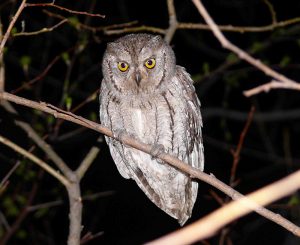
 

Though this research project has only recently been put into action, the results are already promising. After the first two surveys at the salt marsh, five new bird species have been added to the previous species lists created from the previous years. A success of this nature in so short a time period has lead Archipelagos to also expand these surveys to other wetlands across Samos, and other sites are already being vetted.


Isaac Mars

Fourth year BSc Natural Resources and Environmental Sciences, University of Kentucky, USA

0
0
0
0
0

What you can read next

Spatial Distribution of Microplastics in Coastal Shallow Sediments in Samos Island
Macro-invertebrates around Lipsi island
Remote Internship – GIS for Marine Conservation

HIGHLIGHTS

  • International Visitors at the Aegean Marine Life Sanctuary Project

    International Visitors at the Aegean Marine Life Sanctuary Project

    1 June 2021
    At Archipelagos Institute of Marine Conservation an important visit took …
  • The Efkranti Award was Granted to the Archipelagos Institute of Marine Conservation

    The Efkranti Award was Granted to the Archipelagos Institute of Marine Conservation

    27 July 2020
    It was a great honor but also great moral support …
  • The President of the Hellenic Republic’s visit to Archipelagos research vessel, the Aegean Explorer

    The President of the Hellenic Republic’s visit to Archipelagos research vessel, the Aegean Explorer

    30 June 2020
    Yesterday, during the President of the Republic’s visit to the …
  • Award to Archipelagos: Best Heroic Act of Environmental Stewardship

    Award to Archipelagos: Best Heroic Act of Environmental Stewardship

    19 February 2020
    The Short Documentary Film presenting the Aegean Marine Life Sanctuary, …
  • Award to Archipelagos Institute from the International Propeller Club of the United States

    Award to Archipelagos Institute from the International Propeller Club of the United States

    6 February 2020
    We would like to thank the International Propeller Club of …

Recent Posts

  • Photo-ID & Behavioral Assessments of Delphinus delphis in the Northern Aegean Sea

    Photo-ID & Behavioral Assessments of Delphinus delphis in the Northern Aegean Sea

    2 November 2023
    Yasas! Intern Alannah from the Marine Mammal Field here, currently …
  • Experiences After Work at Archipelagos

    Experiences After Work at Archipelagos

    2 November 2023
    Hi, I’m Ella and I completed a 6-week internship on …
  • Hands-on Projects with the Marine Mammal Research & Conservation Team

    Hands-on Projects with the Marine Mammal Research & Conservation Team

    2 November 2023
    My name is Sjoerd and I am in the last …
  • Planting Underwater Gardens of Posidonia seagrass- a new innovative planting process

    Planting Underwater Gardens of Posidonia seagrass- a new innovative planting process

    29 June 2023
    An innovative process of planting underwater gardens of Posidonia oceanica …
  • A special three-day research expedition to the Ikaria Trench

    A special three-day research expedition to the Ikaria Trench

    19 May 2023
    Archipelagos Marine Mammal Research team took part in a very …
  • Aegean Islet Conservation Project in cooperation with the University of Toronto’s Faculty of Architecture

    Aegean Islet Conservation Project in cooperation with the University of Toronto’s Faculty of Architecture

    17 May 2023
    A new cycle of interdisciplinary on-site research of the Aegean …
  • Mutilated Striped Dolphin Stranded on the shores of Samos Island

    Mutilated Striped Dolphin Stranded on the shores of Samos Island

    12 May 2023
    A mutilated striped dolphin was found stranded on the north …

Subscribe to Our Newsletter

Archipelagos Institute of Marine Conservation is committed to researching and defending the biodiversity of the Greek seas and islands.

Our action is possible only with your help!

donate
  • Contact us
  • Placements

Archipelagos - Institute of Marine Conservation © All Rights Reserved || Developed Fekas Brothers

TOP