Archipelagos

  • English
  • Ελληνικα
Who We Are
The TeamThe Team
Research BasesResearch Bases
Research BoatsResearch Boats
Our EquipmentOur Equipment
PartnersPartners
SupportersSupporters
Fields of Action
Marine ConservationMarine Conservation Fisheries Shipping Risks Seagrass Meadows Coralligene Conservation Littoral Ecosystems Invasive Species Jellyfish Sea Turtles
Marine MammalsMarine Mammals Dolphins and Porpoises Whales Seals
Terrestrial ConservationTerrestrial Conservation Island Fauna Forests & Flora Freshwater Ecosystems Aegean Seed Bank
Laboratory ResearchLaboratory Research Microplastics Water Analysis Soil Quality
Projects
Aegean Marine Life Sanctuary
Eco-Navigation
FIsh4Life
Save the Aegean
Join Us
Internships in the Aegean
Remote Internships
Interns Experiences
Field Courses
News
Planting Underwater Gardens of Posidonia seagrass- a new innovative planting process
Aegean Islet Conservation Project in cooperation with the University of Toronto’s Faculty of Architecture
Mutilated Striped Dolphin Stranded on the shores of Samos Island
Posidonia Seagrass Fruits Wash up on Our Shores – A Rare Phenomenon
View All...
Contact us
Publications
Videos
Awareness Material
Donate
Menu

Assessing the Microplastic Fiber Content in Stranded Dolphins

Assessing the Microplastic Fiber Content in Stranded Dolphins

by Kleopatra Delaveri / Thursday, 10 May 2018 / Published in Intern Experience, Marine Mammal Team, Microplastic Team, Work Journal

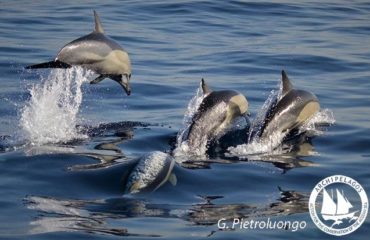
Dolphins might be one of the most charismatic animals that plough through the oceans and seas. In general, they are social animals that enjoy living in pods. These marine mammals are considered one of the most intelligent species on the planet. Although they are mainly piscivores, their diet varies between species, feeding on fish, cephalopods and crustaceans. They are bio-indicator species, sentinels of the ecosystem’s health.

Dolphins hold an ecological niche in the marine environment comparable to humans; each of us occupies the top position in our respective trophic chains.

The Mediterranean Sea – and particularly the Aegean – holds unique biodiversity that is being affected by anthropogenic impacts. The main threats include: overexploitation of resources, unmeasured urbanisation, degradation of the surrounding lands (agriculture, etc.), marine traffic, chemical and noise pollution, bycatch and the proliferation of invasive species. These unconcerned practices have direct effects on the ecosystem equilibrium, richness and health; resulting in coral bleaching, loss of species and impoverishment of the seas in general.

Plastic is currently one of the most massively produced and widely used materials worldwide. Yet, it constitutes a global issue.

Microplastics are small plastic pieces less than five millimeters long that can be harmful to the marine environment and aquatic life.
Microplastics may come from the degradation of bigger plastic items. They may also be a constituent in goods used in daily life that are known as “microbeads”. These are microscopic pieces of polyethylene (the most common plastic) that health and beauty products contain in general. It is very likely that you are brushing your teeth and cleaning your face using microplastics, therefore, introducing them through the pipe system where they will eventually end up in the sea/ocean.

Archipelagos’ stranding response team is involved in recording and studying stranding events in and around Samos.

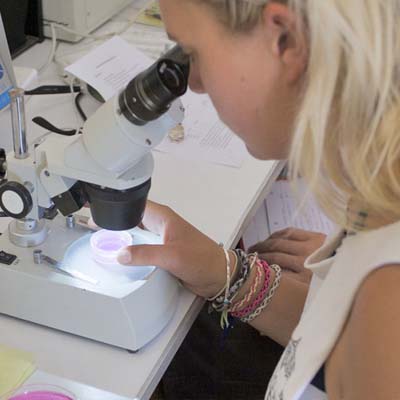
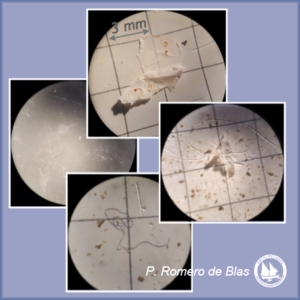
The content of the different gastrointestinal-compartments of the animal is collected in order to study diet and the presence of macro/micro plastics. The microplastic analysis process consists of filtration, microscope analysis, data collection and statistical study.

Through the microscope phase, the filtered slides are looked at in order to determine the number, shape/kind, color and approximate size of every microplastic found.

It is worth mentioning that not only microplastics are found inside the bodies of our specimens. Some bigger pieces that appear such as straws, plastic wrappers, balloons, and pellets have also been found.

Through my research in this area, I focused on the analysis of the plastic content of a young individual of Stenella coeruleoalba. It was initially found during a live-stranding situation, but her general health conditions were so compromised that the first aid response was unsuccessful. She died on the same night of August 2017 at Karlóvasi in NW Samos, while being heavily infested with parasites.

This unfortunate event gave us the chance to study her in a more detailed manner and to determine the (micro)plastic content in her GI system.

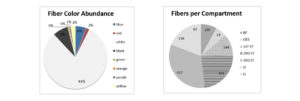
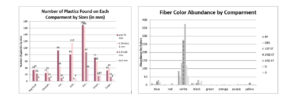
The results were alarming. The total amount found is 1377 microplastics, being 1052 of them white fibers. (See the graphs below)
Further analysis of these fibers will be done in university laboratories, in order to assess the chemical load and type of fibers.

In retrospect, would it be just a coincidence that the sea is full of plastic as well as these marine animals? Would we find a reflection on us from what is affecting them? Would current plastic over-exploitation and careless utilization of single-use-plastics pollute not just our environment but also ourselves?

Paula Romero de Blas
Environmental Sciences,
University of La Laguna, Canary Islands
0
0
0
0
0

What you can read next

Monitoring the Bird Populations in the Wetlands of Samos
Terrestrial and Marine Conservation Internship
Research on Island Habitats Aiming to Contribute to their Conservation

HIGHLIGHTS

  • International Visitors at the Aegean Marine Life Sanctuary Project

    International Visitors at the Aegean Marine Life Sanctuary Project

    1 June 2021
    At Archipelagos Institute of Marine Conservation an important visit took …
  • The Efkranti Award was Granted to the Archipelagos Institute of Marine Conservation

    The Efkranti Award was Granted to the Archipelagos Institute of Marine Conservation

    27 July 2020
    It was a great honor but also great moral support …
  • The President of the Hellenic Republic’s visit to Archipelagos research vessel, the Aegean Explorer

    The President of the Hellenic Republic’s visit to Archipelagos research vessel, the Aegean Explorer

    30 June 2020
    Yesterday, during the President of the Republic’s visit to the …
  • Award to Archipelagos: Best Heroic Act of Environmental Stewardship

    Award to Archipelagos: Best Heroic Act of Environmental Stewardship

    19 February 2020
    The Short Documentary Film presenting the Aegean Marine Life Sanctuary, …
  • Award to Archipelagos Institute from the International Propeller Club of the United States

    Award to Archipelagos Institute from the International Propeller Club of the United States

    6 February 2020
    We would like to thank the International Propeller Club of …

Recent Posts

  • Photo-ID & Behavioral Assessments of Delphinus delphis in the Northern Aegean Sea

    Photo-ID & Behavioral Assessments of Delphinus delphis in the Northern Aegean Sea

    2 November 2023
    Yasas! Intern Alannah from the Marine Mammal Field here, currently …
  • Experiences After Work at Archipelagos

    Experiences After Work at Archipelagos

    2 November 2023
    Hi, I’m Ella and I completed a 6-week internship on …
  • Hands-on Projects with the Marine Mammal Research & Conservation Team

    Hands-on Projects with the Marine Mammal Research & Conservation Team

    2 November 2023
    My name is Sjoerd and I am in the last …
  • Planting Underwater Gardens of Posidonia seagrass- a new innovative planting process

    Planting Underwater Gardens of Posidonia seagrass- a new innovative planting process

    29 June 2023
    An innovative process of planting underwater gardens of Posidonia oceanica …
  • A special three-day research expedition to the Ikaria Trench

    A special three-day research expedition to the Ikaria Trench

    19 May 2023
    Archipelagos Marine Mammal Research team took part in a very …
  • Aegean Islet Conservation Project in cooperation with the University of Toronto’s Faculty of Architecture

    Aegean Islet Conservation Project in cooperation with the University of Toronto’s Faculty of Architecture

    17 May 2023
    A new cycle of interdisciplinary on-site research of the Aegean …
  • Mutilated Striped Dolphin Stranded on the shores of Samos Island

    Mutilated Striped Dolphin Stranded on the shores of Samos Island

    12 May 2023
    A mutilated striped dolphin was found stranded on the north …

Subscribe to Our Newsletter

Archipelagos Institute of Marine Conservation is committed to researching and defending the biodiversity of the Greek seas and islands.

Our action is possible only with your help!

donate
  • Contact us
  • Placements

Archipelagos - Institute of Marine Conservation © All Rights Reserved || Developed Fekas Brothers

TOP