
Archipelagos

  • English
  • Ελληνικα
Who We Are
The TeamThe Team
Research BasesResearch Bases
Research BoatsResearch Boats
Our EquipmentOur Equipment
PartnersPartners
SupportersSupporters
Fields of Action
Marine ConservationMarine Conservation Fisheries Shipping Risks Seagrass Meadows Coralligene Conservation Littoral Ecosystems Invasive Species Jellyfish Sea Turtles
Marine MammalsMarine Mammals Dolphins and Porpoises Whales Seals
Terrestrial ConservationTerrestrial Conservation Island Fauna Forests & Flora Freshwater Ecosystems Aegean Seed Bank
Laboratory ResearchLaboratory Research Microplastics Water Analysis Soil Quality
Projects
Aegean Marine Life Sanctuary
Eco-Navigation
FIsh4Life
Save the Aegean
Join Us
Internships in the Aegean
Remote Internships
Interns Experiences
Field Courses
News
Planting Underwater Gardens of Posidonia seagrass- a new innovative planting process
Aegean Islet Conservation Project in cooperation with the University of Toronto’s Faculty of Architecture
Mutilated Striped Dolphin Stranded on the shores of Samos Island
Posidonia Seagrass Fruits Wash up on Our Shores – A Rare Phenomenon
View All...
Contact us
Publications
Videos
Awareness Material
Donate
Menu

Dolphin Communication vs. Noise Pollution in the Aegean Sea

Dolphin Communication vs. Noise Pollution in the Aegean Sea

by Dimitris Fekkas / Monday, 02 July 2018 / Published in Intern Experience, Marine Mammal Team, Work Journal


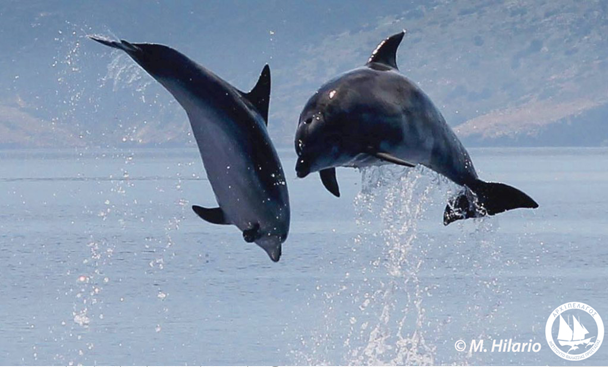
Figure 1 – Bottlenose dolphins (Tursiops truncatus) following a trawler.

“Noise pollution” in the marine environment has been an increasing concern for conservationists and marine researchers in the past decades. Underwater sounds caused by ships have no impact on humans, however, they may have severe effects on marine life, especially marine mammals.

Engine noise from boats increases with size, power, load and speed. It overlaps with the frequency range of many cetaceans.

There are many different types of sounds emitted by dolphins and in this project, we focused on the acoustic signal of whistles. They are narrowband tonal calls with durations up to a few seconds and fundamental frequencies that typically fall between 5 and 20 kHz. They are thought to be a method of communication through water for long distances.

The purpose of this project is to classify dolphin whistles and to understand if their parameters change in presence of boats. For every whistle recorded we analyze the following parameters: shape, start and end time, minimum and maximum frequency, delta time, mean frequency, peak power, peak frequency, centre frequency, steps, harmonics, inflections.

Figure 2 – Common dolphin (Delphinus delphis) parameters table. We also collect whistles from Striped dolphin (Stenella coeruleoalba) and Bottlenose dolphin (Tursiops truncatus).

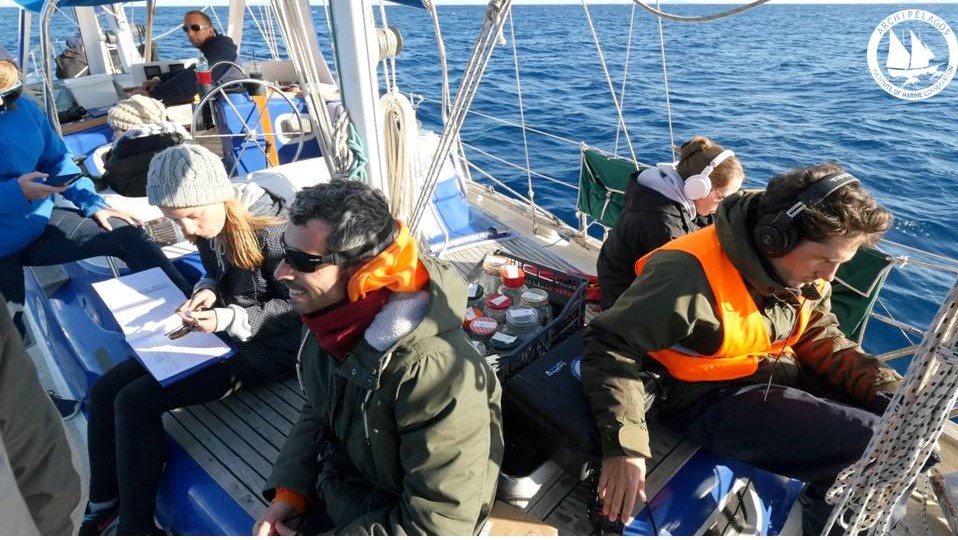
During every sighting, we also collected data of boat presence and measured the level of ambient noise (peak amplitude and equivalent continuous sound level).
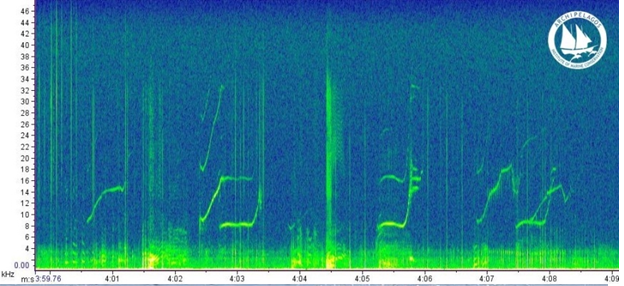
Figure 3 – Spectrogram of Striped dolphin whistles.

Dolphins can change their vocalizations when the level of ambient noise is high. This variation allows them to transmit their signals and avoid masking. The Bioacoustics Team will compare the whistles parameters with the presence and noise of boats in order to understand if this type of anthropogenic impact could affect the communication system and the social interactions of dolphins in the Aegean Sea.


Simone Antichi

BSc Marine Biology, Universita Politecnica delle, Italy

and Dahlia Hassell,

BSc Aquaculture and Marine Resources Management, Wageningen University and Research, The Netherlands

0
0
0
0
0

What you can read next

Comparing Debris Found on Beach Cleans During Different Seasonal Activity
Sperm whales
Sperm whales in the northern and central Aegean, as we keep up the continuous research in the Greek seas
Sea turtles of the Aegean Sea

HIGHLIGHTS

  • International Visitors at the Aegean Marine Life Sanctuary Project

    International Visitors at the Aegean Marine Life Sanctuary Project

    1 June 2021
    At Archipelagos Institute of Marine Conservation an important visit took …
  • The Efkranti Award was Granted to the Archipelagos Institute of Marine Conservation

    The Efkranti Award was Granted to the Archipelagos Institute of Marine Conservation

    27 July 2020
    It was a great honor but also great moral support …
  • The President of the Hellenic Republic’s visit to Archipelagos research vessel, the Aegean Explorer

    The President of the Hellenic Republic’s visit to Archipelagos research vessel, the Aegean Explorer

    30 June 2020
    Yesterday, during the President of the Republic’s visit to the …
  • Award to Archipelagos: Best Heroic Act of Environmental Stewardship

    Award to Archipelagos: Best Heroic Act of Environmental Stewardship

    19 February 2020
    The Short Documentary Film presenting the Aegean Marine Life Sanctuary, …
  • Award to Archipelagos Institute from the International Propeller Club of the United States

    Award to Archipelagos Institute from the International Propeller Club of the United States

    6 February 2020
    We would like to thank the International Propeller Club of …

Recent Posts

  • Photo-ID & Behavioral Assessments of Delphinus delphis in the Northern Aegean Sea

    Photo-ID & Behavioral Assessments of Delphinus delphis in the Northern Aegean Sea

    2 November 2023
    Yasas! Intern Alannah from the Marine Mammal Field here, currently …
  • Experiences After Work at Archipelagos

    Experiences After Work at Archipelagos

    2 November 2023
    Hi, I’m Ella and I completed a 6-week internship on …
  • Hands-on Projects with the Marine Mammal Research & Conservation Team

    Hands-on Projects with the Marine Mammal Research & Conservation Team

    2 November 2023
    My name is Sjoerd and I am in the last …
  • Planting Underwater Gardens of Posidonia seagrass- a new innovative planting process

    Planting Underwater Gardens of Posidonia seagrass- a new innovative planting process

    29 June 2023
    An innovative process of planting underwater gardens of Posidonia oceanica …
  • A special three-day research expedition to the Ikaria Trench

    A special three-day research expedition to the Ikaria Trench

    19 May 2023
    Archipelagos Marine Mammal Research team took part in a very …
  • Aegean Islet Conservation Project in cooperation with the University of Toronto’s Faculty of Architecture

    Aegean Islet Conservation Project in cooperation with the University of Toronto’s Faculty of Architecture

    17 May 2023
    A new cycle of interdisciplinary on-site research of the Aegean …
  • Mutilated Striped Dolphin Stranded on the shores of Samos Island

    Mutilated Striped Dolphin Stranded on the shores of Samos Island

    12 May 2023
    A mutilated striped dolphin was found stranded on the north …

Subscribe to Our Newsletter

Archipelagos Institute of Marine Conservation is committed to researching and defending the biodiversity of the Greek seas and islands.

Our action is possible only with your help!

donate
  • Contact us
  • Placements

Archipelagos - Institute of Marine Conservation © All Rights Reserved || Developed Fekas Brothers

TOP