
Archipelagos

  • English
  • Ελληνικα
Who We Are
The TeamThe Team
Research BasesResearch Bases
Research BoatsResearch Boats
Our EquipmentOur Equipment
PartnersPartners
SupportersSupporters
Fields of Action
Marine ConservationMarine Conservation Fisheries Shipping Risks Seagrass Meadows Coralligene Conservation Littoral Ecosystems Invasive Species Jellyfish Sea Turtles
Marine MammalsMarine Mammals Dolphins and Porpoises Whales Seals
Terrestrial ConservationTerrestrial Conservation Island Fauna Forests & Flora Freshwater Ecosystems Aegean Seed Bank
Laboratory ResearchLaboratory Research Microplastics Water Analysis Soil Quality
Projects
Aegean Marine Life Sanctuary
Eco-Navigation
FIsh4Life
Save the Aegean
Join Us
Internships in the Aegean
Remote Internships
Interns Experiences
Field Courses
News
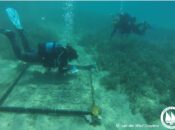
Planting Underwater Gardens of Posidonia seagrass- a new innovative planting process
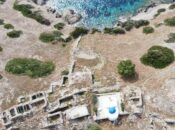
Aegean Islet Conservation Project in cooperation with the University of Toronto’s Faculty of Architecture
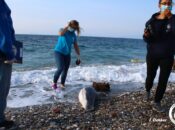
Mutilated Striped Dolphin Stranded on the shores of Samos Island
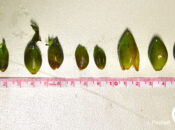
Posidonia Seagrass Fruits Wash up on Our Shores – A Rare Phenomenon
View All...
Contact us
Publications
Videos
Awareness Material
Donate
Menu

Protecting the Nobel Pen shell (Pinna nobilis) in the Easter Aegean Sea

Protecting the Nobel Pen shell (Pinna nobilis) in the Easter Aegean Sea

by Kleopatra Delaveri / Thursday, 29 November 2018 / Published in Intern Experience, Marine Conservation Team, Work Journal

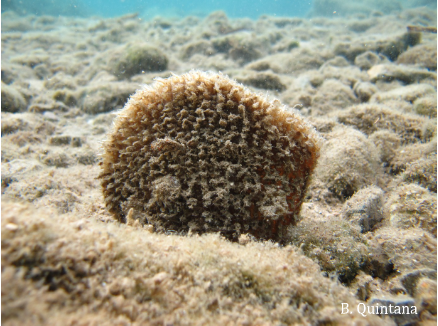
Juvenile Pinna spp. in cobble substrate in Vroulia,Lipsi

The endemic Mediterranean Pinna nobilis (Fig. 1) is one of the largest bivalves of the world reaching heights up to 120cm, and found in depths up to 60m. It is partially buried in soft sediment and tends to shelter itself on the edge of seagrass meadows. As an “Endangered Species” it is under protection, according to the European Council Directive 92/43/EEC. In recent years the endemic fan mussel’s survival has been under threat. Abnormal Mass Mortality Events (MMEs) along the Western Mediterranean coast have led to the observed haplosporidian parasite (Haplosporidium pinnae) reported as the likely killer of the bivalve.

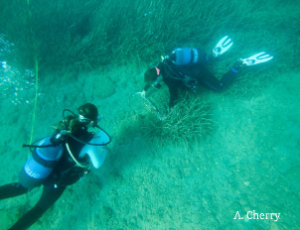
The fan mussel’s monitoring has become crucial here at Archipelagos due to the recent small-scale MMEs observed in Samos Island and the Dodecanese in the last few months. Sites in Samos and Lipsi islands that once housed many healthy Pinna nobilis now look like graveyards. It is unsure yet if the parasite is present in the Aegean Sea but other factors have been hypothesized to help explain the increasing number of deaths. To have a better understanding of the situation, monitoring strategies used by previous interns were replicated in Samos. Starting at a depth of 0.5 meters, a 200-meter tapeline is set perpendicular to the shore, or until a depth of 5 meters is reached, to define the transects. This methodology is recommended when searching large areas. Coordinates of the Pinna’s location, measurements of each individuals, and health status (i.e. fast or slow response to water movement around it) are recorded. Habitat and substrate type, as well as temperature are also recorded.
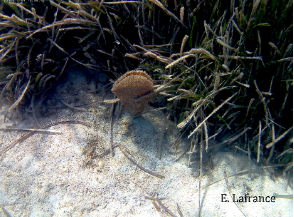
Fig.1 – Dead Pinna nobilis in Vroulia,Lipsi


From the collected data up to date, it has been suggested – beyond the possibility of the presence of the haplosporidium parasite and the pressures of overfishing, that a) healthy Posidonia oceanica meadows promote the survival of Pinna nobilis, and b) being that Pinna inhabit soft bottom substrates too, suggests that hydrodynamics and water temperature affect recruitment and shell orientation.


The health of Posidonia in the Aegean and the effects of climate change on water temperatures and salinity are scarcely studied in these remote areas of Greece. Very little is known about bivalves but we are hoping to understand what is affecting these keystone species.


Elyana Lafrance – Concordia University, Canada

Irene Moro – University of Salamanca, Spain


0
0
0
0
0

What you can read next

Assessment of the butterfly biodiversity in Lipsi during spring
Macro-invertebrates around Lipsi island
The Silent Invasion

HIGHLIGHTS

  • International Visitors at the Aegean Marine Life Sanctuary Project

    International Visitors at the Aegean Marine Life Sanctuary Project

    1 June 2021
    At Archipelagos Institute of Marine Conservation an important visit took …
  • The Efkranti Award was Granted to the Archipelagos Institute of Marine Conservation

    The Efkranti Award was Granted to the Archipelagos Institute of Marine Conservation

    27 July 2020
    It was a great honor but also great moral support …
  • The President of the Hellenic Republic’s visit to Archipelagos research vessel, the Aegean Explorer

    The President of the Hellenic Republic’s visit to Archipelagos research vessel, the Aegean Explorer

    30 June 2020
    Yesterday, during the President of the Republic’s visit to the …
  • Award to Archipelagos: Best Heroic Act of Environmental Stewardship

    Award to Archipelagos: Best Heroic Act of Environmental Stewardship

    19 February 2020
    The Short Documentary Film presenting the Aegean Marine Life Sanctuary, …
  • Award to Archipelagos Institute from the International Propeller Club of the United States

    Award to Archipelagos Institute from the International Propeller Club of the United States

    6 February 2020
    We would like to thank the International Propeller Club of …

Recent Posts

  • Photo-ID & Behavioral Assessments of Delphinus delphis in the Northern Aegean Sea

    Photo-ID & Behavioral Assessments of Delphinus delphis in the Northern Aegean Sea

    2 November 2023
    Yasas! Intern Alannah from the Marine Mammal Field here, currently …
  • Experiences After Work at Archipelagos

    Experiences After Work at Archipelagos

    2 November 2023
    Hi, I’m Ella and I completed a 6-week internship on …
  • Hands-on Projects with the Marine Mammal Research & Conservation Team

    Hands-on Projects with the Marine Mammal Research & Conservation Team

    2 November 2023
    My name is Sjoerd and I am in the last …
  • Planting Underwater Gardens of Posidonia seagrass- a new innovative planting process

    Planting Underwater Gardens of Posidonia seagrass- a new innovative planting process

    29 June 2023
    An innovative process of planting underwater gardens of Posidonia oceanica …
  • A special three-day research expedition to the Ikaria Trench

    A special three-day research expedition to the Ikaria Trench

    19 May 2023
    Archipelagos Marine Mammal Research team took part in a very …
  • Aegean Islet Conservation Project in cooperation with the University of Toronto’s Faculty of Architecture

    Aegean Islet Conservation Project in cooperation with the University of Toronto’s Faculty of Architecture

    17 May 2023
    A new cycle of interdisciplinary on-site research of the Aegean …
  • Mutilated Striped Dolphin Stranded on the shores of Samos Island

    Mutilated Striped Dolphin Stranded on the shores of Samos Island

    12 May 2023
    A mutilated striped dolphin was found stranded on the north …

Subscribe to Our Newsletter

Archipelagos Institute of Marine Conservation is committed to researching and defending the biodiversity of the Greek seas and islands.

Our action is possible only with your help!

donate
  • Contact us
  • Placements

Archipelagos - Institute of Marine Conservation © All Rights Reserved || Developed Fekas Brothers

TOP