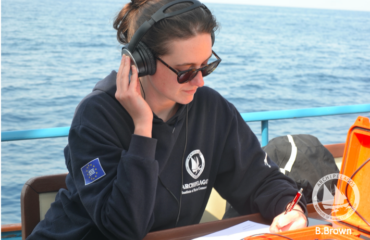


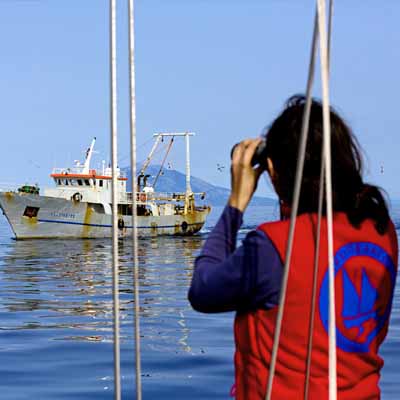
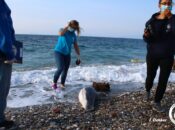
Soon after arriving in Samos, Greece in June 2019, Vivienne and Amy transferred to the island of Lipsi. Here, they spent the majority of their internship working with Archipelagos on the marine conservation team; Amy, being a recent graduate who studied wildlife conservation and ecology at the University of Chester, UK and Vivienne, who is i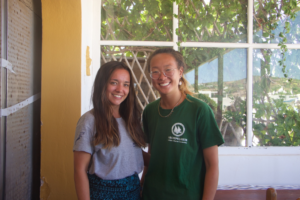 n her 3rd year studying marine biology at Northeastern University, USA. As they were very enthusiastic about gaining hands-on experience with the team, they started out assisting others with their projects like Carbon storage data in Posidonia Oceanica and coral health assessment. This inspired them to create their own research project.
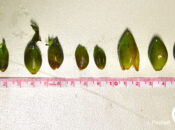
They started out by asking the supervisors on Lipsi about research areas that needed attention and by sharing their own ideas, brought on from reading previous intern research projects. Through this process, Amy and Vivienne got involved in the ongoing Environmental Impact Assessment (EIA), led by intern Deanna Atkins, which was being undertaken in Vroulia Bay, the sight of Archipelagos’ planned marine life sanctuary. They were able to gain practical experience in conducting macroinvertebrate biodiversity surv eys which prompted them to propose their own project that aimed to focus on the abundance and diversity of Benthic macroinvertebrates at Vroulia Bay.
Surveys are conducted daily to gage invertebrate presence throughout the bay, studying the differences in communities across different habitat types (seagrass meadows, sandy substrate, and the rocky perimeter are the most common) and at different depths. Collecting this data is essential for monitoring the overall health of this underwater ecosystem, as population estimates of these species are a good bioindicator. Thus far, this kind of data collection at Vroulia Bay has not been done; therefore, understanding the composition of benthic macro-invertebrate communities not only further our understanding of the current ecosystem health of the bay but will also provide the base for future expansion of this research.
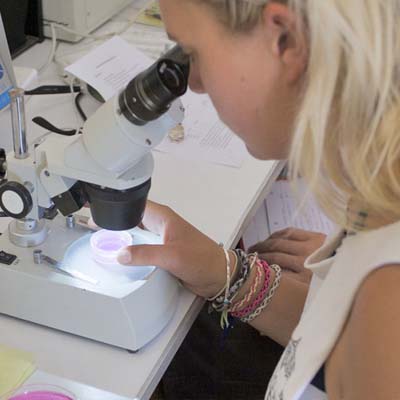
Another important part of this research process is the drafting of a research proposal, which Amy and Vivienne have been working closely on with the help of their supervisors. This allows them to gain valuable experience in scientific writing and designing data collection methods.
Amy:
“I first heard about Archipelagos through a recommendation by a University professor. I’ve 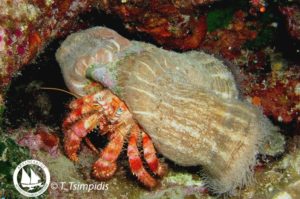 been wanting to do an internship in conservation for several years but was unsure of who to work with. What brought me to Archipelagos was the fact that they were very research-based, so my internship would be less of a vacation/gap year and more of actual, hands-on experience within the marine conservation field.
Being here has inspired me; seeing the supervisors’ high enthusiasm when discussing our project shows their passion for their work. Due to this, I now know that I would like to study a masters in the future and continue a career in research.”
Vivienne:
“I am a third-year university student, completing a 6-month internship as part of my BSc in Marine Biology from Northeastern University in Boston,  MA. I am interested in conservation and wanted to understand how research and conservation can be combined, so an internship at Archipelagos was the perfect opportunity to learn skills in these fields.
For me, the highlight has definitely been meeting people from all around the world and getting to know them in both a professional and personal setting. I love being surrounded by passionate interns and supervisors and I’ve already learned so much from the people I’ve met. Another highlight is the fact that Archipelagos’ base is in the center of Lipsi town, where I can meet the locals and experience Greek culture.”