Archipelagos

  • English
  • Ελληνικα
Who We Are
The TeamThe Team
Research BasesResearch Bases
Research BoatsResearch Boats
Our EquipmentOur Equipment
PartnersPartners
SupportersSupporters
Fields of Action
Marine ConservationMarine Conservation Fisheries Shipping Risks Seagrass Meadows Coralligene Conservation Littoral Ecosystems Invasive Species Jellyfish Sea Turtles
Marine MammalsMarine Mammals Dolphins and Porpoises Whales Seals
Terrestrial ConservationTerrestrial Conservation Island Fauna Forests & Flora Freshwater Ecosystems Aegean Seed Bank
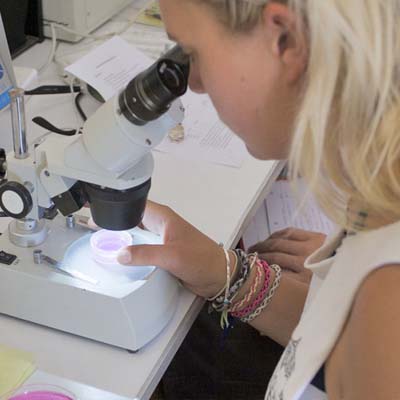
Laboratory ResearchLaboratory Research Microplastics Water Analysis Soil Quality
Projects
Aegean Marine Life Sanctuary
Eco-Navigation
FIsh4Life
Save the Aegean
Join Us
Internships in the Aegean
Remote Internships
Interns Experiences
Field Courses
News
Planting Underwater Gardens of Posidonia seagrass- a new innovative planting process
Aegean Islet Conservation Project in cooperation with the University of Toronto’s Faculty of Architecture
Mutilated Striped Dolphin Stranded on the shores of Samos Island
Posidonia Seagrass Fruits Wash up on Our Shores – A Rare Phenomenon
View All...
Contact us
Publications
Videos
Awareness Material
Donate
Menu

Tursiops truncatus (bottlenose dolphins) and their habitat use/ abundance in relation to different seasons

Tursiops truncatus (bottlenose dolphins) and their habitat use/ abundance in relation to different seasons

by Kleopatra Delaveri / Wednesday, 22 July 2020 / Published in Marine Mammal Team, Work Journal

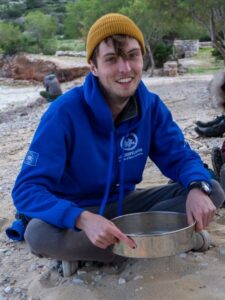
My name is Luke Rodgers and I study Marine biology at Queen’s University in Belfast.
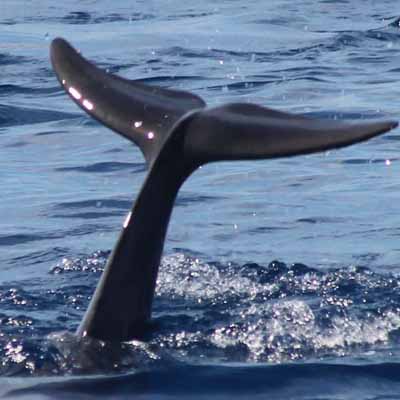
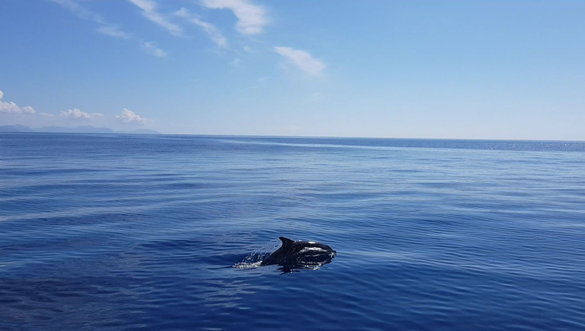
I came to Archipelagos as part of my placement year and will be working on the Island of Lipsi from January until the end of June, here I joined the Marine mammal team in their ongoing research in the Aegean Sea. I am currently working towards a distribution-based project, with specific interest in Tursiops truncatus (bottlenose dolphins) and their habitat use/ abundance in relation to different seasons.

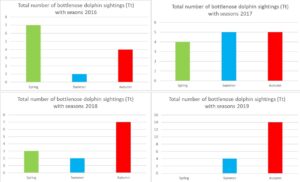
When I first arrived on Lipsi in January, the winter weather meant that boat surveys were unable to be carried out. For the first month of my placement I became free-dive trained and was able to assist in snorkel- based projects with other interns in the Marine ecology team, collecting sea cucumbers and sea urchins to measure microplastics consumption. I regularly carry out macroplastic surveys on our local shores with other interns to ensure that plastic pollution is minimised but also keeping an up to date record of types of rubbish found on each shore in our data-sets.  During this time I also spend considerable time in the office carrying out research into scientific literature and produced my literature review on Tursiops truncatus distribution and have been able to go back through our data-sets from 2016-2019 to produce graphs showing total number of sightings per season to search for trends in sighting frequencies.
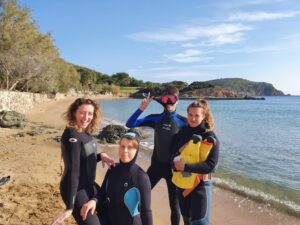
We collect environmental data on our boat surveys that we can compare as seasons change, such as sea temperature and weather conditions. Other data collected that may affect habitat use and distribution during our surveys includes boat presence and noise pollution data from the hydrophone, as dolphins will often avoid areas with higher boat traffic. During a sighting, co-ordinates are recorded from the GPS which I can use to produce distribution models on GIS to track movements and habitat use and compare this with seasons. I plan on using data from our photo-ID catalogues and a mark-recapture survey technique to measure re-occurrences and migration patterns of catalogued individuals to see if these are influenced by changing seasons.

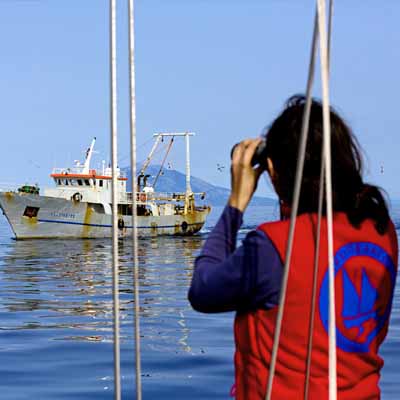
Due to COVID-19 and travel restrictions, our usual boat surveying schedule has been put on standby. As a team we have been carrying out land-based surveys to see if these are a suitable means of surveying and collecting data. For this we created our own range finders to measure an animal’s distance from us during a sighting.
We can collect environmental data such as weather conditions, sea state and viewing visibility during our surveys. We are also able to collect some anthropogenic data such as boat presence, particularly in relation to dolphin behaviour. I have found that land-based surveys are a good way to collect behavioural data, as we can remove ourselves and our surveying platform as a variable that may influence behaviour changes and responses and observe how they interact with each other in their natural environment. They allow for more in depth studies of interactions with anthropogenic elements and animal movements. However, there are limitations with this method as photo-ID methods cannot be implemented and identifying may be more difficult if animals are unclear from these greater distances.

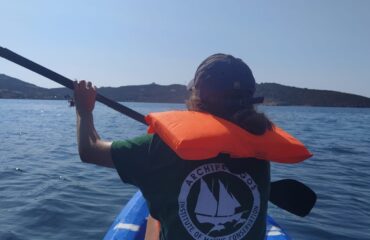
We have also been given the opportunity to take part in kayak training for future kayak-based marine mammal surveys, with interest in monitoring endangered monk seal populations around Lipsi. With the addition of the portable hydrophone we can also measure noise pollution in our study areas as well as collecting our usual environmental and anthropogenic data.


Luke Rodgers
Student of Marine biology, Queen’s University
On-site intern at Archipelagos’ Marine Mammal Research Team
0
0
0
0
0

What you can read next

Bioacoustic Research – Understanding Underwater Sounds
Comparison of Microplastics Found Within the Gastrointestinal Tract of Caretta caretta
Using GIS and Remote Sensing for Conservation

HIGHLIGHTS

  • International Visitors at the Aegean Marine Life Sanctuary Project

    International Visitors at the Aegean Marine Life Sanctuary Project

    1 June 2021
    At Archipelagos Institute of Marine Conservation an important visit took …
  • The Efkranti Award was Granted to the Archipelagos Institute of Marine Conservation

    The Efkranti Award was Granted to the Archipelagos Institute of Marine Conservation

    27 July 2020
    It was a great honor but also great moral support …
  • The President of the Hellenic Republic’s visit to Archipelagos research vessel, the Aegean Explorer

    The President of the Hellenic Republic’s visit to Archipelagos research vessel, the Aegean Explorer

    30 June 2020
    Yesterday, during the President of the Republic’s visit to the …
  • Award to Archipelagos: Best Heroic Act of Environmental Stewardship

    Award to Archipelagos: Best Heroic Act of Environmental Stewardship

    19 February 2020
    The Short Documentary Film presenting the Aegean Marine Life Sanctuary, …
  • Award to Archipelagos Institute from the International Propeller Club of the United States

    Award to Archipelagos Institute from the International Propeller Club of the United States

    6 February 2020
    We would like to thank the International Propeller Club of …

Recent Posts

  • Photo-ID & Behavioral Assessments of Delphinus delphis in the Northern Aegean Sea

    Photo-ID & Behavioral Assessments of Delphinus delphis in the Northern Aegean Sea

    2 November 2023
    Yasas! Intern Alannah from the Marine Mammal Field here, currently …
  • Experiences After Work at Archipelagos

    Experiences After Work at Archipelagos

    2 November 2023
    Hi, I’m Ella and I completed a 6-week internship on …
  • Hands-on Projects with the Marine Mammal Research & Conservation Team

    Hands-on Projects with the Marine Mammal Research & Conservation Team

    2 November 2023
    My name is Sjoerd and I am in the last …
  • Planting Underwater Gardens of Posidonia seagrass- a new innovative planting process

    Planting Underwater Gardens of Posidonia seagrass- a new innovative planting process

    29 June 2023
    An innovative process of planting underwater gardens of Posidonia oceanica …
  • A special three-day research expedition to the Ikaria Trench

    A special three-day research expedition to the Ikaria Trench

    19 May 2023
    Archipelagos Marine Mammal Research team took part in a very …
  • Aegean Islet Conservation Project in cooperation with the University of Toronto’s Faculty of Architecture

    Aegean Islet Conservation Project in cooperation with the University of Toronto’s Faculty of Architecture

    17 May 2023
    A new cycle of interdisciplinary on-site research of the Aegean …
  • Mutilated Striped Dolphin Stranded on the shores of Samos Island

    Mutilated Striped Dolphin Stranded on the shores of Samos Island

    12 May 2023
    A mutilated striped dolphin was found stranded on the north …

Subscribe to Our Newsletter

Archipelagos Institute of Marine Conservation is committed to researching and defending the biodiversity of the Greek seas and islands.

Our action is possible only with your help!

donate
  • Contact us
  • Placements

Archipelagos - Institute of Marine Conservation © All Rights Reserved || Developed Fekas Brothers

TOP