

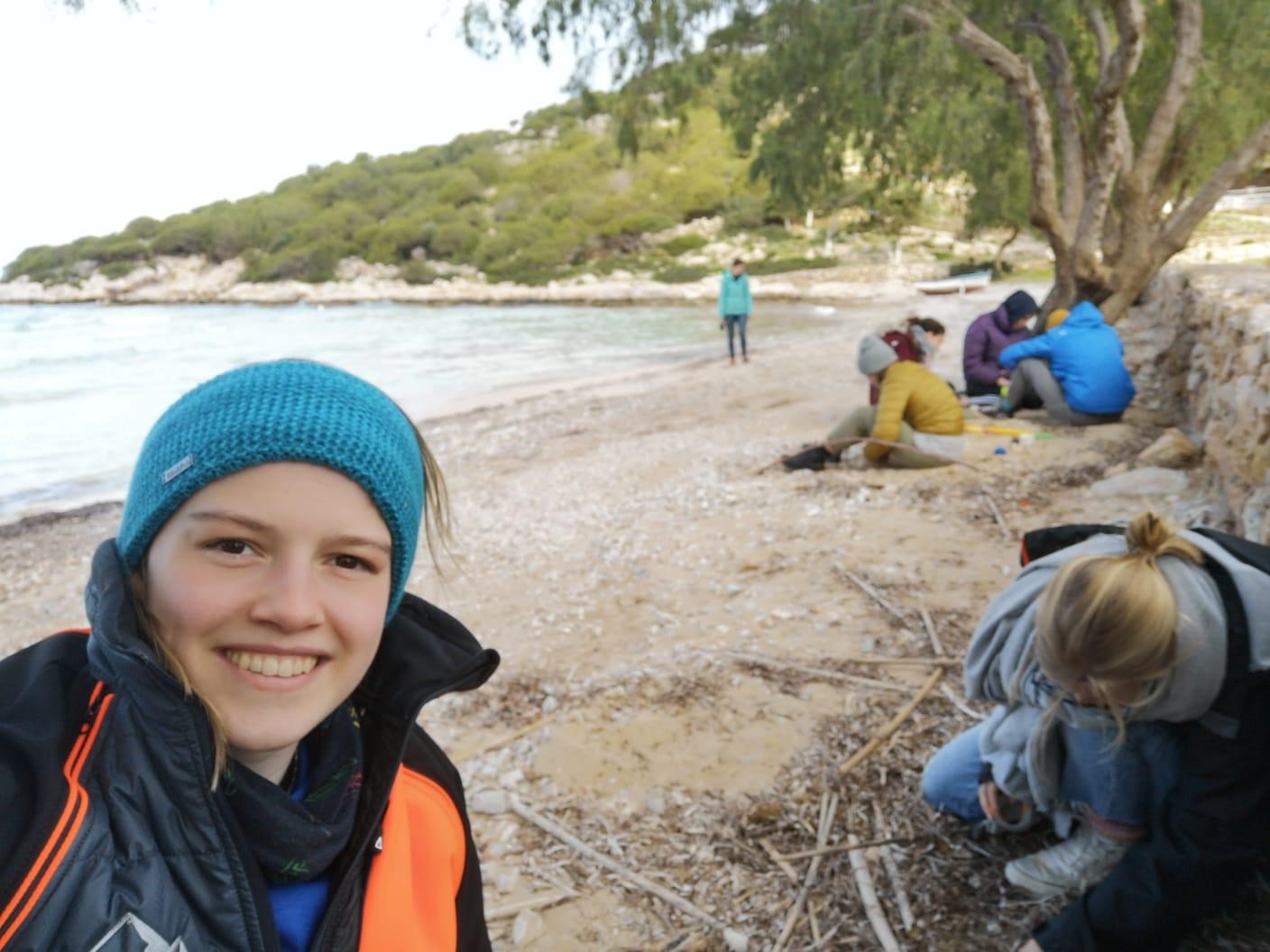
I was always looking for a job in which I could make a small contribution to the protection of our environment. After a long search, I stumbled across my current study program – Geoinformation and Environmental Technologies in Villach, Austria. I realised that Geographic Information Systems (GIS) were exactly what I was looking for. By analysing geographical data, it is possible to visualize complex patterns in our environment. Understanding them gives us an insight into our nature and the relationships and processes within an ecosystem. It can help us to assess hazards and risks effectively and take countermeasures.
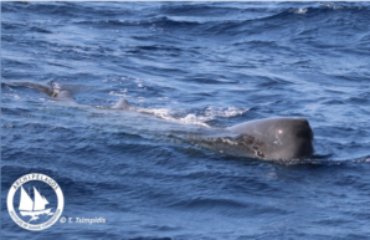
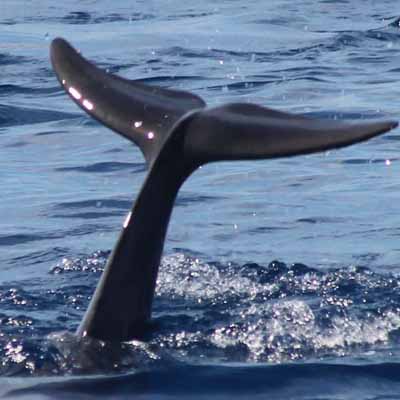
 That knowledge and motivation brought me to Archipelagos. I am currently working with the GIS and Marine Mammal team to increase knowledge about the Delphinus delphis. According to IUCN, the Delphinus delphis is an endangered species. It is estimated that the surviving Mediterranean population of the species has been reduced to half during the last 25 – 40 years. Unfortunately, not enough studies have been made to gather sufficient information about its current total abundance and distribution or factors threatening to survival.
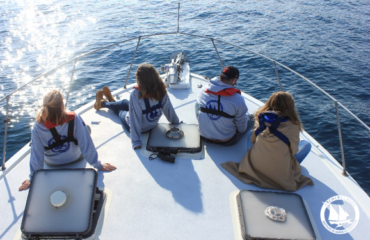
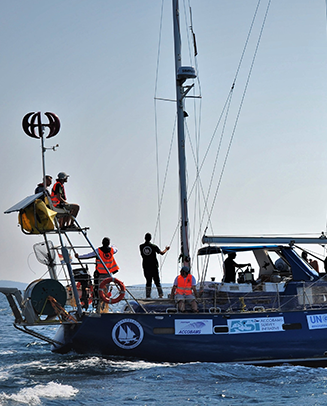
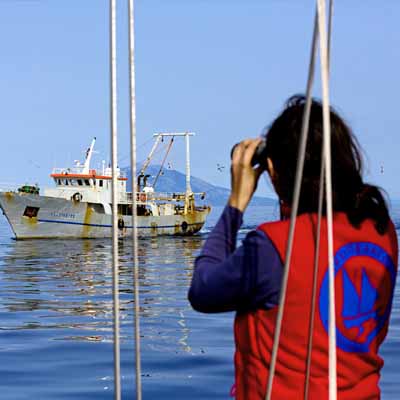
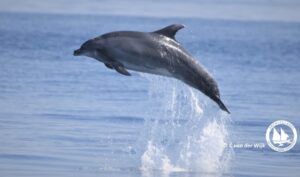 That is where I come into play. Archipelagos carries out regular boat surveys and records in detail every sighting of the D. delphis population in the eastern Aegean. I use the data from those sightings to find out more about the dolphin populations. I want to know about their ecological niche, where they like to live and, specifically in this study, in which parts between Samos and Lipsi are they most likely to be encountered.
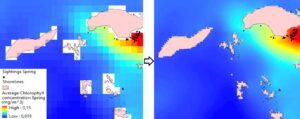
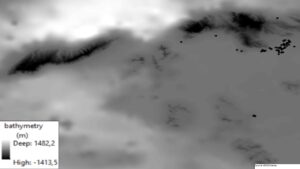
For that task I use a Species Distribution Model. I will use the sightings of the Common Dolphin that Archipelagos gathered over the last two years and combine it with environmental data, for example the content of chlorophyll and salinity or the depth (bathymetry on the right). That model returns information about the ecological niche of D. delphis and determines the habitat suitability of the marine area between Samos and Lipsi islands. I aim to produce a map that predicts the potential distribution of the Common Dolphin.
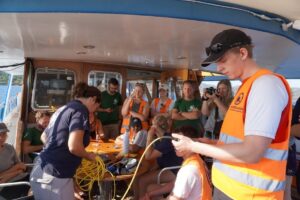 Of course, a lot of my effort goes into reading reports and inform myself about the best practice to model potential habitat distribution. As I am writing my Bachelors thesis about my project, research and writing makes up a large part of my time. To research intensively and actively get involved with the topic makes it even more interesting for me. The other part of my office hours I can luckily spend on the fun part – the practical one. For now, that mostly includes preparing the data for the software. The screenshots below for example show two steps during the preparation process. On the left side I calculated the mean chlorophyll concentration in Spring (2018 & 2019, data derived from marine.copernicus.eu), on the right there is the data prepared and ready to use for the software.
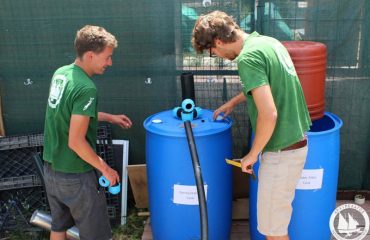
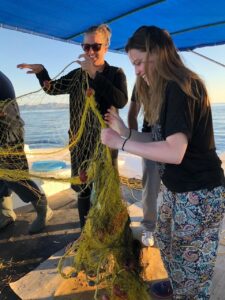 Besides working on my project, I like to help at the sanctuary. Doing some hard manual work once in a while helps me clear my head and gives me new energy. Off work we spend a lot of times playing games, doing sports or getting in touch with the locals and explore the island. Not only going for hikes and long walks of course, but also doing some swimming and snorkelling to experience first hand the marine life we are working on to conserve.
Paula Klück
Geoinformation and Environmental Technologies, Carinthia University of Applied Science, Austria
On-site intern at Archipelagos’ GIS and Marine Mammal Research Team