Archipelagos

  • English
  • Ελληνικα
Who We Are
The TeamThe Team
Research BasesResearch Bases
Research BoatsResearch Boats
Our EquipmentOur Equipment
PartnersPartners
SupportersSupporters
Fields of Action
Marine ConservationMarine Conservation Fisheries Shipping Risks Seagrass Meadows Coralligene Conservation Littoral Ecosystems Invasive Species Jellyfish Sea Turtles
Marine MammalsMarine Mammals Dolphins and Porpoises Whales Seals
Terrestrial ConservationTerrestrial Conservation Island Fauna Forests & Flora Freshwater Ecosystems Aegean Seed Bank
Laboratory ResearchLaboratory Research Microplastics Water Analysis Soil Quality
Projects
Aegean Marine Life Sanctuary
Eco-Navigation
FIsh4Life
Save the Aegean
Join Us
Internships in the Aegean
Remote Internships
Interns Experiences
Field Courses
News
Planting Underwater Gardens of Posidonia seagrass- a new innovative planting process
Aegean Islet Conservation Project in cooperation with the University of Toronto’s Faculty of Architecture
Mutilated Striped Dolphin Stranded on the shores of Samos Island
Posidonia Seagrass Fruits Wash up on Our Shores – A Rare Phenomenon
View All...
Contact us
Publications
Videos
Awareness Material
Donate
Menu

Remote Internship – GIS for Marine Conservation

Remote Internship – GIS for Marine Conservation

by Kleopatra Delaveri / Wednesday, 09 September 2020 / Published in GIS Team, Work Journal

As a geography student from Nottingham Trent University in the UK I worked on a remote internship programme using GIS with Archipelagos for six weeks, opening doors to a new field of research in marine conservation. I began my placement from home on 15th June 2020 where my pre-existing GIS skills were put to the test, tackling new spatial analysis problems and developing as a researcher.

I decided to apply for an internship here at Archipelagos back in January/February 2020 after seeing an advertisement via the university hub. The use of GIS and remote sensing within Greece sounded like an amazing opportunity so, with the level of confidence developed, I took the plunge.

Unfortunately, the rise of COVID-19 meant that the placement had to be cancelled but instead of this, I was offered a remote intern programme for six weeks to compensate for the missed real-life opportunity. The project I worked on was in relation to studying the presence and absence of Posidonia oceanica seagrass around the island of Samos with the aim of understanding how accurate different map datasets were for this particular species, endemic to the Mediterranean.

Literature Review

One of the main projects, which my supervisor was working on, was examining and evaluating a range of mapped datasets of Posidonia oceanica. This is a species of seagrass which provides essential ecosystem services such as food provision, coastal protection, carbon sequestration, increased water quality and life cycle maintenance. My task was to find out which mapped dataset was the most accurate at revealing the presence or absence of P. oceanica.

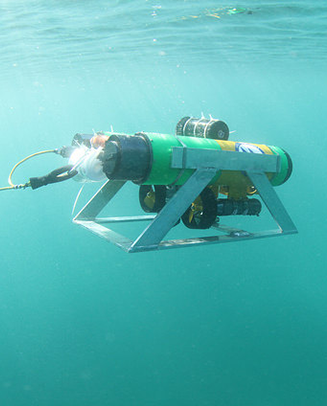
Before undertaking any GIS and spatial analysis, I produced a literature review to gain a deeper understanding of the range of methods involved to map P. oceanica, which ranged from satellite imagery, Side Scan Sonar (SSS), to Autonomous Underwater Vehicles (AUV). I was provided with datasets produced by the Greek government from 2015, a study undertaken by Topouzelis et al (2018) and also a study carried out Archipelagos itself. One of the maps I produced (below) shows the mapped comparison of the classified Greek Government (2015) and Archipelagos datasets in Samos, Greece produced by ArcGIS software where it is clear that the Archipelagos data has mapped a lot more of the specific seagrass species.

Confusion Matrices

To quantify the level of accuracy for each dataset, comparisons are made within a confusion matrix (left) where it is clear that the example supports the contention of the map (above) that the Archipelagos dataset was more accurate since the government dataset only produced a 59% overall accuracy with a low kappa Coefficient of 0.24.

Remote working

Despite the situation of working from home for six weeks and not being able to experience the local environment in the Aegean islands, I feel that I have quickly adapted during an unprecedented time which employers will certainly value more looking towards the future. I don’t think I’ve ever video called as much as I did during the placement but it has brought me out of my comfort zone in that respect so I don’t dread calling people as much as I used to!


Philip Gwynn
BSc Geography, Nottingham Trent University
Remote intern at Archipelagos GIS Team
0
0
0
0
0

What you can read next

Current Projects Regarding Microplastics and Plastic Pollution
Eco-Navigation: A Citizen Science Project
Evaluation of Macroplastic Debris on two Beaches of Samos Island

HIGHLIGHTS

  • International Visitors at the Aegean Marine Life Sanctuary Project

    International Visitors at the Aegean Marine Life Sanctuary Project

    1 June 2021
    At Archipelagos Institute of Marine Conservation an important visit took …
  • The Efkranti Award was Granted to the Archipelagos Institute of Marine Conservation

    The Efkranti Award was Granted to the Archipelagos Institute of Marine Conservation

    27 July 2020
    It was a great honor but also great moral support …
  • The President of the Hellenic Republic’s visit to Archipelagos research vessel, the Aegean Explorer

    The President of the Hellenic Republic’s visit to Archipelagos research vessel, the Aegean Explorer

    30 June 2020
    Yesterday, during the President of the Republic’s visit to the …
  • Award to Archipelagos: Best Heroic Act of Environmental Stewardship

    Award to Archipelagos: Best Heroic Act of Environmental Stewardship

    19 February 2020
    The Short Documentary Film presenting the Aegean Marine Life Sanctuary, …
  • Award to Archipelagos Institute from the International Propeller Club of the United States

    Award to Archipelagos Institute from the International Propeller Club of the United States

    6 February 2020
    We would like to thank the International Propeller Club of …

Recent Posts

  • Photo-ID & Behavioral Assessments of Delphinus delphis in the Northern Aegean Sea

    Photo-ID & Behavioral Assessments of Delphinus delphis in the Northern Aegean Sea

    2 November 2023
    Yasas! Intern Alannah from the Marine Mammal Field here, currently …
  • Experiences After Work at Archipelagos

    Experiences After Work at Archipelagos

    2 November 2023
    Hi, I’m Ella and I completed a 6-week internship on …
  • Hands-on Projects with the Marine Mammal Research & Conservation Team

    Hands-on Projects with the Marine Mammal Research & Conservation Team

    2 November 2023
    My name is Sjoerd and I am in the last …
  • Planting Underwater Gardens of Posidonia seagrass- a new innovative planting process

    Planting Underwater Gardens of Posidonia seagrass- a new innovative planting process

    29 June 2023
    An innovative process of planting underwater gardens of Posidonia oceanica …
  • A special three-day research expedition to the Ikaria Trench

    A special three-day research expedition to the Ikaria Trench

    19 May 2023
    Archipelagos Marine Mammal Research team took part in a very …
  • Aegean Islet Conservation Project in cooperation with the University of Toronto’s Faculty of Architecture

    Aegean Islet Conservation Project in cooperation with the University of Toronto’s Faculty of Architecture

    17 May 2023
    A new cycle of interdisciplinary on-site research of the Aegean …
  • Mutilated Striped Dolphin Stranded on the shores of Samos Island

    Mutilated Striped Dolphin Stranded on the shores of Samos Island

    12 May 2023
    A mutilated striped dolphin was found stranded on the north …

Subscribe to Our Newsletter

Archipelagos Institute of Marine Conservation is committed to researching and defending the biodiversity of the Greek seas and islands.

Our action is possible only with your help!

donate
  • Contact us
  • Placements

Archipelagos - Institute of Marine Conservation © All Rights Reserved || Developed Fekas Brothers

TOP