
Archipelagos

  • English
  • Ελληνικα
Who We Are
The TeamThe Team
Research BasesResearch Bases
Research BoatsResearch Boats
Our EquipmentOur Equipment
PartnersPartners
SupportersSupporters
Fields of Action
Marine ConservationMarine Conservation Fisheries Shipping Risks Seagrass Meadows Coralligene Conservation Littoral Ecosystems Invasive Species Jellyfish Sea Turtles
Marine MammalsMarine Mammals Dolphins and Porpoises Whales Seals
Terrestrial ConservationTerrestrial Conservation Island Fauna Forests & Flora Freshwater Ecosystems Aegean Seed Bank
Laboratory ResearchLaboratory Research Microplastics Water Analysis Soil Quality
Projects
Aegean Marine Life Sanctuary
Eco-Navigation
FIsh4Life
Save the Aegean
Join Us
Internships in the Aegean
Remote Internships
Interns Experiences
Field Courses
News
Planting Underwater Gardens of Posidonia seagrass- a new innovative planting process
Aegean Islet Conservation Project in cooperation with the University of Toronto’s Faculty of Architecture
Mutilated Striped Dolphin Stranded on the shores of Samos Island
Posidonia Seagrass Fruits Wash up on Our Shores – A Rare Phenomenon
View All...
Contact us
Publications
Videos
Awareness Material
Donate
Menu

Working towards an improving seagrass mapping methodology

Working towards an improving seagrass mapping methodology

by Kleopatra Delaveri / Monday, 15 February 2021 / Published in GIS Team, Intern Experience, Work Journal

I am a recent graduate student from the University of Birmingham, UK, with a BSc in Geography. The GIS and Remote Sensing internship at Archipelagos stood out to me as it combined independent field projects using a variety of remote sensing techniques with interesting data analysis on research that focus on the most vulnerable ecological communities in the Aegean.
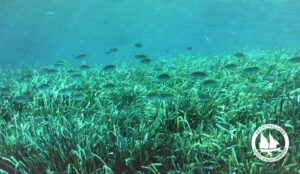
The Posidonia oceanica seagrass meadows – the forests of the Mediterranean Sea

Posidonia oceanica mapping project

The main goal when I arrived was to continue the work to accurately map the presence of Posidonia oceanica seagrass initially throughout Lipsi island and after further afar. This is an incredibly important project as this species of seagrass plays a crucial role in many ecosystem services including reducing coastal erosion, providing nursery grounds for marine wildlife, significant carbon sequestration and even sea water filtration.
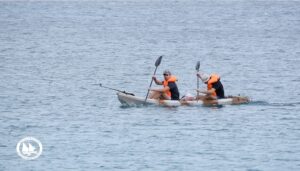
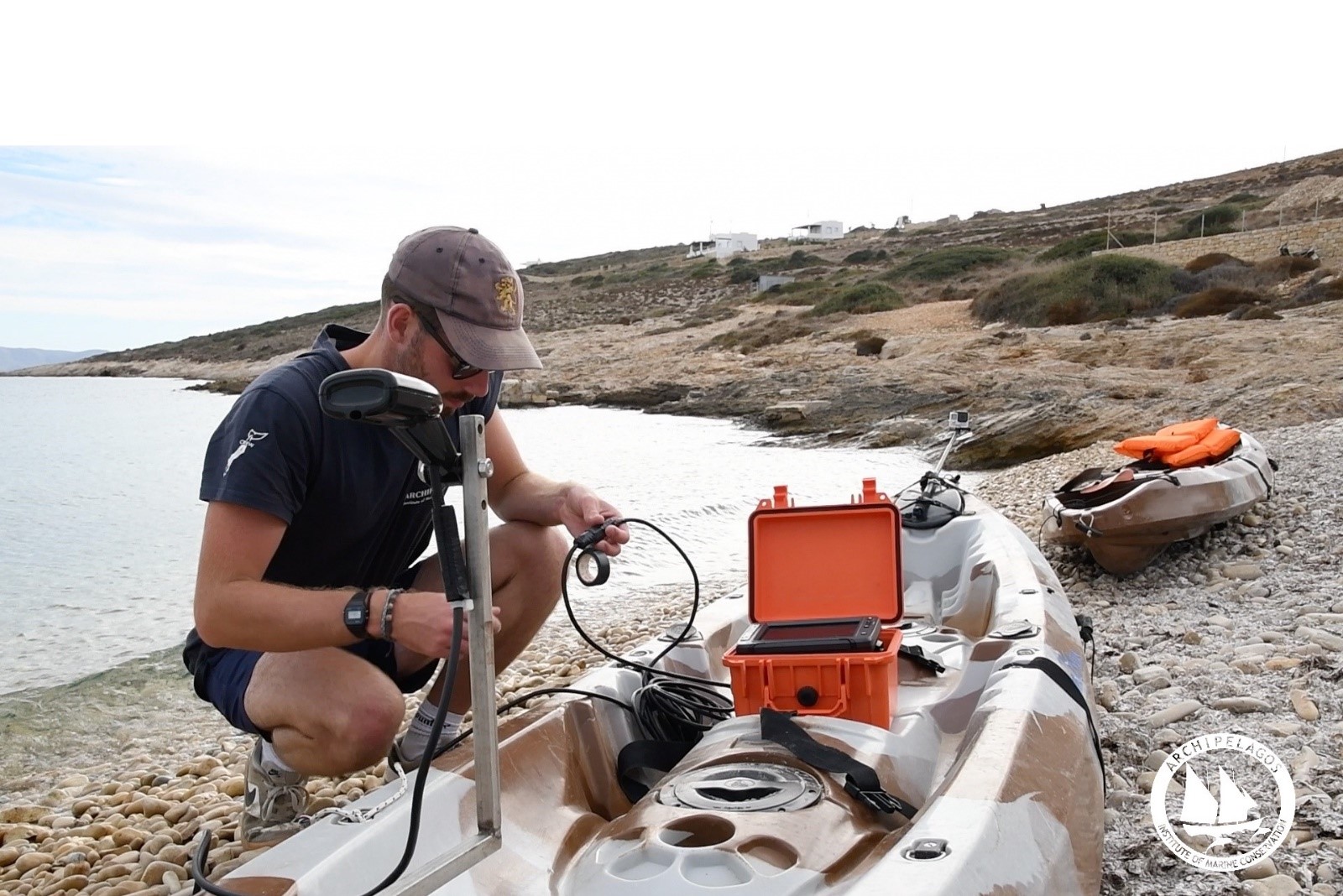
kayak-based surveys mapping the Posidonia oceanica seagrass meadows

The ecological and economic significance of this species has been under threat from eutrophication, climate change, coastal development and boat anchoring in shallow waters where this species thrives.
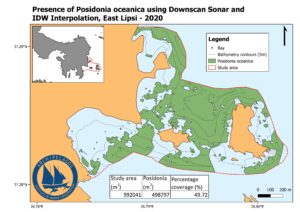
Accurately mapping seagrass presence in the Aegean is therefore incredibly important to gain a realistic measure of its distribution and to give accurate reference to areas most in need of ecological mooring sites. The latter is an ongoing project which Archipelagos are working on to help reduce the negative impact of anchoring on seagrass meadows. It was essential to collect as much accurate data as possible using dense kayak transects at sites that the previous research teams were unable to reach. Together with the GIS member Konstantis Alexopoulos, we have been able to map a large portion of the east side of Lipsi island which covered an area of about 1km2 and involved covering a total of 53km in transect lines.
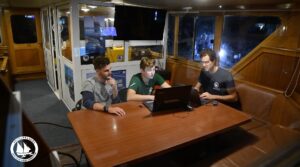
data analysis on the Aegean Explorer research vessel

Data analyses and Python

Another aspect of this internship which enticed me was to expand on my programming skills through Python by applying it to the field data we collected. I have been working on a series of Python Notebooks that use supervised and unsupervised classification techniques alongside object-orientated image analysis, to delineate the Posidonia oceanica extent using the drone footage to allow accurate comparisons of the field measurements. I am also planning to work on automatizing as many processes as possible with Python to reduce data processing time and remove subjective bias through the manual analysis of field measurements.
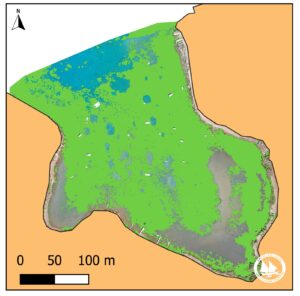
Distribution of seagrass using a supervised object-orientated classification on the collected drone footage

Part of the GIS work is to contribute to the spatial analysis of other research teams of Archipelagos such as dolphin and seabird sightings, marine litter and seagrass health datasets. It is interesting to use my GIS and programming skills to be able to aid the development and analyses of these other projects.

I have really enjoyed the independent research and hands-on approach here at Archipelagos. I have been able to build on my skills in GIS and apply them in the field. I had the freedom to explore and contribute to other projects throughout the organisation such as seagrass replanting, monk seal surveys and invasive species monitoring. My original plan was to be here for three months, but I have enjoyed my time so much that I have decided to extend my stay so that I can continue my research and build on this unique experience before I hope to start my masters programme in September 2021.


Billy Browning
BSc Geography
University of Birmingham, UK
0
0
0
0
0

What you can read next

Comparison of fish biodiversity and invasive fish species presence in different marine habitats, using remote underwater video method (RUV)Comparison of fish biodiversity and invasive fish species presence in different marine habitats, using remote underwater video method (RUV)
Dolphins’ interactions with fish farms & assess the marine litter in the Aegean Sea.
Population Assessment of the Mediterranean Chameleon

HIGHLIGHTS

  • International Visitors at the Aegean Marine Life Sanctuary Project

    International Visitors at the Aegean Marine Life Sanctuary Project

    1 June 2021
    At Archipelagos Institute of Marine Conservation an important visit took …
  • The Efkranti Award was Granted to the Archipelagos Institute of Marine Conservation

    The Efkranti Award was Granted to the Archipelagos Institute of Marine Conservation

    27 July 2020
    It was a great honor but also great moral support …
  • The President of the Hellenic Republic’s visit to Archipelagos research vessel, the Aegean Explorer

    The President of the Hellenic Republic’s visit to Archipelagos research vessel, the Aegean Explorer

    30 June 2020
    Yesterday, during the President of the Republic’s visit to the …
  • Award to Archipelagos: Best Heroic Act of Environmental Stewardship

    Award to Archipelagos: Best Heroic Act of Environmental Stewardship

    19 February 2020
    The Short Documentary Film presenting the Aegean Marine Life Sanctuary, …
  • Award to Archipelagos Institute from the International Propeller Club of the United States

    Award to Archipelagos Institute from the International Propeller Club of the United States

    6 February 2020
    We would like to thank the International Propeller Club of …

Recent Posts

  • Photo-ID & Behavioral Assessments of Delphinus delphis in the Northern Aegean Sea

    Photo-ID & Behavioral Assessments of Delphinus delphis in the Northern Aegean Sea

    2 November 2023
    Yasas! Intern Alannah from the Marine Mammal Field here, currently …
  • Experiences After Work at Archipelagos

    Experiences After Work at Archipelagos

    2 November 2023
    Hi, I’m Ella and I completed a 6-week internship on …
  • Hands-on Projects with the Marine Mammal Research & Conservation Team

    Hands-on Projects with the Marine Mammal Research & Conservation Team

    2 November 2023
    My name is Sjoerd and I am in the last …
  • Planting Underwater Gardens of Posidonia seagrass- a new innovative planting process

    Planting Underwater Gardens of Posidonia seagrass- a new innovative planting process

    29 June 2023
    An innovative process of planting underwater gardens of Posidonia oceanica …
  • A special three-day research expedition to the Ikaria Trench

    A special three-day research expedition to the Ikaria Trench

    19 May 2023
    Archipelagos Marine Mammal Research team took part in a very …
  • Aegean Islet Conservation Project in cooperation with the University of Toronto’s Faculty of Architecture

    Aegean Islet Conservation Project in cooperation with the University of Toronto’s Faculty of Architecture

    17 May 2023
    A new cycle of interdisciplinary on-site research of the Aegean …
  • Mutilated Striped Dolphin Stranded on the shores of Samos Island

    Mutilated Striped Dolphin Stranded on the shores of Samos Island

    12 May 2023
    A mutilated striped dolphin was found stranded on the north …

Subscribe to Our Newsletter

Archipelagos Institute of Marine Conservation is committed to researching and defending the biodiversity of the Greek seas and islands.

Our action is possible only with your help!

donate
  • Contact us
  • Placements

Archipelagos - Institute of Marine Conservation © All Rights Reserved || Developed Fekas Brothers

TOP