Archipelagos

  • English
  • Ελληνικα
Who We Are
The TeamThe Team
Research BasesResearch Bases
Research BoatsResearch Boats
Our EquipmentOur Equipment
PartnersPartners
SupportersSupporters
Fields of Action
Marine ConservationMarine Conservation Fisheries Shipping Risks Seagrass Meadows Coralligene Conservation Littoral Ecosystems Invasive Species Jellyfish Sea Turtles
Marine MammalsMarine Mammals Dolphins and Porpoises Whales Seals
Terrestrial ConservationTerrestrial Conservation Island Fauna Forests & Flora Freshwater Ecosystems Aegean Seed Bank
Laboratory ResearchLaboratory Research Microplastics Water Analysis Soil Quality
Projects
Aegean Marine Life Sanctuary
Eco-Navigation
FIsh4Life
Save the Aegean
Join Us
Internships in the Aegean
Remote Internships
Interns Experiences
Field Courses
News
Planting Underwater Gardens of Posidonia seagrass- a new innovative planting process
Aegean Islet Conservation Project in cooperation with the University of Toronto’s Faculty of Architecture
Mutilated Striped Dolphin Stranded on the shores of Samos Island
Posidonia Seagrass Fruits Wash up on Our Shores – A Rare Phenomenon
View All...
Contact us
Publications
Videos
Awareness Material
Donate
Menu

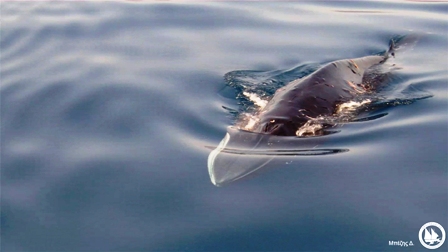
A rare fin whale visit to the Saronic Gulf

A rare fin whale visit to the Saronic Gulf

by Archipelagos / Friday, 25 May 2012 / Published in Marine Mammals

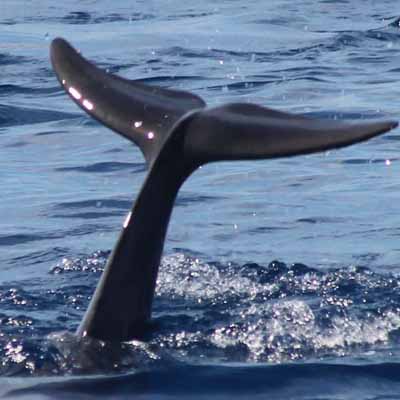
A young, 14-metre long fin whale was identified in the Saronic Gulf on Wednesday the 16th of May, by a member of Archipelagos’ observation network.  This impressive mammal was spotted in the NW region of Aegina, remaining in the gulf for two days to feed, and then departing in an unknown direction.  The research team of Archipelagos, for obvious reasons related to the safety of the animal, did not announce the event in real time.

The whales of the Greek seas are still largely unknown to the public, a fact that shows the general ignorance about this unique sea and the rare biodiversity it supports. Although the international scientific community recognizes that the northeast Mediterranean, and especially the Aegean Sea, support one of the most important marine mammal populations remaining in the Mediterranean, the absence of management, protection measures, and environmental awareness, is creating a dangerous scenario for the survival of this great biodiversity and natural heritage. The future of marine mammals and other rare species living in the Greek seas is increasingly threatened every day by human activities.

The high traffic of commercial vessels without central control or prevention measures in place, the absence of an effective plan to manage a marine accident, and the rising pollution of marine ecosystems, all threaten the rich wildlife diversity of Greek marine ecosystems.  There is an urgent need for the implementation of basic efficient management measures to protect the Greek seas and its unique biodiversity. Through systematic research and active conservation actions, Archipelagos (www.archipelago.gr) works to spread awareness, engage a broad group of stakeholders and the wider public in conservation efforts, and urge the national and EU authorities to increase the effectiveness of conservation measures.

About fin whales (Balaenoptera physalus)

The fin whale is a species that occasionally crosses the Greek seas, more frequently recorded in the Ionian Sea than the Aegean. It can reach a maximum length of 25 metres, can weigh up to 40-60 tones, and has a life expectancy that can exceed 80 years. It is dark grey on the back and white on the belly. It swims at a maximum speed of up to 14 knots and dives to depths reaching 400metres, with an impressive expiration reaching a height of 6 metres. Fin whales mainly feed on small fish and zooplankton.

An increasing threat to fin whales are vessel strikes and collision, especially with large ships travelling at high speed, which is now recognized as one of the leading causes of death. The exact population size of this species is unknown, but in the Mediterranean Sea it is estimated to be fewer than 10.000 adult individuals, therefore we must act now to conserve this giant of the sea.
0
0
0
0
0

What you can read next

Young Fin whale found stranded on the shores of Kiparissia, NW Greece
Aegean Sea: An important hotspot for Cetaceans
Another Deliberate Killing of a Monk Seal

HIGHLIGHTS

  • International Visitors at the Aegean Marine Life Sanctuary Project

    International Visitors at the Aegean Marine Life Sanctuary Project

    1 June 2021
    At Archipelagos Institute of Marine Conservation an important visit took …
  • The Efkranti Award was Granted to the Archipelagos Institute of Marine Conservation

    The Efkranti Award was Granted to the Archipelagos Institute of Marine Conservation

    27 July 2020
    It was a great honor but also great moral support …
  • The President of the Hellenic Republic’s visit to Archipelagos research vessel, the Aegean Explorer

    The President of the Hellenic Republic’s visit to Archipelagos research vessel, the Aegean Explorer

    30 June 2020
    Yesterday, during the President of the Republic’s visit to the …
  • Award to Archipelagos: Best Heroic Act of Environmental Stewardship

    Award to Archipelagos: Best Heroic Act of Environmental Stewardship

    19 February 2020
    The Short Documentary Film presenting the Aegean Marine Life Sanctuary, …
  • Award to Archipelagos Institute from the International Propeller Club of the United States

    Award to Archipelagos Institute from the International Propeller Club of the United States

    6 February 2020
    We would like to thank the International Propeller Club of …

Recent Posts

  • Photo-ID & Behavioral Assessments of Delphinus delphis in the Northern Aegean Sea

    Photo-ID & Behavioral Assessments of Delphinus delphis in the Northern Aegean Sea

    2 November 2023
    Yasas! Intern Alannah from the Marine Mammal Field here, currently …
  • Experiences After Work at Archipelagos

    Experiences After Work at Archipelagos

    2 November 2023
    Hi, I’m Ella and I completed a 6-week internship on …
  • Hands-on Projects with the Marine Mammal Research & Conservation Team

    Hands-on Projects with the Marine Mammal Research & Conservation Team

    2 November 2023
    My name is Sjoerd and I am in the last …
  • Planting Underwater Gardens of Posidonia seagrass- a new innovative planting process

    Planting Underwater Gardens of Posidonia seagrass- a new innovative planting process

    29 June 2023
    An innovative process of planting underwater gardens of Posidonia oceanica …
  • A special three-day research expedition to the Ikaria Trench

    A special three-day research expedition to the Ikaria Trench

    19 May 2023
    Archipelagos Marine Mammal Research team took part in a very …
  • Aegean Islet Conservation Project in cooperation with the University of Toronto’s Faculty of Architecture

    Aegean Islet Conservation Project in cooperation with the University of Toronto’s Faculty of Architecture

    17 May 2023
    A new cycle of interdisciplinary on-site research of the Aegean …
  • Mutilated Striped Dolphin Stranded on the shores of Samos Island

    Mutilated Striped Dolphin Stranded on the shores of Samos Island

    12 May 2023
    A mutilated striped dolphin was found stranded on the north …

Subscribe to Our Newsletter

Archipelagos Institute of Marine Conservation is committed to researching and defending the biodiversity of the Greek seas and islands.

Our action is possible only with your help!

donate
  • Contact us
  • Placements

Archipelagos - Institute of Marine Conservation © All Rights Reserved || Developed Fekas Brothers

TOP