Archipelagos

  • English
  • Ελληνικα
Who We Are
The TeamThe Team
Research BasesResearch Bases
Research BoatsResearch Boats
Our EquipmentOur Equipment
PartnersPartners
SupportersSupporters
Fields of Action
Marine ConservationMarine Conservation Fisheries Shipping Risks Seagrass Meadows Coralligene Conservation Littoral Ecosystems Invasive Species Jellyfish Sea Turtles
Marine MammalsMarine Mammals Dolphins and Porpoises Whales Seals
Terrestrial ConservationTerrestrial Conservation Island Fauna Forests & Flora Freshwater Ecosystems Aegean Seed Bank
Laboratory ResearchLaboratory Research Microplastics Water Analysis Soil Quality
Projects
Aegean Marine Life Sanctuary
Eco-Navigation
FIsh4Life
Save the Aegean
Join Us
Internships in the Aegean
Remote Internships
Interns Experiences
Field Courses
News
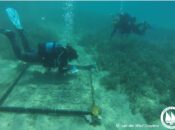
Planting Underwater Gardens of Posidonia seagrass- a new innovative planting process
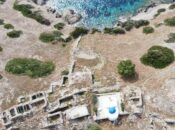
Aegean Islet Conservation Project in cooperation with the University of Toronto’s Faculty of Architecture
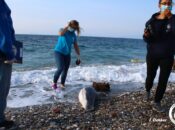
Mutilated Striped Dolphin Stranded on the shores of Samos Island
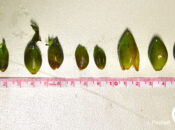
Posidonia Seagrass Fruits Wash up on Our Shores – A Rare Phenomenon
View All...
Contact us
Publications
Videos
Awareness Material
Donate
Menu

Admiration for Cetacean Communication

Admiration for Cetacean Communication

by Kleopatra Delaveri / Monday, 22 April 2019 / Published in Intern Experience, Marine Mammal Team, Work Journal

Since working with Archipelagos, specifically on a project monitoring the bioacoustics of cetaceans, Bethan Jones has developed an admiration for how cetaceans communicate. As a member of the marine mammal team, she is specialising in burst pulses (a series of rapid clicks) looking specifically at the  Delphinus delphis (Common Dolphin) and Tursiops truncatus (Bottlenose Dolphin). These species rely on underwater sounds including echolocation clicks which are short broadband clicks essential for navigation and foraging for food.

[siteorigin_widget class=”WP_Widget_Media_Image”][/siteorigin_widget]

The marine mammal team is currently focusing on several bioacoustics projects, however this particular project, was designed to understand the vocal behaviour of these cetaceans, including communication and mapping of the distribution of these species. A typical day for Beth involves analysing hydrophone recordings collected from September 2017 until September 2018 in order to pinpoint the burst pulses for Common Dolphin and Bottlenose Dolphin. “Once I have found the burst pulses, I am recording the different measurements of each one. The duration, the inter-click interval (time between the clicks), repetition rate (how many clicks within a second) bandwidth 90% (the bandwidth of the click) rms amplitude and harmonics. They are also measured in different frequencies, minimum frequency, peak frequency and interquartile frequency.” After identifying and categorising the specific category of burst pulses they are, she compares the two species Common Dolphin and Bottlenose Dolphin.

[siteorigin_widget class=”WP_Widget_Media_Image”][/siteorigin_widget]

Beth is studying biological sciences at Cardiff University, Beth secured her 10 month placement at Archipelagos, and currently has 2 months remaining. She claims “it has been useful working for a longer period of time, as it gave me more time to work out what projects are happening and then focus on something I’m passionate about.” One particular aspect of the internship Beth likes is the opportunity to work on multiple projects, “I really like the flexibility.” Other marine mammal surveys she is involved with at Archipelagos include the Monk seal observational survey, a twice daily survey used to monitor the abundance of this endangered species.

[siteorigin_widget class=”WP_Widget_Media_Image”][/siteorigin_widget]

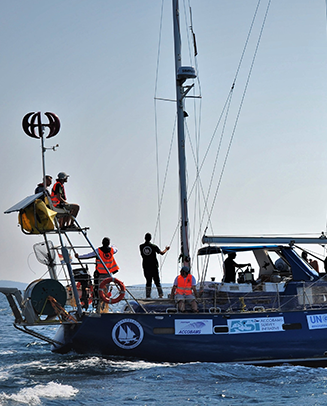
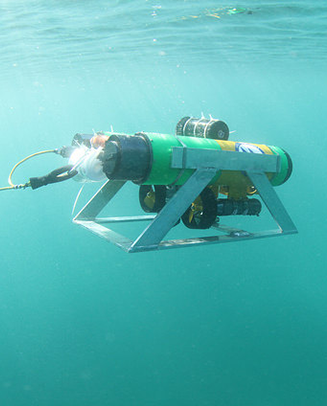
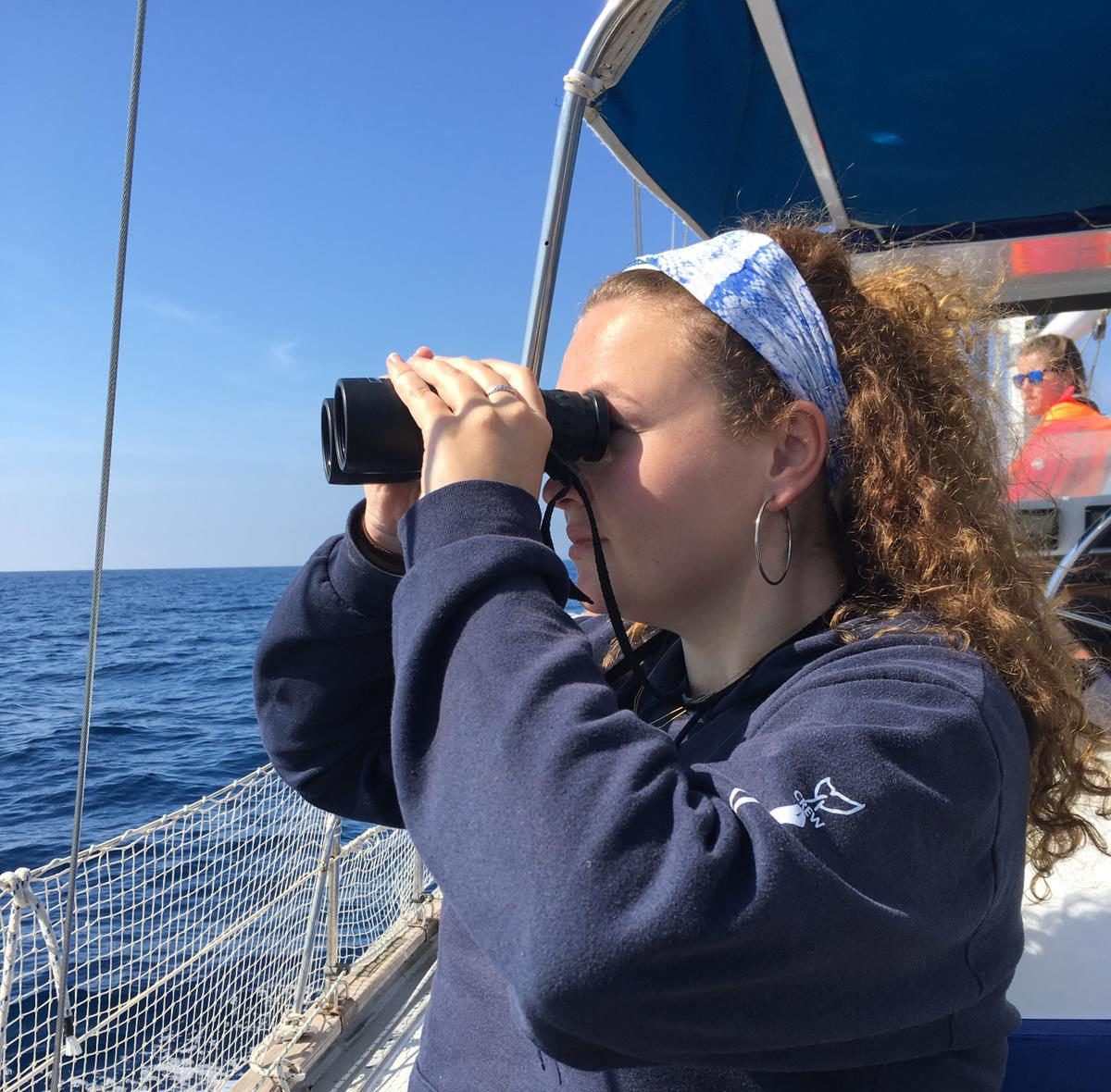
Eight months into her internship, Beth reflects on the new skills she has acquired, “I had never worked with bioacoustics before, but I know quite a lot about it now, for instance using RavenPro, a software I am now proficient in.” In addition to working on time management skills, Beth has developed important field research techniques such as using the hydrophone array system– a sophisticated microphone designed to be used underwater for recording and monitoring of underwater sounds. As well as this she has developed observational skills essential for boat surveys and also are transferable to other marine mammal surveys. Generally, Beth prefers the field work aspects of her project, “I really enjoying being out on the boat, it’s nice to get out of the office, especially as sitting through the hydrophone recordings can be repetitive.”

[siteorigin_widget class=”WP_Widget_Media_Image”][/siteorigin_widget]

When asked about any significant results Beth responded “I’m still in the analysis stage so I haven’t got concrete results yet, however burst pulses are under researched therefore any research on burst pulses will be useful.” The findings will work as a great baseline for future work to build upon, regarding the communication between cetaceans and assessing what impacts the way they communicate. After Archipelagos, Beth intends to finish her degree and move on to do further conservation work.
0
0
0
0
0

What you can read next

Scouts Visit at Archipelagos Institute
Research Assessing the Dietary Preferences of Golden Jackals
Development of a Methodology to Assess Anchor Damages on Posidonia Seagrass Meadows

HIGHLIGHTS

  • International Visitors at the Aegean Marine Life Sanctuary Project

    International Visitors at the Aegean Marine Life Sanctuary Project

    1 June 2021
    At Archipelagos Institute of Marine Conservation an important visit took …
  • The Efkranti Award was Granted to the Archipelagos Institute of Marine Conservation

    The Efkranti Award was Granted to the Archipelagos Institute of Marine Conservation

    27 July 2020
    It was a great honor but also great moral support …
  • The President of the Hellenic Republic’s visit to Archipelagos research vessel, the Aegean Explorer

    The President of the Hellenic Republic’s visit to Archipelagos research vessel, the Aegean Explorer

    30 June 2020
    Yesterday, during the President of the Republic’s visit to the …
  • Award to Archipelagos: Best Heroic Act of Environmental Stewardship

    Award to Archipelagos: Best Heroic Act of Environmental Stewardship

    19 February 2020
    The Short Documentary Film presenting the Aegean Marine Life Sanctuary, …
  • Award to Archipelagos Institute from the International Propeller Club of the United States

    Award to Archipelagos Institute from the International Propeller Club of the United States

    6 February 2020
    We would like to thank the International Propeller Club of …

Recent Posts

  • Photo-ID & Behavioral Assessments of Delphinus delphis in the Northern Aegean Sea

    Photo-ID & Behavioral Assessments of Delphinus delphis in the Northern Aegean Sea

    2 November 2023
    Yasas! Intern Alannah from the Marine Mammal Field here, currently …
  • Experiences After Work at Archipelagos

    Experiences After Work at Archipelagos

    2 November 2023
    Hi, I’m Ella and I completed a 6-week internship on …
  • Hands-on Projects with the Marine Mammal Research & Conservation Team

    Hands-on Projects with the Marine Mammal Research & Conservation Team

    2 November 2023
    My name is Sjoerd and I am in the last …
  • Planting Underwater Gardens of Posidonia seagrass- a new innovative planting process

    Planting Underwater Gardens of Posidonia seagrass- a new innovative planting process

    29 June 2023
    An innovative process of planting underwater gardens of Posidonia oceanica …
  • A special three-day research expedition to the Ikaria Trench

    A special three-day research expedition to the Ikaria Trench

    19 May 2023
    Archipelagos Marine Mammal Research team took part in a very …
  • Aegean Islet Conservation Project in cooperation with the University of Toronto’s Faculty of Architecture

    Aegean Islet Conservation Project in cooperation with the University of Toronto’s Faculty of Architecture

    17 May 2023
    A new cycle of interdisciplinary on-site research of the Aegean …
  • Mutilated Striped Dolphin Stranded on the shores of Samos Island

    Mutilated Striped Dolphin Stranded on the shores of Samos Island

    12 May 2023
    A mutilated striped dolphin was found stranded on the north …

Subscribe to Our Newsletter

Archipelagos Institute of Marine Conservation is committed to researching and defending the biodiversity of the Greek seas and islands.

Our action is possible only with your help!

donate
  • Contact us
  • Placements

Archipelagos - Institute of Marine Conservation © All Rights Reserved || Developed Fekas Brothers

TOP