



Identification of Bioindicator Species in the NE Aegean and Creation of a Photo Guide
Friday, 11 August 2017
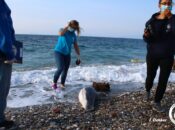
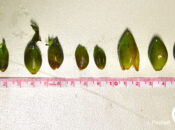
The Marine Conservation Team of Archipelagos Institute has started to use marine bioindicator species to monitor ecosystems of the littoral zone. Bioindicator species are species which only can sustain within high quality environmental conditions. The use of Bioindicator Species is becoming of increasing importance as they can tell us more about the cumulative effects of
- Published in Intern Experience, Marine Conservation Team, Work Journal
Daily Monitoring of Macroplastics
Friday, 11 August 2017
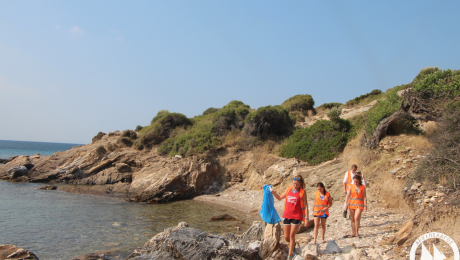
The long-term macroplastic monitoring project began in early June 2017 and has since been carried out almost daily in two beaches of SE Samos. Every weekday, two members of the research team go to the sites to collect all the debris left by the public and washed in by the sea. All the collected debris
- Published in Intern Experience, Marine Conservation Team, Work Journal
The Influence of Environmental Factors on the Spatial Distribution of Dolphin Populations in the Aegean Sea
Friday, 04 August 2017
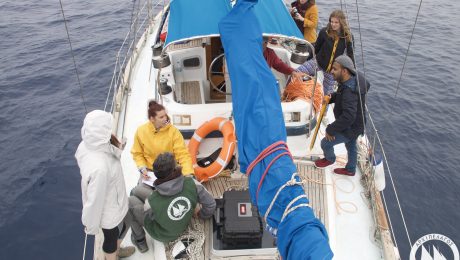
Due to the large biodiversity of cetacean species inhabiting its waters, the Aegean Sea is considered an incredibly important marine area. Archipelagos Institute is conducting a study about the influence of environmental factors on the spatial distribution of dolphins. In particular, this study is focused on two dolphin species that are facing a dramatic population
- Published in Intern Experience, Marine Mammal Team, Work Journal
Μapping of Posidonia oceanica using a Drone
Friday, 04 August 2017
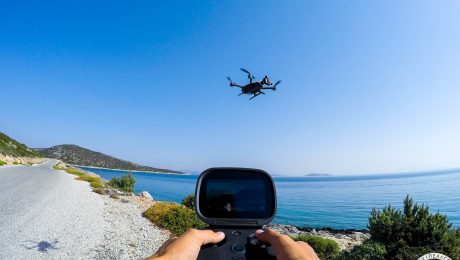
Posidonia oceanica is an endemic seagrass species in the Mediterranean Sea. It has a key ecological role and many impacts on its ecosystem. Its role in fisheries production and in sediment stabilization are well-known. In fact, seagrass meadows provide habitats for a number of threatened species. However, throughout the Mediterranean these meadows are declining at
- Published in GIS Team, Intern Experience, Marine Conservation Team, Work Journal
Ocean Acidification Effects on Venus casina Shells: A Preliminary Experimental Project
Wednesday, 02 August 2017
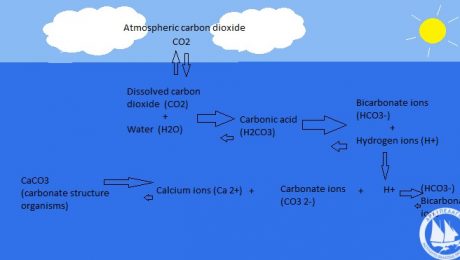
The Ocean Acidification (OA) problem is referred to a reduction of the sea water pH caused primarily by the anthropogenic increasing uptake of CO2 from the atmosphere. There is a direct relationship between atmospheric CO2 and ocean pH: as CO2[atm]-uptake increases, the pH drops. Industrial activities have resulted in an increase in atmospheric CO2 concentrations
- Published in Intern Experience, Marine Conservation Team, Work Journal
Development of a Spatio-Temporal Model as a Prediction Indicator of Cetacean Strandings in the Eastern Aegean Sea
Tuesday, 01 August 2017
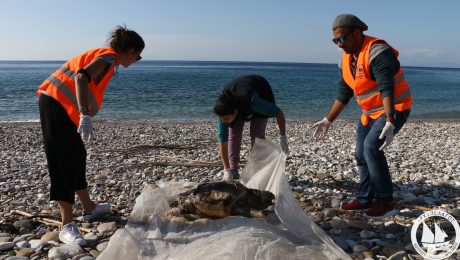
Numerous reasons are known as to why marine mammals strand, however, unfortunately it would seem the case that human activity is be a key contributor to these deaths. Data has been collected by the Archipelagos Institute of Marine Conservation ranging from 1994 to the present day, incorporating factors such as seasonality, cause of death, condition
- Published in Intern Experience, Marine Mammal Team, Work Journal
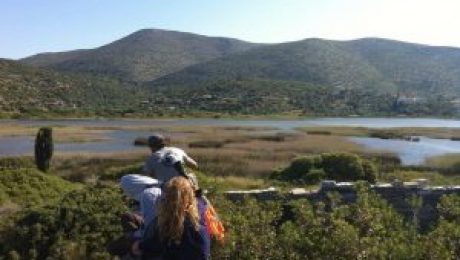
Monitoring the Bird Populations in the Wetlands of Samos
Tuesday, 01 August 2017
The Psili Ammos wetland on Samos is a very valuable habitat for many different bird species, including breeding, migratory, endemic, and threatened species. However, for the past five years or so, there have been increasing human impacts including illegal bird hunting, illegal joyriding with quad bikes within the dry wetland in the summer months and
- Published in Intern Experience, Terrestrial Conservation Team, Work Journal
Eco-Navigation: A Citizen Science Platform for Sailors and Sea Enthusiasts to Report Their Observations
Tuesday, 01 August 2017
Eco-Navigation is a key action developed by Archipelagos Institute, aiming to increase awareness but also public engagement on the biodiversity and conservation of the Mediterranean Sea. Eco-Navigation aims to record valuable data, through reported sightings by sailors and sea enthusiasts on their observations of rare and protected animals such as marine mammals and turtles, or
- Published in Intern Experience, Marine Mammal Team, Work Journal
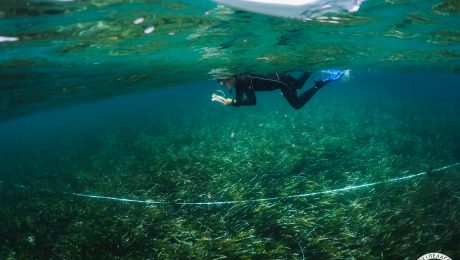
Invasive Algae Caulerpa cylindracea: Factors and Consequences of the Distribution in Aegean Sea
Tuesday, 01 August 2017
With climate change and ocean acidification of the seas, more alien species are spreading in our seas. The green macroalgae, Caulerpa cylindracea, is considered an invasive species native from Australia that has rapidly spread across the Mediterranean since 1926. C. cylindracea colonises a variety of substrata, and its dominating presence has been found to alter
- Published in Intern Experience, Marine Conservation Team, Work Journal
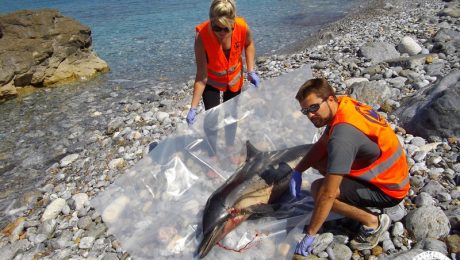
Quantification of Microplastics in Dolphin Digestive Systems
Friday, 28 July 2017
With the worldwide increase in the production of plastics over the last century, in combination with the overall lack of plastic waste management, the impact of plastics on marine environments has become a critical concern. Microplastics develop from the degradation of larger plastics, such as plastic bottles, bags, and many other improperly discarded objects, that
- Published in Intern Experience, Marine Mammal Team, Microplastic Team, Work Journal