


Experimental Design and Assessment of Artificial Reefs
Monday, 04 June 2018
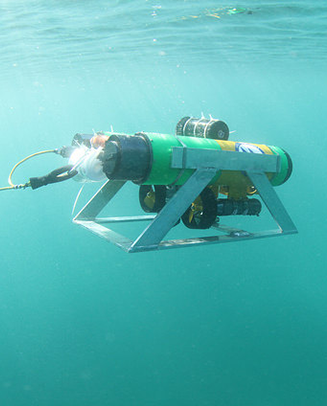
What is an artificial reef and why are we developing and using one? The artificial reef project has been ongoing since March 2017. It is a long-term project with the aim to successfully create reefs that increase biodiversity in the surrounding waters. The project is still in its experimental stage, but the long-term aim is
- Published in Intern Experience, Marine Conservation Team, Work Journal
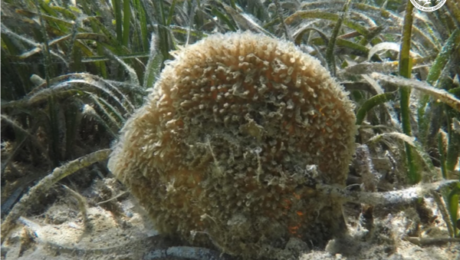
How eDNA is helping to Cast Light on the Noble Pen Shell
Monday, 04 June 2018
Have you ever stood on the shoreline, with waves lapping back and forth and allowed your mind to dive down into the mysterious world that lies beneath the waves? What creatures prowl the depth in search of their next meal? Dolphins, Sharks, Giant squid? What if I tell you that this mystery can be solved
- Published in Intern Experience, Marine Conservation Team, Work Journal
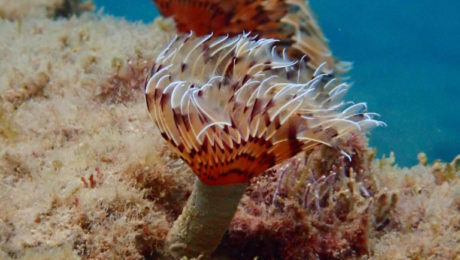
Changing Biodiversity of Invertebrate Populations
Thursday, 15 March 2018
Mankind is having a major impact on every ecosystem on earth. From the very tops of the tallest peaks to the deepest abysses in our oceans, the world is changing, and how we measure these impacts, is also changing. Bioindicator species are helping us understand how we have affected our world and can even
- Published in Intern Experience, Marine Conservation Team, Work Journal
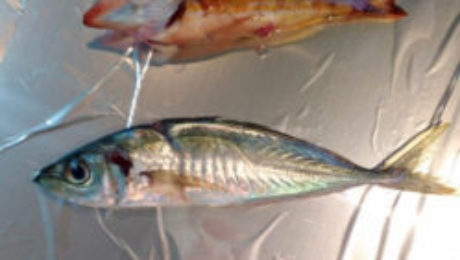
Microplastics in Edible Fish and Invertebrates
Thursday, 15 March 2018
Microplastics content found in edible fish and invertebrate species of the Eastern Aegean Sea, February 2018 The increasing abundance of marine plastic debris is a worldwide issue and it represents a critical threat in areas such as the Mediterranean Sea. Many studies so far already documented the negative effects of this global issue on marine
- Published in Intern Experience, Marine Conservation Team, Microplastic Team, Work Journal
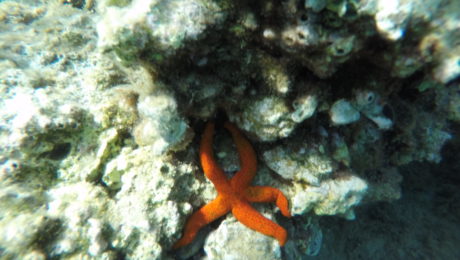
Abundance and Distribution of Echinoderms Throughout the Island of Samos
Tuesday, 30 January 2018
Echinoderms play an important role in marine, benthic ecosystems. They can be both carnivorous or, most importantly, grazers. The grazing of sea urchins specifically reduces the rate of colonization on bare rocks by settling organisms. This keeps algae in check, thereby enhancing the biodiversity of coral reefs. Despite that, echinoderms sometimes have large population swings
- Published in Intern Experience, Marine Conservation Team, Work Journal
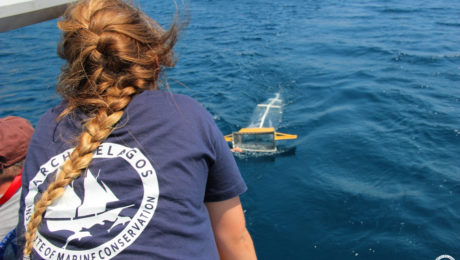
Determining the Ratio of Microplastic in Zooplankton in Surface Waters Surrounding Samos Island
Thursday, 21 December 2017
The presence of vast amounts of plastics in our oceans is cause for great concern for our marine wildlife due to their toxicity, persistence and ubiquity. With the production of plastics increasing, these pollutants are entering our oceans and breaking down into microplastics (MPs) at an ever-increasing rate. Microplastics are buoyant fragments of <5mm which
- Published in Intern Experience, Marine Conservation Team, Microplastic Team, Work Journal
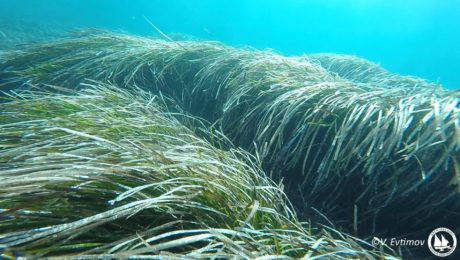
Maritime Traffic Impact on Seagrass Vitality and Invertebrate Richness
Thursday, 07 December 2017
Seagrass plays a vital role in the health of coastal ecosystems all across the world. It is useful in sediment stabilization and carbon storage, and it supports a very diverse set of organisms. The seagrass beds often house commercial invertebrate and fish species, and are therefore not only ecologically important but economically, as well. Seagrasses
- Published in Intern Experience, Marine Conservation Team, Work Journal
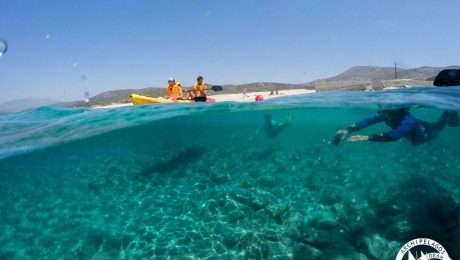
Identification of Bioindicator Species in the NE Aegean and Creation of a Photo Guide
Friday, 11 August 2017
The Marine Conservation Team of Archipelagos Institute has started to use marine bioindicator species to monitor ecosystems of the littoral zone. Bioindicator species are species which only can sustain within high quality environmental conditions. The use of Bioindicator Species is becoming of increasing importance as they can tell us more about the cumulative effects of
- Published in Intern Experience, Marine Conservation Team, Work Journal
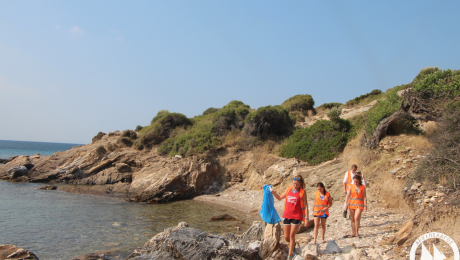
Daily Monitoring of Macroplastics
Friday, 11 August 2017
The long-term macroplastic monitoring project began in early June 2017 and has since been carried out almost daily in two beaches of SE Samos. Every weekday, two members of the research team go to the sites to collect all the debris left by the public and washed in by the sea. All the collected debris
- Published in Intern Experience, Marine Conservation Team, Work Journal
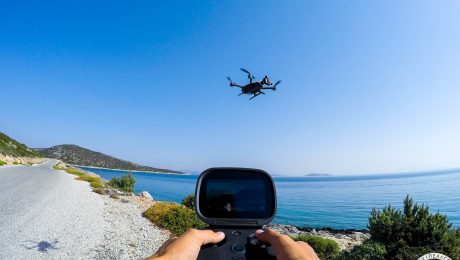
Μapping of Posidonia oceanica using a Drone
Friday, 04 August 2017
Posidonia oceanica is an endemic seagrass species in the Mediterranean Sea. It has a key ecological role and many impacts on its ecosystem. Its role in fisheries production and in sediment stabilization are well-known. In fact, seagrass meadows provide habitats for a number of threatened species. However, throughout the Mediterranean these meadows are declining at
- Published in GIS Team, Intern Experience, Marine Conservation Team, Work Journal