




Admiration for Cetacean Communication
Monday, 22 April 2019
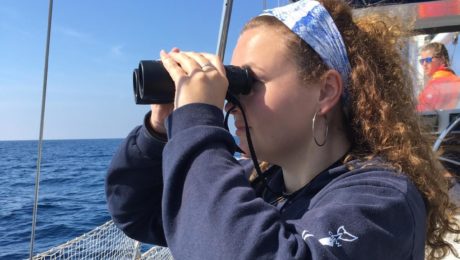
Since working with Archipelagos, specifically on a project monitoring the bioacoustics of cetaceans, Bethan Jones has developed an admiration for how cetaceans communicate. As a member of the marine mammal team, she is specialising in burst pulses (a series of rapid clicks) looking specifically at the Delphinus delphis (Common Dolphin) and Tursiops truncatus (Bottlenose Dolphin).
- Published in Intern Experience, Marine Mammal Team, Work Journal

Fighting for a Protected Species
Friday, 01 March 2019
Jack, a 21-year-old Biological Sciences student at Cardiff University, introduces himself hiding a little smirk. He knows that I am going to ask him about Monk Seals and the bad luck he’s known for having when it comes to spotting them… He is one of our long-term interns who arrived in August 2018 for his
- Published in Intern Experience, Marine Mammal Team, Work Journal
Acoustic Monitoring of Marine Mammals
Friday, 07 December 2018
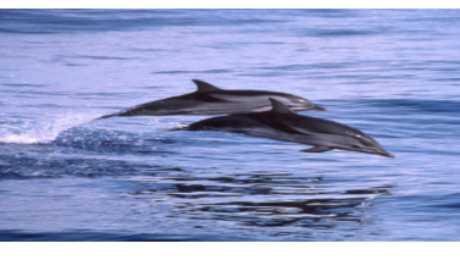
Bioacoustics is the study of sound produced by living organisms and how sound affects them. It’s an important area of research especially in the marine world as sound is amplified underwater and acoustic interactions are thought to be just as important as visual interaction. Cetaceans produce 3 distinct types of noise: Whistles – This type
- Published in Intern Experience, Marine Mammal Team, Work Journal
Study of Cetacean Population Dynamics Through Photo Identification Methodology
Friday, 07 December 2018
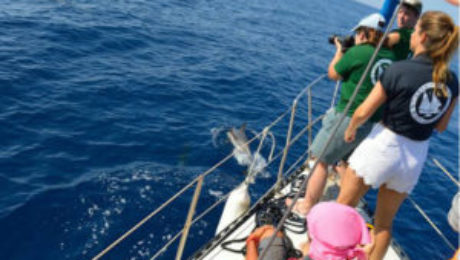
Recognising an individual within a study population is a key issue in many behavioural and ecological studies of animals. A good method for this is photo-identification (photo-ID), a technique that is based on the repeated identification of individuals through pictures. It is an important, non-invasive tool since marine mammals do not have to be physically
- Published in Intern Experience, Marine Mammal Team, Work Journal
Eco-Navigation: Our Citizen Science Platform
Monday, 02 July 2018
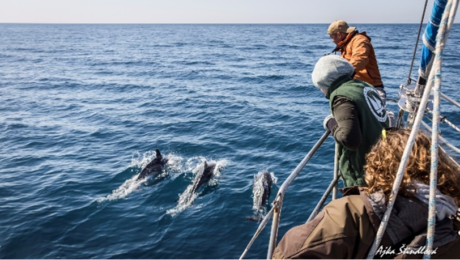
The Aegean Sea hosts some of the most important remaining marine mammal and sea turtle populations in the Mediterranean. Thanks to their unique biodiversity and pristine waters, the islands attract many sea enthusiasts all year long, especially during the summer season. Bad encounters between boats and mammals are common and can have disastrous consequences for animals.
- Published in Intern Experience, Marine Conservation Team, Marine Mammal Team, Work Journal
Dolphin Communication vs. Noise Pollution in the Aegean Sea
Monday, 02 July 2018
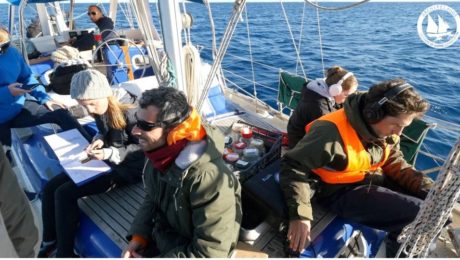
“Noise pollution” in the marine environment has been an increasing concern for conservationists and marine researchers in the past decades. Underwater sounds caused by ships have no impact on humans, however, they may have severe effects on marine life, especially marine mammals. Engine noise from boats increases with size, power, load and speed. It
- Published in Intern Experience, Marine Mammal Team, Work Journal
Behavioral Study of Cetaceans in the Aegean
Friday, 29 June 2018
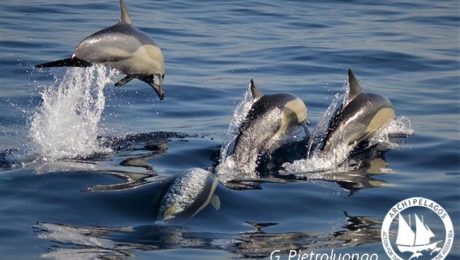
Although people have long been fascinated by the behaviour of animals, the formal discipline of animal behaviour–ethology–is actually relatively new, dating to the work of Konrad Lorenz in Austria in the 1930s. The application of ethological principles and methods to the study of animal welfare is even newer. Behavioural data can offer insight into the
- Published in Intern Experience, Marine Mammal Team, Work Journal
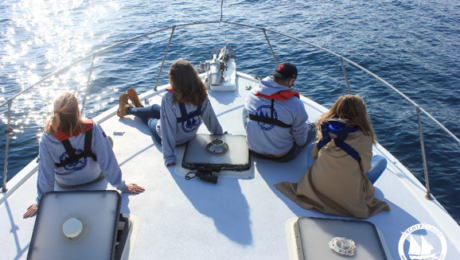
Photo-Identifying the Cetaceans of the Eastern Aegean Sea
Thursday, 10 May 2018
The Aegean Sea supports some of the most important remaining marine mammal populations in the Mediterranean. Archipelagos´ marine mammal research team monitors year round through regular boat surveys the populations of Common Bottlenose dolphin (Tursiops truncatus), Short-beaked Common dolphin (Delphinus delphis), Stripped dolphin (Stenella coeruleoalba), Risso’s dolphin (Grampus griseus) and Sperm Whale (Physeter macrocephalus). Photo
- Published in Intern Experience, Marine Mammal Team, Work Journal
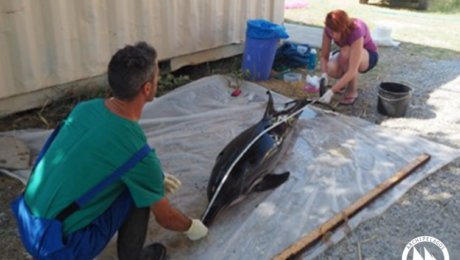
Assessing the Microplastic Fiber Content in Stranded Dolphins
Thursday, 10 May 2018
Dolphins might be one of the most charismatic animals that plough through the oceans and seas. In general, they are social animals that enjoy living in pods. These marine mammals are considered one of the most intelligent species on the planet. Although they are mainly piscivores, their diet varies between species, feeding on fish, cephalopods
- Published in Intern Experience, Marine Mammal Team, Microplastic Team, Work Journal
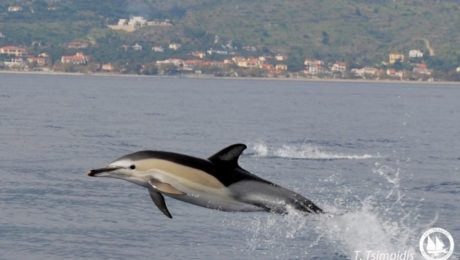
Common Dolphin (D. delphis) Bioacoustics Project
Thursday, 15 March 2018
Common dolphin (D. delphis) bioacoustics project – a study about vocalization and sociality of the common dolphin population in the Aegean Sea, February-March 2018. Common dolphins often live in pods consisting of around 12-20 individuals in the Mediterranean Sea (Murphy et al., 2008). The population of this particular species has been declining at an alarming
- Published in Intern Experience, Marine Mammal Team, Work Journal