


Research on the Sperm Whale Populations in the Eastern Aegean Sea
Wednesday, 08 November 2017
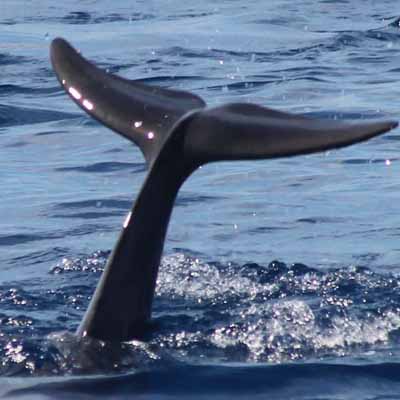
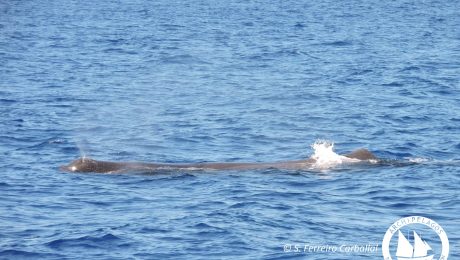
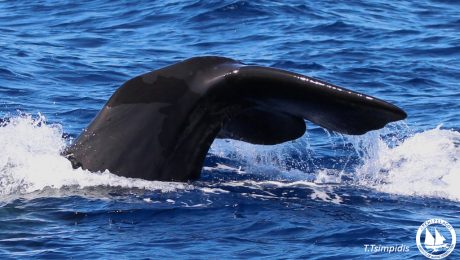
Archipelagos Marine Mammal Team has been monitoring the population of Sperm Whales (Physeter macrocephalus) in the north Aegean Sea for over 17 years. Physeter macrocephalus is the biggest species of Odontoceti – toothed whales. A female can reach approximately 12 m and the male 18 m in length. The large head occupies one-third of the
- Published in Intern Experience, Marine Mammal Team, Work Journal
Underwater Acoustics: An Invaluable Tool for Cetacean Conservation
Tuesday, 07 November 2017
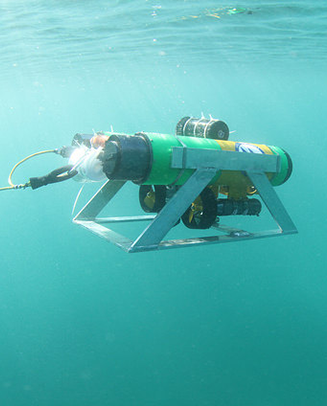
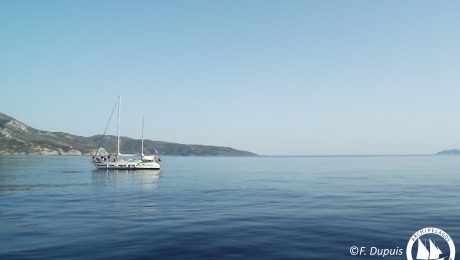
The sea gives out the illusion of a serene place to either relax or work in. The tranquility of the sea depth is what most of us expect to hear and see. However, the open seas are realistically noisy and contaminated. Archipelagos Marine Mammal team is working to prove how noisy the Aegean Sea and
- Published in Intern Experience, Marine Mammal Team, Work Journal
Extensive Monitoring of Whale and Dolphin Populations
Wednesday, 04 October 2017
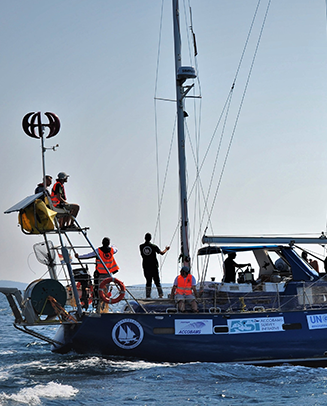
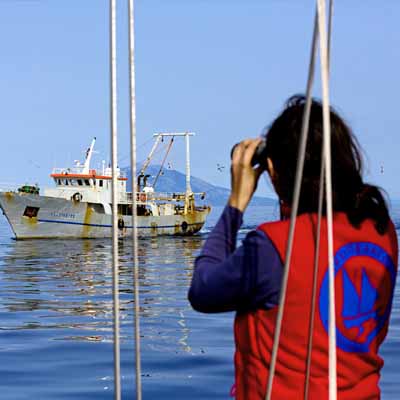
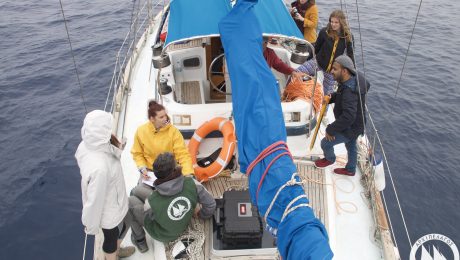
The ideal weather conditions allowed the Archipelagos Marine Mammal Team to carry out an extensive survey in the waters north of Samos and Ikaria Islands during the past week. The Team spent several days in the sea with the aim to have an updated census of the cetacean species present in the study area. At the
- Published in Intern Experience, Marine Mammal Team, Work Journal
Observation and Monitoring of the Mediterranean Monk Seal around Samos Island
Friday, 29 September 2017
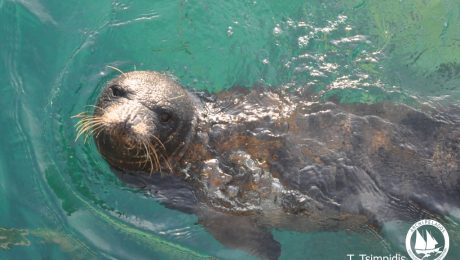
The Mediterranean monk seal (Monachus monachus) is the rarest species of marine mammal in Europe with only around 500 individuals surviving in the world. They are currently listed as “endangered” on the IUCN (International Union for Conservation of Nature) Red List. With such a small remaining population, the actions for their monitoring and conservation are
- Published in Intern Experience, Marine Mammal Team, Work Journal
The Influence of Environmental Factors on the Spatial Distribution of Dolphin Populations in the Aegean Sea
Friday, 04 August 2017
Due to the large biodiversity of cetacean species inhabiting its waters, the Aegean Sea is considered an incredibly important marine area. Archipelagos Institute is conducting a study about the influence of environmental factors on the spatial distribution of dolphins. In particular, this study is focused on two dolphin species that are facing a dramatic population
- Published in Intern Experience, Marine Mammal Team, Work Journal
Development of a Spatio-Temporal Model as a Prediction Indicator of Cetacean Strandings in the Eastern Aegean Sea
Tuesday, 01 August 2017
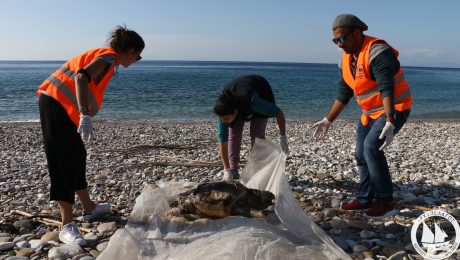
Numerous reasons are known as to why marine mammals strand, however, unfortunately it would seem the case that human activity is be a key contributor to these deaths. Data has been collected by the Archipelagos Institute of Marine Conservation ranging from 1994 to the present day, incorporating factors such as seasonality, cause of death, condition
- Published in Intern Experience, Marine Mammal Team, Work Journal
Eco-Navigation: A Citizen Science Platform for Sailors and Sea Enthusiasts to Report Their Observations
Tuesday, 01 August 2017
Eco-Navigation is a key action developed by Archipelagos Institute, aiming to increase awareness but also public engagement on the biodiversity and conservation of the Mediterranean Sea. Eco-Navigation aims to record valuable data, through reported sightings by sailors and sea enthusiasts on their observations of rare and protected animals such as marine mammals and turtles, or
- Published in Intern Experience, Marine Mammal Team, Work Journal
Quantification of Microplastics in Dolphin Digestive Systems
Friday, 28 July 2017
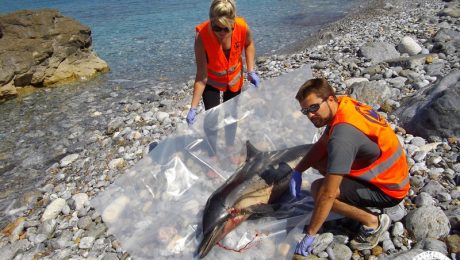
With the worldwide increase in the production of plastics over the last century, in combination with the overall lack of plastic waste management, the impact of plastics on marine environments has become a critical concern. Microplastics develop from the degradation of larger plastics, such as plastic bottles, bags, and many other improperly discarded objects, that
- Published in Intern Experience, Marine Mammal Team, Microplastic Team, Work Journal
Behaviour of Delphinus delphis and Tursiops truncatus around Samos Island
Friday, 14 July 2017
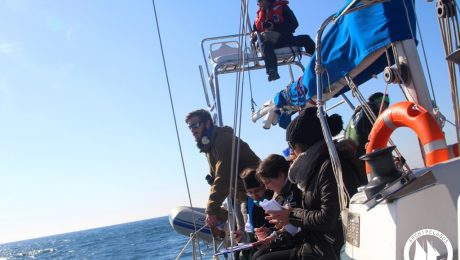
Ship traffic has been increasing in the oceans in recent decades, especially in the northern hemisphere, and very likely will increase exponentially in the future. Anthropic activities produce diffuse and almost continuous noise that may affect very wide areas. Low-frequency (below 1,000Hz) ambient noise levels generated by ship traffic have increased in the northern hemisphere
- Published in Intern Experience, Marine Mammal Team, Work Journal
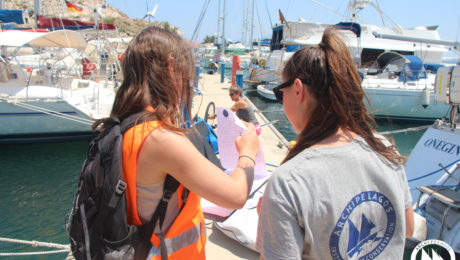
Eco-Navigation: A Citizen Science Project
Friday, 14 July 2017
Archipelagos’ Eco-navigation project focuses on creating a citizen-science platform about observations of marine mammals (dolphins, whales, seals), sea turtles, invasive species and jellyfish blooms, as well as pollution incidents (plastic debris, oil slicks, etc.) or other unusual sightings. In this way we are in the process of forming a network of sailors, divers, fishermen and
- Published in Intern Experience, Marine Mammal Team, Work Journal