


Invasive Algae Caulerpa cylindracea: Factors and Consequences of the Distribution in Aegean Sea
Tuesday, 01 August 2017
With climate change and ocean acidification of the seas, more alien species are spreading in our seas. The green macroalgae, Caulerpa cylindracea, is considered an invasive species native from Australia that has rapidly spread across the Mediterranean since 1926. C. cylindracea colonises a variety of substrata, and its dominating presence has been found to alter
- Published in Intern Experience, Marine Conservation Team, Work Journal
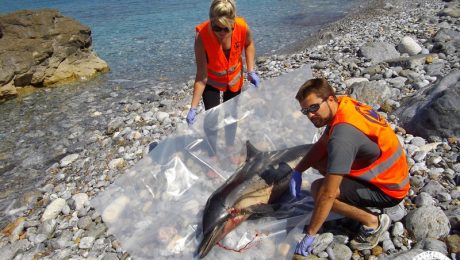
Quantification of Microplastics in Dolphin Digestive Systems
Friday, 28 July 2017
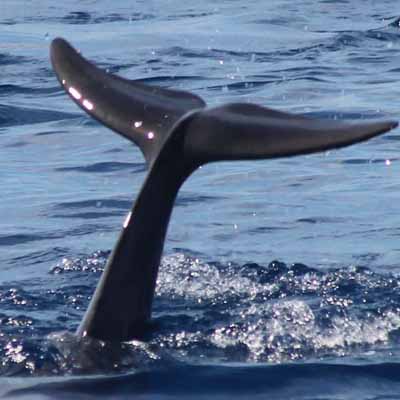
With the worldwide increase in the production of plastics over the last century, in combination with the overall lack of plastic waste management, the impact of plastics on marine environments has become a critical concern. Microplastics develop from the degradation of larger plastics, such as plastic bottles, bags, and many other improperly discarded objects, that
- Published in Intern Experience, Marine Mammal Team, Microplastic Team, Work Journal
Invasive Fish Species Distribution: Research and Citizen Science Projects
Friday, 28 July 2017
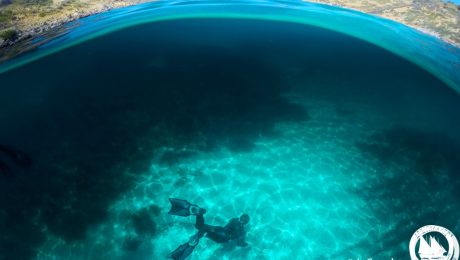
Since the opening of the Suez Canal between the Red Sea and the Mediterranean Sea there has been a steady flow of invasive species entering the Aegean Sea out of which there are over 32 established fish species. At Archipelagos Institute we are monitoring the spread of these species in the region of the NE
- Published in Intern Experience, Marine Conservation Team, Work Journal
Evaluation of Macroplastic Debris on two Beaches of Samos Island
Tuesday, 25 July 2017
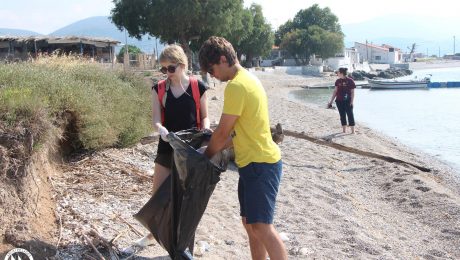
The macro-plastic project primarily focuses on measuring the influx of waste items into the Aegean Sea onto specified beaches at the main Archipelagos Base. It is a renowned fact that human activity has had, an is continuing to have, a significant impact on the health of the environment and functioning of both marine and terrestrial
- Published in Intern Experience, Marine Conservation Team, Microplastic Team, Work Journal
Scouts Visit at Archipelagos Institute
Tuesday, 25 July 2017
Among the numerous awareness-raising activities we carry out year-round, Archipelagos was happy to host a group of 33 scouts ages 7-11 from Samos, Chios and Leros islands on Tuesday, June 20th. In the morning, they all attended a lesson on the wildlife of the Aegean and watched animations on the Aegean wildlife, all produced by
- Published in Intern Experience, Media Team, Work Journal
Firefighting With Seawater: Effects on Soil Properties in Samos Island
Monday, 24 July 2017
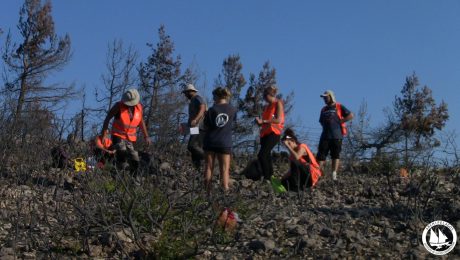
The island of Samos is prone to wildfires during the summer months due to its hot, arid climate and dry landscape. A crew of workers inadvertently ignited a small fire on July 7th 2016, which quickly spread across the island, claiming nearly 780 hectares of pine forest as it moved southeast from Kamara to Mesokampos.
- Published in Intern Experience, Terrestrial Conservation Team, Work Journal
Creating Printed Media to Raise Awareness
Friday, 14 July 2017
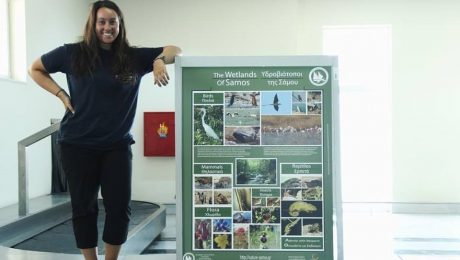
Coupling our research and conservation actions, Archipelagos Institute aims to also raise awareness about the unique nature and biodiversity of the Aegean Sea and islands. In regards to this, Archipelagos’ Media Team has been hard at work creating three large posters which were installed this week in Samos International Airport. The purpose is to provide
- Published in Intern Experience, Media Team, Work Journal
Behaviour of Delphinus delphis and Tursiops truncatus around Samos Island
Friday, 14 July 2017
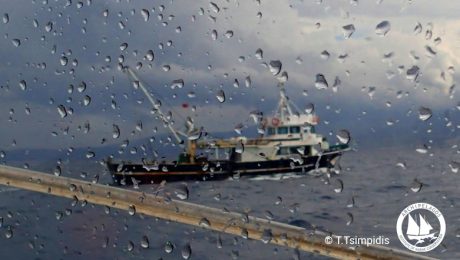
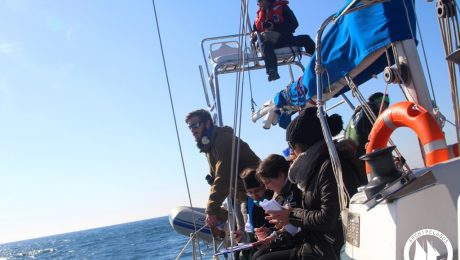
Ship traffic has been increasing in the oceans in recent decades, especially in the northern hemisphere, and very likely will increase exponentially in the future. Anthropic activities produce diffuse and almost continuous noise that may affect very wide areas. Low-frequency (below 1,000Hz) ambient noise levels generated by ship traffic have increased in the northern hemisphere
- Published in Intern Experience, Marine Mammal Team, Work Journal
Assessment of Fish Biodiversity in P. oceanica Seagrass Meadows in Lipsi island
Friday, 14 July 2017
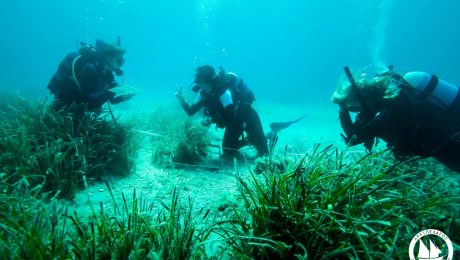
Posidonia oceanica is an endemic seagrass species of the Mediterranean Sea. Research in other areas of the Mediterranean Sea has shown that P. oceanica meadows provide habitats for a diverse fish community and they have an especially important role as breeding and nursing areas. Variety of fish species, including numerous species of conservational or commercial
- Published in Intern Experience, Marine Conservation Team, Work Journal
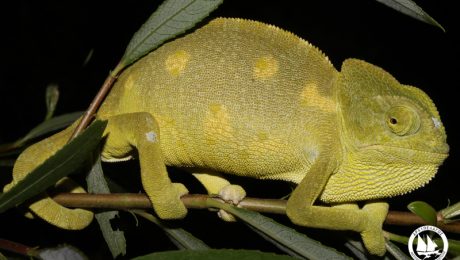
Population Assessment of the Mediterranean Chameleon
Friday, 14 July 2017
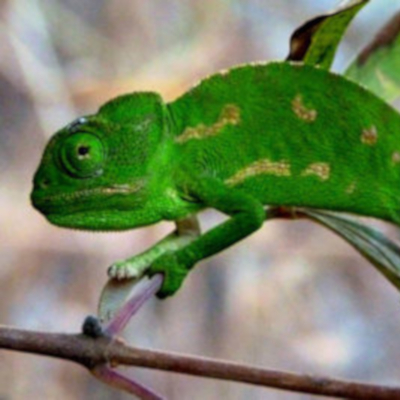
The Mediterranean Chameleon (Chamaeleo chamaeleon) is one of only two existent species of Chamaleonidae in Europe. It can be found in the southern part of Spain, Portugal, Italy and Greece. Until a few decades ago, only a few parts of Greece supported populations of this species; namely the islands of Samos, Chios and Crete. Today
- Published in Intern Experience, Terrestrial Conservation Team, Work Journal