Archipelagos

  • English
  • Ελληνικα
Who We Are
The TeamThe Team
Research BasesResearch Bases
Research BoatsResearch Boats
Our EquipmentOur Equipment
PartnersPartners
SupportersSupporters
Fields of Action
Marine ConservationMarine Conservation Fisheries Shipping Risks Seagrass Meadows Coralligene Conservation Littoral Ecosystems Invasive Species Jellyfish Sea Turtles
Marine MammalsMarine Mammals Dolphins and Porpoises Whales Seals
Terrestrial ConservationTerrestrial Conservation Island Fauna Forests & Flora Freshwater Ecosystems Aegean Seed Bank
Laboratory ResearchLaboratory Research Microplastics Water Analysis Soil Quality
Projects
Aegean Marine Life Sanctuary
Eco-Navigation
FIsh4Life
Save the Aegean
Join Us
Internships in the Aegean
Remote Internships
Interns Experiences
Field Courses
News
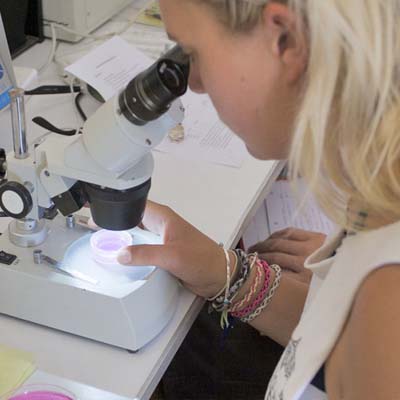
Planting Underwater Gardens of Posidonia seagrass- a new innovative planting process
Aegean Islet Conservation Project in cooperation with the University of Toronto’s Faculty of Architecture
Mutilated Striped Dolphin Stranded on the shores of Samos Island
Posidonia Seagrass Fruits Wash up on Our Shores – A Rare Phenomenon
View All...
Contact us
Publications
Videos
Awareness Material
Donate
Menu

Changing Biodiversity of Invertebrate Populations

Changing Biodiversity of Invertebrate Populations

by Kleopatra Delaveri / Thursday, 15 March 2018 / Published in Intern Experience, Marine Conservation Team, Work Journal


Figure 1: Twin fan worm Bispira volutacornis

Mankind is having a major impact on every ecosystem on earth. From the very tops of the tallest peaks to the deepest abysses in our oceans, the world is changing, and how we measure these impacts, is also changing. Bioindicator species are helping us understand how we have affected our world and can even give us an insight into what these ecosystems used to be like, before records began.

A bioindicator is a species which has an observable response to a certain environmental stress. They can be categorized in several different ways including type of stress (temperature, pollution, UV exposure e.t.c) or type of response (behavioural, physiological). They allow us to see, not only the changes occurring in an environment, but how this change is affecting the ecosystem as a whole. The only downside is that first, a bioindicator must be discovered. That is what this project is all about.
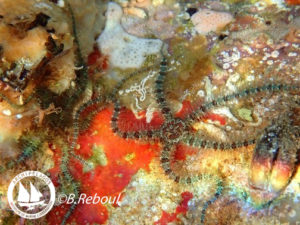
Figure 2: Common brittle star (Ophiothrix fragiles), mimetizing in the rocky habitat.

Marine ecosystems usually observe relatively little change in their environments compared to their terrestrial counterparts. Temperature is regulated much more consistently and below a few meters there is very little impact from the weather. This makes the marine world a hotbed of potential bioindicators as, due to the lack of natural change, marine species have not evolved a resistance to stress so are often very sensitive.
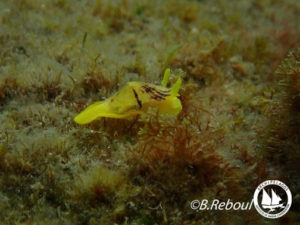
Figure 3: Individual of Yellow umbrella slug (Tylodina perversa) .

The presence of a sewage treatment plant on the southern coast of Samos island provides the perfect gradient of “clean” and “contaminated” water. Here at Archipelagos, we are hoping to discover what impact this sewage plant has on the abundance and diversity of the invertebrate species. Marine invertebrates make ideal bioindicators because they are either sessile (don’t move) or they don’t migrate, so noincidence of seasonal abundance should affect the results. At 200m along the coast, transects are being performed in order to calculate a biodiversity index at each point. A team identifies every invertebrate species found within a 50m by 2m area.

The original hypothesis was that the biodiversity of the bays would decrease with decreasing distance from the plant. However, in the early stages of the analysis, it appears that biodiversity is increasing as the transects get closer to the sewage plant.Progress is slow due to the need for flat seas in order to complete transects safely which is rare during the winter months. Currently, over 1,600 individuals have been recorded belonging to over 40 different taxa. Arbacia lixula, Elysia timida and Balanophyllia europaea have currently proven the most abundant.
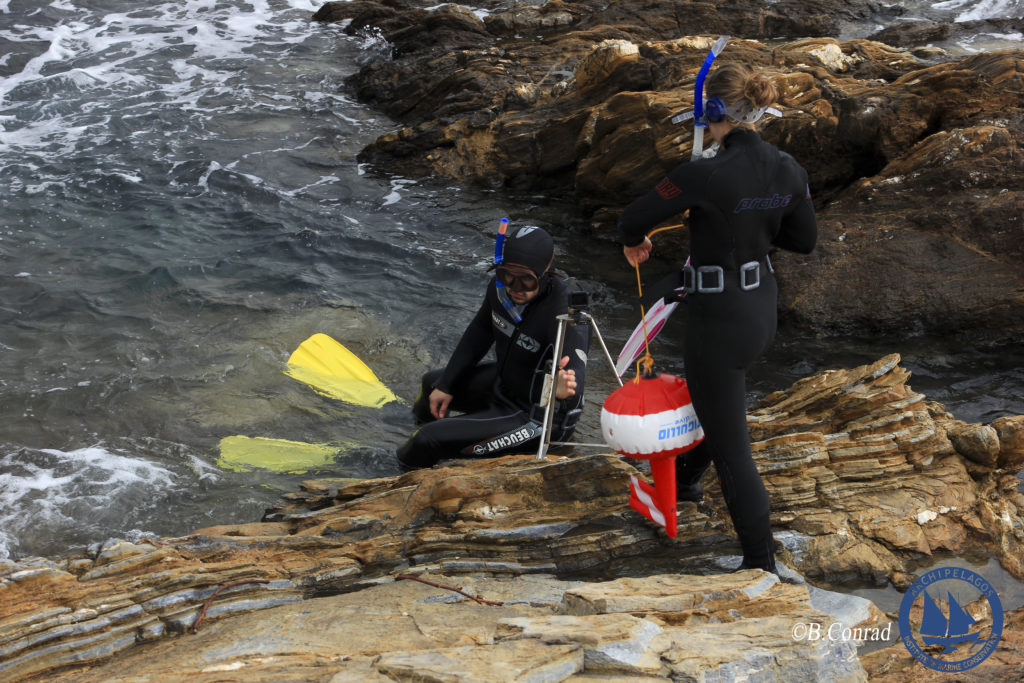
Figure 4. Snorkelers entering the water off of the rocky coastline.


Benedict Charles Rickards
BSc in Zoology
University of Leeds
0
0
0
0
0

What you can read next

GIS Mapping as a Key Tool in Marine Conservation
Assessing the Grazing Activity of Sea Urchins
Chameleon Distribution Monitoring in Samos Island

HIGHLIGHTS

  • International Visitors at the Aegean Marine Life Sanctuary Project

    International Visitors at the Aegean Marine Life Sanctuary Project

    1 June 2021
    At Archipelagos Institute of Marine Conservation an important visit took …
  • The Efkranti Award was Granted to the Archipelagos Institute of Marine Conservation

    The Efkranti Award was Granted to the Archipelagos Institute of Marine Conservation

    27 July 2020
    It was a great honor but also great moral support …
  • The President of the Hellenic Republic’s visit to Archipelagos research vessel, the Aegean Explorer

    The President of the Hellenic Republic’s visit to Archipelagos research vessel, the Aegean Explorer

    30 June 2020
    Yesterday, during the President of the Republic’s visit to the …
  • Award to Archipelagos: Best Heroic Act of Environmental Stewardship

    Award to Archipelagos: Best Heroic Act of Environmental Stewardship

    19 February 2020
    The Short Documentary Film presenting the Aegean Marine Life Sanctuary, …
  • Award to Archipelagos Institute from the International Propeller Club of the United States

    Award to Archipelagos Institute from the International Propeller Club of the United States

    6 February 2020
    We would like to thank the International Propeller Club of …

Recent Posts

  • Photo-ID & Behavioral Assessments of Delphinus delphis in the Northern Aegean Sea

    Photo-ID & Behavioral Assessments of Delphinus delphis in the Northern Aegean Sea

    2 November 2023
    Yasas! Intern Alannah from the Marine Mammal Field here, currently …
  • Experiences After Work at Archipelagos

    Experiences After Work at Archipelagos

    2 November 2023
    Hi, I’m Ella and I completed a 6-week internship on …
  • Hands-on Projects with the Marine Mammal Research & Conservation Team

    Hands-on Projects with the Marine Mammal Research & Conservation Team

    2 November 2023
    My name is Sjoerd and I am in the last …
  • Planting Underwater Gardens of Posidonia seagrass- a new innovative planting process

    Planting Underwater Gardens of Posidonia seagrass- a new innovative planting process

    29 June 2023
    An innovative process of planting underwater gardens of Posidonia oceanica …
  • A special three-day research expedition to the Ikaria Trench

    A special three-day research expedition to the Ikaria Trench

    19 May 2023
    Archipelagos Marine Mammal Research team took part in a very …
  • Aegean Islet Conservation Project in cooperation with the University of Toronto’s Faculty of Architecture

    Aegean Islet Conservation Project in cooperation with the University of Toronto’s Faculty of Architecture

    17 May 2023
    A new cycle of interdisciplinary on-site research of the Aegean …
  • Mutilated Striped Dolphin Stranded on the shores of Samos Island

    Mutilated Striped Dolphin Stranded on the shores of Samos Island

    12 May 2023
    A mutilated striped dolphin was found stranded on the north …

Subscribe to Our Newsletter

Archipelagos Institute of Marine Conservation is committed to researching and defending the biodiversity of the Greek seas and islands.

Our action is possible only with your help!

donate
  • Contact us
  • Placements

Archipelagos - Institute of Marine Conservation © All Rights Reserved || Developed Fekas Brothers

TOP