Archipelagos

  • English
  • Ελληνικα
Who We Are
The TeamThe Team
Research BasesResearch Bases
Research BoatsResearch Boats
Our EquipmentOur Equipment
PartnersPartners
SupportersSupporters
Fields of Action
Marine ConservationMarine Conservation Fisheries Shipping Risks Seagrass Meadows Coralligene Conservation Littoral Ecosystems Invasive Species Jellyfish Sea Turtles
Marine MammalsMarine Mammals Dolphins and Porpoises Whales Seals
Terrestrial ConservationTerrestrial Conservation Island Fauna Forests & Flora Freshwater Ecosystems Aegean Seed Bank
Laboratory ResearchLaboratory Research Microplastics Water Analysis Soil Quality
Projects
Aegean Marine Life Sanctuary
Eco-Navigation
FIsh4Life
Save the Aegean
Join Us
Internships in the Aegean
Remote Internships
Interns Experiences
Field Courses
News
Planting Underwater Gardens of Posidonia seagrass- a new innovative planting process
Aegean Islet Conservation Project in cooperation with the University of Toronto’s Faculty of Architecture
Mutilated Striped Dolphin Stranded on the shores of Samos Island
Posidonia Seagrass Fruits Wash up on Our Shores – A Rare Phenomenon
View All...
Contact us
Publications
Videos
Awareness Material
Donate
Menu

Chemical Weapons Destruction – Threat of Toxic Pollution in the Mediterranean

Chemical Weapons Destruction – Threat of Toxic Pollution in the Mediterranean

by Archipelagos / Wednesday, 09 April 2014 / Published in Destructive Industrial Practices, Marine Conservation, Press Releases

Chemical Weapons Destruction – Threat of Toxic Pollution in the Mediterranean.


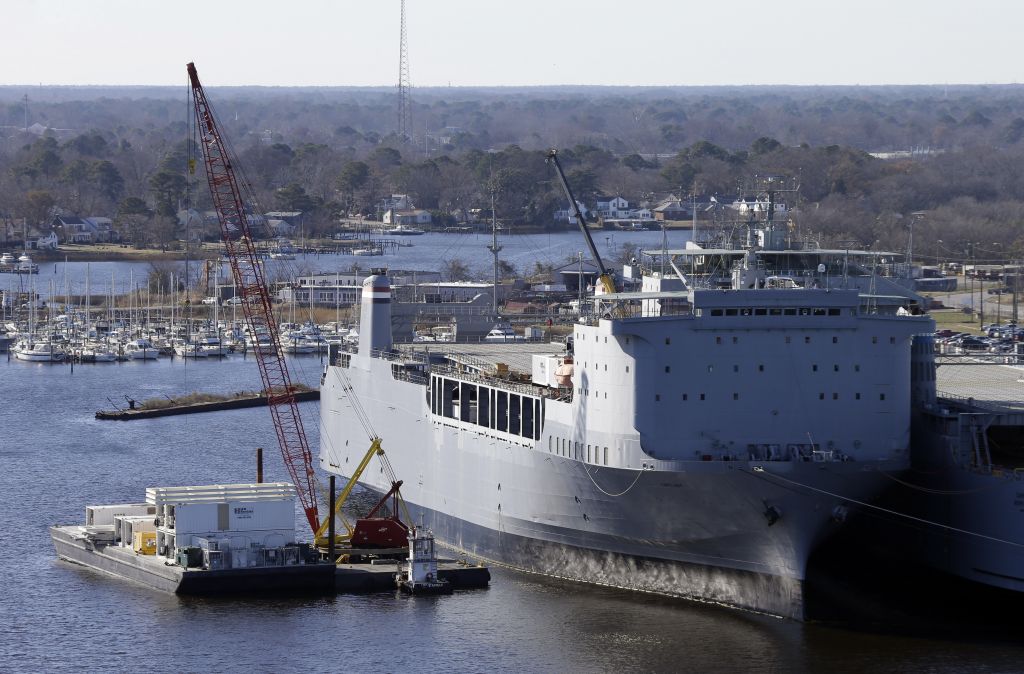
The at-sea destruction process of Syria’s chemical weapons arsenal in the “Ionian Abyssal Plain” between Crete and Sicily is fast approaching. Following Archipelago’s latest press release on this issue (04.04.2014), we now give you an update based on our communication with the Organization for the Prohibition of Chemical Weapons (OPCW).

Last week, the OPCW sent Archipelagos an invitation to visit the MV Cape Ray, now at the port of Rota, Spain, while last Friday they sent us their official answers to some of our questions. Soon, a relevant teleconference is expected to take place, during which we hope to have our remaining questions answered.

As for tomorrow’s visit to the MV Cape Ray, Archipelagos and its partners have many doubts about the true aims of this event. Therefore, despite a Spanish colleague of ours being in the area, we decided not to attend, given that we refuse to offer a communicational alibi to the U.S. Navy, since the purpose and content of this so-called “informational tour” will not alter the problem’s nature or the imminent danger. Our goal remains unaltered: We cannot allow the destruction process of the Syrian chemical weapons arsenal to occur in this way.

The latest responses to some of our pressing questions that we received by the OPCW last Friday only served to increase our concern. As an indication, the OPCW has stated that it will virtually take no part in the process, but will merely supervise the procedure as an external observer, as will the U.N., while the U.S. Navy will have full control of the operation.

We were also informed that the loading and transport of the chemical arsenal from Syria is continued by the cargo ships MV Ark Futura (from Denmark) and MV Taiko (from Norway). However with respect to the marine area where the destruction process will take place, the OPCW stated that it had not yet been precisely defined. This is in contrast to previous reports that clearly indicated an area between Crete, Sicily and Malta. We believe that the reactions, pressures and key questions raised are altering the initial plans of the U.S. authorities regarding the destruction process.

In addition, they mentioned that while some tonnes of chemical weapons from Syria will become inactivated (of course not for free) in onshore facilities in Finland, Britain and the U.S.A., the rest, which are dangerous and highly toxic chemical weapons (characterized by the International Convention for Chemical Weapons Convention as Schedule 1), namely 20 tonnes of the infamous “mustard gas” and 540 tonnes of the so-called DF (Methylphosphonyle difluoride), will be destroyed at sea in the Mediterranean, since no country accepted to carry out the destruction in onshore facilities, obviously because of risk involved.

It is also noteworthy that beside the U.S.A., several other countries are involved, such as China, Norway, Denmark and Russia with the (in essence decorative) presence of one of their naval vessels, which is to accompany the U.S. vessel, but cannot interfere. But it is at least suspicious that all Mediterranean countries will be absent, which are the ones that will suffer the greatest environmental, financial and social consequences in case of an accident or failure of this dangerous pilot project.

Given that the European Mediterranean countries have perfectly well-equipped government research vessels, including Greece with the vessel R/V Aigaio of the H.C.M.R., we believe that for the sake of transparency and security they should have already been invited to oversee the process, with continuous monitoring of the chemical composition of the seawater.

It should be mentioned that representatives of the OPCW assure us that there will be no discharge into the sea, referring to a number of international conventions and to their relevant obligations. If, however, we take into account the risk, the amount of chemicals, the uncertainty of the pilot project of “inactivation”, and the dangerous way the U.S. armed forces have in the past managed toxic weapons (e.g. depleted uranium, dumping of thousands of tonnes of toxic weapons during military operations), we should not be appeased by mere assurances.

In conclusion we must emphasize that we must be very careful with the changes that may occur in the plans for the at-sea destruction of the Syrian chemical arsenal. Under no circumstances does the change of area or vessel mean the dangers of this irreversible environmental destruction are eliminated for the Mediterranean. Based on these latest responses by the OPCW increasingly more questions are created about the whole operation.

Anastasia Miliou – Scientific Director

“Archipelagos” Institute of Marine Conservation
0
0
0
0
0

What you can read next

Archipelagos Visits Top Unis
Fisherman gets seriously injured using dynamite while fishing in Koufonisia Islands
Interactive Environmental Education in Alyki salt marsh

HIGHLIGHTS

  • International Visitors at the Aegean Marine Life Sanctuary Project

    International Visitors at the Aegean Marine Life Sanctuary Project

    1 June 2021
    At Archipelagos Institute of Marine Conservation an important visit took …
  • The Efkranti Award was Granted to the Archipelagos Institute of Marine Conservation

    The Efkranti Award was Granted to the Archipelagos Institute of Marine Conservation

    27 July 2020
    It was a great honor but also great moral support …
  • The President of the Hellenic Republic’s visit to Archipelagos research vessel, the Aegean Explorer

    The President of the Hellenic Republic’s visit to Archipelagos research vessel, the Aegean Explorer

    30 June 2020
    Yesterday, during the President of the Republic’s visit to the …
  • Award to Archipelagos: Best Heroic Act of Environmental Stewardship

    Award to Archipelagos: Best Heroic Act of Environmental Stewardship

    19 February 2020
    The Short Documentary Film presenting the Aegean Marine Life Sanctuary, …
  • Award to Archipelagos Institute from the International Propeller Club of the United States

    Award to Archipelagos Institute from the International Propeller Club of the United States

    6 February 2020
    We would like to thank the International Propeller Club of …

Recent Posts

  • Photo-ID & Behavioral Assessments of Delphinus delphis in the Northern Aegean Sea

    Photo-ID & Behavioral Assessments of Delphinus delphis in the Northern Aegean Sea

    2 November 2023
    Yasas! Intern Alannah from the Marine Mammal Field here, currently …
  • Experiences After Work at Archipelagos

    Experiences After Work at Archipelagos

    2 November 2023
    Hi, I’m Ella and I completed a 6-week internship on …
  • Hands-on Projects with the Marine Mammal Research & Conservation Team

    Hands-on Projects with the Marine Mammal Research & Conservation Team

    2 November 2023
    My name is Sjoerd and I am in the last …
  • Planting Underwater Gardens of Posidonia seagrass- a new innovative planting process

    Planting Underwater Gardens of Posidonia seagrass- a new innovative planting process

    29 June 2023
    An innovative process of planting underwater gardens of Posidonia oceanica …
  • A special three-day research expedition to the Ikaria Trench

    A special three-day research expedition to the Ikaria Trench

    19 May 2023
    Archipelagos Marine Mammal Research team took part in a very …
  • Aegean Islet Conservation Project in cooperation with the University of Toronto’s Faculty of Architecture

    Aegean Islet Conservation Project in cooperation with the University of Toronto’s Faculty of Architecture

    17 May 2023
    A new cycle of interdisciplinary on-site research of the Aegean …
  • Mutilated Striped Dolphin Stranded on the shores of Samos Island

    Mutilated Striped Dolphin Stranded on the shores of Samos Island

    12 May 2023
    A mutilated striped dolphin was found stranded on the north …

Subscribe to Our Newsletter

Archipelagos Institute of Marine Conservation is committed to researching and defending the biodiversity of the Greek seas and islands.

Our action is possible only with your help!

donate
  • Contact us
  • Placements

Archipelagos - Institute of Marine Conservation © All Rights Reserved || Developed Fekas Brothers

TOP