Archipelagos

  • English
  • Ελληνικα
Who We Are
The TeamThe Team
Research BasesResearch Bases
Research BoatsResearch Boats
Our EquipmentOur Equipment
PartnersPartners
SupportersSupporters
Fields of Action
Marine ConservationMarine Conservation Fisheries Shipping Risks Seagrass Meadows Coralligene Conservation Littoral Ecosystems Invasive Species Jellyfish Sea Turtles
Marine MammalsMarine Mammals Dolphins and Porpoises Whales Seals
Terrestrial ConservationTerrestrial Conservation Island Fauna Forests & Flora Freshwater Ecosystems Aegean Seed Bank
Laboratory ResearchLaboratory Research Microplastics Water Analysis Soil Quality
Projects
Aegean Marine Life Sanctuary
Eco-Navigation
FIsh4Life
Save the Aegean
Join Us
Internships in the Aegean
Remote Internships
Interns Experiences
Field Courses
News
Planting Underwater Gardens of Posidonia seagrass- a new innovative planting process
Aegean Islet Conservation Project in cooperation with the University of Toronto’s Faculty of Architecture
Mutilated Striped Dolphin Stranded on the shores of Samos Island
Posidonia Seagrass Fruits Wash up on Our Shores – A Rare Phenomenon
View All...
Contact us
Publications
Videos
Awareness Material
Donate
Menu

Claiming the Right to …Overexploit our Seas!

Claiming the Right to …Overexploit our Seas!

by Kleopatra Delaveri / Monday, 10 July 2017 / Published in News, Wildlife Poaching

After nearly two decades of research and action by the Archipelagos Institute for Marine Conservation to protect the Greek seas, it is remarkable that in every corner of Greece the same arguments are repeated with regards to the question: “Who destroys and empties our seas?”
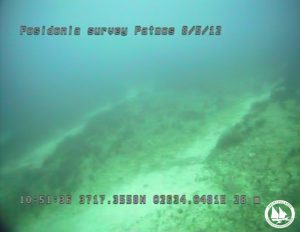
Posidonia seagrass meadow in the coast of Patmos island which has been obviously destroyed by illegal trawing, at a depth of 28m (trawling is permitted at depths that >50 metres) – Image from Archipelagos’ research surveys mapping seagrass meadows

Artisanal fishermen accuse trawlers and recreational fishermen. Recreational fishermen blame all professionals – both industrial and artisanal. Together, however, often without taking responsibility, they claim their right to overexploit our seas and rarely suggest proposals for fishstock management, or criticize those who cause small or large damages. Whether professional or recreational, there are those who fish sustainably and with respect to the environment. However, there are others who have no moral compass and take anything in their wake, often by destructive methods.

Industrial fishermen (trawlers and purse seiners) blame artisanal and recreational fishermen. 
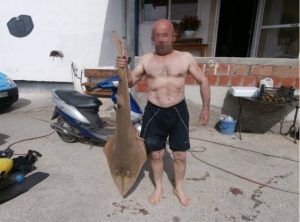
The protected ray Rhinobatos cemiculus caught in Kos island by a recreational fisherman

This past winter was particularly harsh for our marine ecosystems. Despite being fully subsidized, the satellite-based Vessel Monitoring System, used to track large fishing vessels, was deliberately not upgraded (as is required by national and EU law). As a result many vessels took the opportunity to cause further destruction to our seas and fish stocks, largely by illegal fishing.

After a winter of numerous violations (confirmed or otherwise), fish stocks were left in a significantly diminished state. From June onwards trawlers are seasonally prohibited from operating, whereas recreational and artisanal fishermen continue to fish. It must be made clear, the term “recreational fishermen” includes all non- professional fishermen, Greeks or otherwise, who are fishing by a variety of methods. This is particularly noticeable during the summer months, as recreational fishermen can be seen fishing from large yachts, RIBs, small boats, beaches or while swimming or snorkelling, using various fishing gear. Most fish in a sustainable way for legitimate personal consumption, however some will fish to supply local restaurants and other commercial purposes.

As if this is not enough, through social media, local newspapers and blogs, fishing for protected and rare species is being shown as an achievement, which, instead of being condemned, is well received by many. This behavior does not characterize people who consider themselves civilized and part of a nautical culture. Fortunately, however, there is also an active minority, who not only help to identify the above, but also protects our common maritime resources, as ought to be our shared moral obligation.

Many of them participate in the informal “Destructive Fisheries Observatory” of the Archipelagos Institute. This aims to identify and bring to the attention of the authorities, these incidents of destructive fishing. Those reporting the incidents remain anonymous, so that there is no risk of retaliation against them.
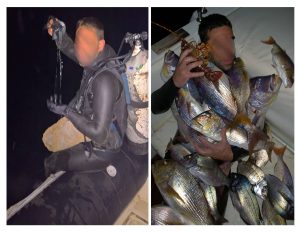
The spear fisherman who was recently arrested in Zakynthos island for fishing with scubagear at night

Some notable incidents of the past month are:

– The arrest of a spear-fisherman in Zakynthos, who is known on social media to shamelessly demonstrate illegal fishing while SCUBA diving and using underwater lighting. Https://www.organiclife.gr/en/hot-news/5079-epeisodiaki-sillipsi-zakintos-paranomos-psarontoufekas-me-mpoukales.html

– The arrest of a spear- fishermen on the islands of Samos and Crete, who were also fishing illegally  during the night with SCUBA gear and underwater lighting. Http://aegaio.blogspot.gr/2017/05/blog-post_796.html?spref=fb&m=1
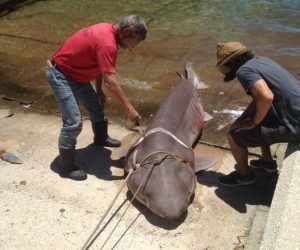
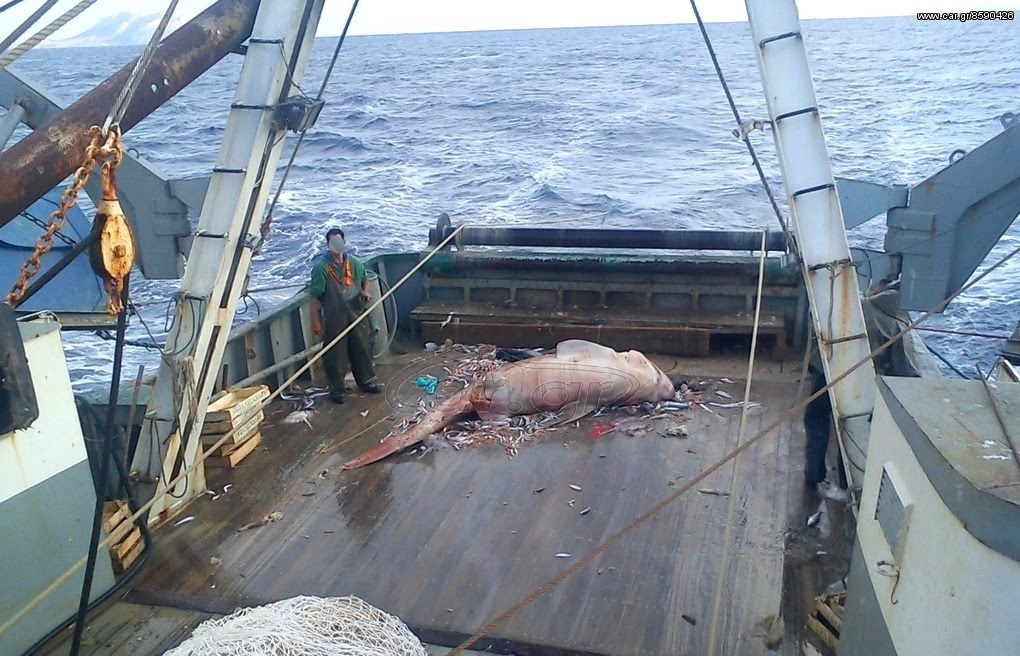
The protected sixgill shark, caught by an artisanal fisherman in Ithaki island
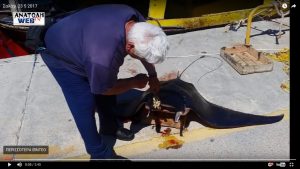
The rare and protected Giant Devil Ray (Mobula mobular), caught by an artisanal fisherman in Crete
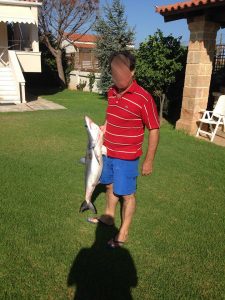
Protected shark species caught in Korinthos by recreational fisherman who holds an important public position

Following a large fine that had been issued by the Kos Port Authority for the capture of a large protected ray caught by a spearfisherman, through Archipelagos’ “Destructive Fisheries Observatory”, we have informed  the Port Authorities and Courts of several further incidents.

For the above we expect the law to be enforced, so that it can act as a deterrent, to stop overexploiting the seas being viewed as a right of all of us. Protecting life in the seas is not the responsibility of a few, but the responsibility of all those who understand our common obligation to be part of the defense of our seas.


by Thodoris Tsimpidis
Director
Archipelagos Institute of Marine Conservation
0
0
0
0
0

What you can read next

Microplastic Pollution Research
Mass stranding of 12 Cuvier’s beaked whale on the North-West coast of Cyprus
Happy ‘Thoughtful’ Holidays!

HIGHLIGHTS

  • International Visitors at the Aegean Marine Life Sanctuary Project

    International Visitors at the Aegean Marine Life Sanctuary Project

    1 June 2021
    At Archipelagos Institute of Marine Conservation an important visit took …
  • The Efkranti Award was Granted to the Archipelagos Institute of Marine Conservation

    The Efkranti Award was Granted to the Archipelagos Institute of Marine Conservation

    27 July 2020
    It was a great honor but also great moral support …
  • The President of the Hellenic Republic’s visit to Archipelagos research vessel, the Aegean Explorer

    The President of the Hellenic Republic’s visit to Archipelagos research vessel, the Aegean Explorer

    30 June 2020
    Yesterday, during the President of the Republic’s visit to the …
  • Award to Archipelagos: Best Heroic Act of Environmental Stewardship

    Award to Archipelagos: Best Heroic Act of Environmental Stewardship

    19 February 2020
    The Short Documentary Film presenting the Aegean Marine Life Sanctuary, …
  • Award to Archipelagos Institute from the International Propeller Club of the United States

    Award to Archipelagos Institute from the International Propeller Club of the United States

    6 February 2020
    We would like to thank the International Propeller Club of …

Recent Posts

  • Photo-ID & Behavioral Assessments of Delphinus delphis in the Northern Aegean Sea

    Photo-ID & Behavioral Assessments of Delphinus delphis in the Northern Aegean Sea

    2 November 2023
    Yasas! Intern Alannah from the Marine Mammal Field here, currently …
  • Experiences After Work at Archipelagos

    Experiences After Work at Archipelagos

    2 November 2023
    Hi, I’m Ella and I completed a 6-week internship on …
  • Hands-on Projects with the Marine Mammal Research & Conservation Team

    Hands-on Projects with the Marine Mammal Research & Conservation Team

    2 November 2023
    My name is Sjoerd and I am in the last …
  • Planting Underwater Gardens of Posidonia seagrass- a new innovative planting process

    Planting Underwater Gardens of Posidonia seagrass- a new innovative planting process

    29 June 2023
    An innovative process of planting underwater gardens of Posidonia oceanica …
  • A special three-day research expedition to the Ikaria Trench

    A special three-day research expedition to the Ikaria Trench

    19 May 2023
    Archipelagos Marine Mammal Research team took part in a very …
  • Aegean Islet Conservation Project in cooperation with the University of Toronto’s Faculty of Architecture

    Aegean Islet Conservation Project in cooperation with the University of Toronto’s Faculty of Architecture

    17 May 2023
    A new cycle of interdisciplinary on-site research of the Aegean …
  • Mutilated Striped Dolphin Stranded on the shores of Samos Island

    Mutilated Striped Dolphin Stranded on the shores of Samos Island

    12 May 2023
    A mutilated striped dolphin was found stranded on the north …

Subscribe to Our Newsletter

Archipelagos Institute of Marine Conservation is committed to researching and defending the biodiversity of the Greek seas and islands.

Our action is possible only with your help!

donate
  • Contact us
  • Placements

Archipelagos - Institute of Marine Conservation © All Rights Reserved || Developed Fekas Brothers

TOP