Archipelagos

  • English
  • Ελληνικα
Who We Are
The TeamThe Team
Research BasesResearch Bases
Research BoatsResearch Boats
Our EquipmentOur Equipment
PartnersPartners
SupportersSupporters
Fields of Action
Marine ConservationMarine Conservation Fisheries Shipping Risks Seagrass Meadows Coralligene Conservation Littoral Ecosystems Invasive Species Jellyfish Sea Turtles
Marine MammalsMarine Mammals Dolphins and Porpoises Whales Seals
Terrestrial ConservationTerrestrial Conservation Island Fauna Forests & Flora Freshwater Ecosystems Aegean Seed Bank
Laboratory ResearchLaboratory Research Microplastics Water Analysis Soil Quality
Projects
Aegean Marine Life Sanctuary
Eco-Navigation
FIsh4Life
Save the Aegean
Join Us
Internships in the Aegean
Remote Internships
Interns Experiences
Field Courses
News
Planting Underwater Gardens of Posidonia seagrass- a new innovative planting process
Aegean Islet Conservation Project in cooperation with the University of Toronto’s Faculty of Architecture
Mutilated Striped Dolphin Stranded on the shores of Samos Island
Posidonia Seagrass Fruits Wash up on Our Shores – A Rare Phenomenon
View All...
Contact us
Publications
Videos
Awareness Material
Donate
Menu

Experimental Design and Assessment of Artificial Reefs

Experimental Design and Assessment of Artificial Reefs

by Kleopatra Delaveri / Monday, 04 June 2018 / Published in Intern Experience, Marine Conservation Team, Work Journal

What is an artificial reef and why are we developing and using one?

The artificial reef project has been ongoing since March 2017. It is a long-term project with the aim to successfully create reefs that increase biodiversity in the surrounding waters.

The project is still in its experimental stage, but the long-term aim is that when the experimental phase is completed, this knowledge will be used to design and install a series of artificial reefs on Lipsi island – within the Aegean Marine Life Sanctuary. The current experimental reefs are located in sites that are now deemed unsuitable due to their exposure level.

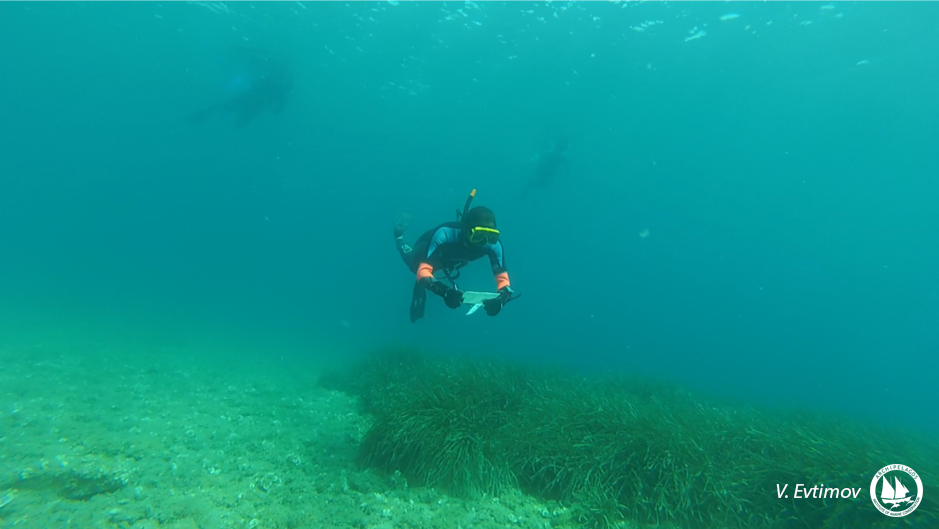
Currently, the reef is waiting to be relocated to a more sheltered location. Before the reef is relocated we are carrying out fish census surveys and camera surveys in the area to assess the level of fish present at “time zero” so we can have comparable data to assess the change in fish abundance and biodiversity in the area after the reef has been relocated there.

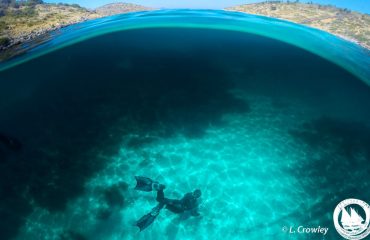
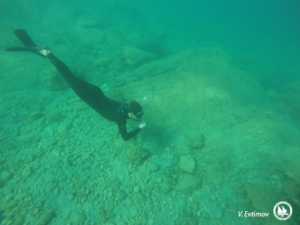
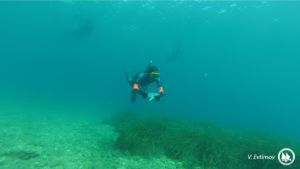
Figure 1. Free diver inspecting sea floor.
How we are monitoring the new reef location?

It is important to get to know our new site well enough before the reef is relocated to it. For this purpose, we are conducting surveys in the area and collecting data. For the fish surveys, three transects are carried out at 15m in length and all fish seen directly below the snorkeler are counted. The survey team consists of two to three people, one of which keeps track of the distance and gathers video of the benthic habitat along each transect. This is done, so that later the footage can be evaluated and the substrate noted as a percentage, i.e. SG – seagrass, S – sand and R – rocks. The rest of the team counts the fish seen along the transect and then an average is taken, if the numbers differ.

Figure 2. Diagram of the transects done. Arrows show direction of travel.
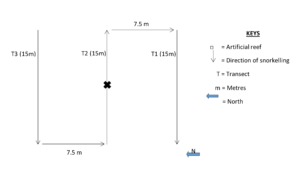
Figure 3.
Results:

Another type of survey is also conducted at the site. A camera is placed in the exact location that the reef will be put and left for 20-30 minutes. The footage is watched and the fish species are identified and recorded. This method allows us to get a closer look at the fish without having to worry about startling them or being limited by our lung capacity. This helps us to identify them later, without having to worry about making the wrong call on a species when identifying in the field.

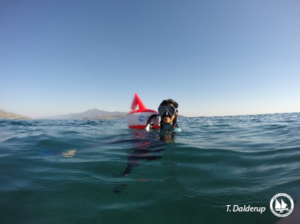
Figure 4. Snorkeler placing a weighted buoy on location.
The first method provides information about how many fish are generally in the area at different times of day and different weather conditions. It showed that there are usually fish present in the area before the reef is implemented and that most of them are found in the transect that is closest to the shore. This is an important result because once the reef is implemented this will be used to determine how effective it is. If the fish count in the area increases and if more fish are observed in the transects farther from the shore, then the project is effective.

To do this properly, however, the area needs to be monitored over a long period of time in order to be able to account for the fish recruitment that occurs in the spring and not to attribute it to the reef.

The second type of survey that is conducted on the artificial reef site aims to provide footage of the fish found around the spot. This method allows for a long observation of a given part of the area without the complications that come with SCUBA diving and the fact that fish gets startled by divers. The footage allowed us to identify about ten different species around the artificial reef site, the most common of which are Coris julis, Chromis chromis and Diplodus vulgaris.

This information is important, as the reef has not been implemented on that spot yet and changes can be made to the design in order to accommodate the local fish species as well as possible.

Viktor Evtimov
BSc. In Biological Sciences
Drexel University
0
0
0
0
0

What you can read next

Combining Botany with Terrestrial Wildlife Research
Archipelagos International School of the Sea Marine Ecology Team
Monitoring the artificial reefs implemented by Archipelagos Institute
Seagrass mapping in the Aegean Sea

HIGHLIGHTS

  • International Visitors at the Aegean Marine Life Sanctuary Project

    International Visitors at the Aegean Marine Life Sanctuary Project

    1 June 2021
    At Archipelagos Institute of Marine Conservation an important visit took …
  • The Efkranti Award was Granted to the Archipelagos Institute of Marine Conservation

    The Efkranti Award was Granted to the Archipelagos Institute of Marine Conservation

    27 July 2020
    It was a great honor but also great moral support …
  • The President of the Hellenic Republic’s visit to Archipelagos research vessel, the Aegean Explorer

    The President of the Hellenic Republic’s visit to Archipelagos research vessel, the Aegean Explorer

    30 June 2020
    Yesterday, during the President of the Republic’s visit to the …
  • Award to Archipelagos: Best Heroic Act of Environmental Stewardship

    Award to Archipelagos: Best Heroic Act of Environmental Stewardship

    19 February 2020
    The Short Documentary Film presenting the Aegean Marine Life Sanctuary, …
  • Award to Archipelagos Institute from the International Propeller Club of the United States

    Award to Archipelagos Institute from the International Propeller Club of the United States

    6 February 2020
    We would like to thank the International Propeller Club of …

Recent Posts

  • Photo-ID & Behavioral Assessments of Delphinus delphis in the Northern Aegean Sea

    Photo-ID & Behavioral Assessments of Delphinus delphis in the Northern Aegean Sea

    2 November 2023
    Yasas! Intern Alannah from the Marine Mammal Field here, currently …
  • Experiences After Work at Archipelagos

    Experiences After Work at Archipelagos

    2 November 2023
    Hi, I’m Ella and I completed a 6-week internship on …
  • Hands-on Projects with the Marine Mammal Research & Conservation Team

    Hands-on Projects with the Marine Mammal Research & Conservation Team

    2 November 2023
    My name is Sjoerd and I am in the last …
  • Planting Underwater Gardens of Posidonia seagrass- a new innovative planting process

    Planting Underwater Gardens of Posidonia seagrass- a new innovative planting process

    29 June 2023
    An innovative process of planting underwater gardens of Posidonia oceanica …
  • A special three-day research expedition to the Ikaria Trench

    A special three-day research expedition to the Ikaria Trench

    19 May 2023
    Archipelagos Marine Mammal Research team took part in a very …
  • Aegean Islet Conservation Project in cooperation with the University of Toronto’s Faculty of Architecture

    Aegean Islet Conservation Project in cooperation with the University of Toronto’s Faculty of Architecture

    17 May 2023
    A new cycle of interdisciplinary on-site research of the Aegean …
  • Mutilated Striped Dolphin Stranded on the shores of Samos Island

    Mutilated Striped Dolphin Stranded on the shores of Samos Island

    12 May 2023
    A mutilated striped dolphin was found stranded on the north …

Subscribe to Our Newsletter

Archipelagos Institute of Marine Conservation is committed to researching and defending the biodiversity of the Greek seas and islands.

Our action is possible only with your help!

donate
  • Contact us
  • Placements

Archipelagos - Institute of Marine Conservation © All Rights Reserved || Developed Fekas Brothers

TOP