Archipelagos

  • English
  • Ελληνικα
Who We Are
The TeamThe Team
Research BasesResearch Bases
Research BoatsResearch Boats
Our EquipmentOur Equipment
PartnersPartners
SupportersSupporters
Fields of Action
Marine ConservationMarine Conservation Fisheries Shipping Risks Seagrass Meadows Coralligene Conservation Littoral Ecosystems Invasive Species Jellyfish Sea Turtles
Marine MammalsMarine Mammals Dolphins and Porpoises Whales Seals
Terrestrial ConservationTerrestrial Conservation Island Fauna Forests & Flora Freshwater Ecosystems Aegean Seed Bank
Laboratory ResearchLaboratory Research Microplastics Water Analysis Soil Quality
Projects
Aegean Marine Life Sanctuary
Eco-Navigation
FIsh4Life
Save the Aegean
Join Us
Internships in the Aegean
Remote Internships
Interns Experiences
Field Courses
News
Planting Underwater Gardens of Posidonia seagrass- a new innovative planting process
Aegean Islet Conservation Project in cooperation with the University of Toronto’s Faculty of Architecture
Mutilated Striped Dolphin Stranded on the shores of Samos Island
Posidonia Seagrass Fruits Wash up on Our Shores – A Rare Phenomenon
View All...
Contact us
Publications
Videos
Awareness Material
Donate
Menu

Archipelagos Institute in Rome at the meeting of the EU Mediterranean Advisory Council for Fisheries (MEDAC)

Archipelagos Institute in Rome at the meeting of the EU Mediterranean Advisory Council for Fisheries (MEDAC)

by Kleopatra Delaveri / Tuesday, 11 December 2018 / Published in News

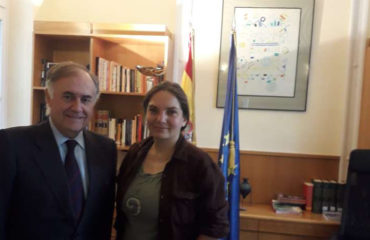
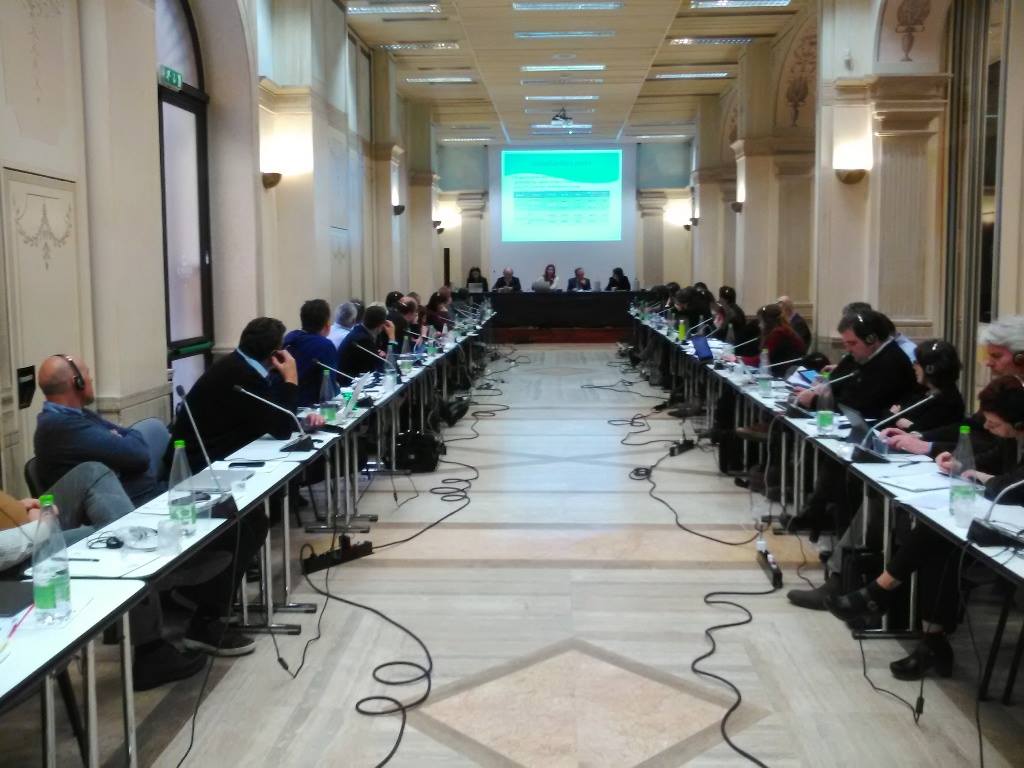
The meeting of the EU Mediterranean Advisory Council for Fisheries (MEDAC) took place this week in Rome. Archipelagos Institute for Marine Conservation, as a member of the Advisory Council is one of only four environmental organisations in the Mediterranean that have the right to vote.

The purpose of the meeting was to formulate proposals and recommendations for the EU Directorate General for Maritime Affairs and Fisheries on amendments to the Control Regulation of Fisheries (1224/2009). The measures to be implemented are based on scientific reports from the various partners and the scientific councils collaborating with the European Commission. This data is currently more reliable compared with previous years, whilst there has been great advancements in the monitoring and assessment systems and assessments.
It is widely accepted that benthic fish stocks in the Mediterranean are drastically declining due to the ongoing overfishing in the region. Increased and continuous research is needed to identify effective measures to tackle the causes of overfishing.

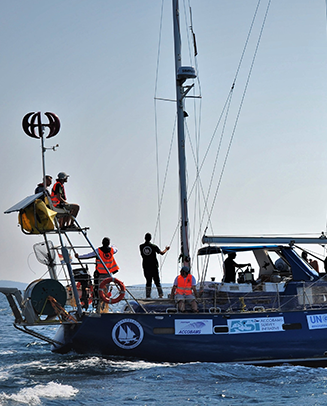
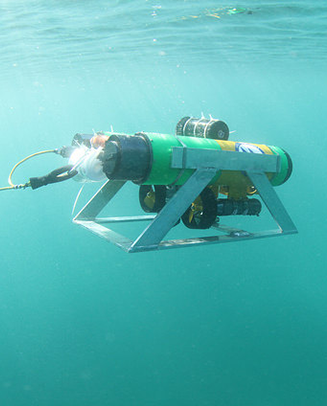
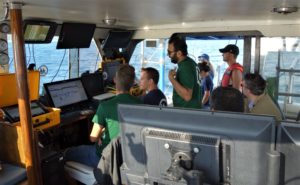
For this reason, current and ongoing research by Archipelagos Institute is of particular importance after recently upgrading its capabilities in the field of fish stock biomass (for the accurate calculation of the mass, weight and size of the fish, as well as the three-dimensional representation of marine habitats). Archipelagos Institute is the only non-governmental organisation in the Eastern Mediterranean that has both the means – in terms of vessels, specialised equipment, software and knowledge – and the ability to scan large areas at low cost, that is currently proactively working to fill the vast knowledge gaps regarding fish stocks in the Aegean and NE Mediterranean regions.

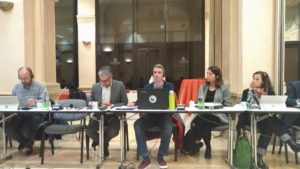
At the meeting, in a room filled with disagreement between the representatives of the environmental organisations and the fishermen’s organisations, on the methods for implementing the Control Regulation, various potential measures were examined. Also discussed were the exceptions proposed by the representatives of the large-scale fisheries sector, many of which prefer an opportunistic approach targeted at short term economic gain.
Four years have passed since the inception of the new Common Fisheries Policy of the EU. Unfortunately, however, at a European level, despite the numerous meetings and consultations, the lack of effective implementation and enforcement of the Policy has resulted in a failure in efficiently addressing the pressing issue of overfishing.

European institutions recognise that more than 90% of fish populations in the Mediterranean have been overfished. To date the slow, bureaucratic approach to fisheries-management has not kept pace with the rate of the decline of fish stocks. Whilst this happens, Member States, particularly in the Mediterranean, are yet to implement effective fisheries management measures.
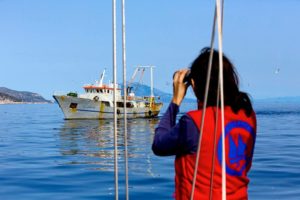
On a national level, within Greece, the situation is a more serious still, we continue to maintain the “unique” position of the country with the largest fishing fleet in the EU, regulated by the least management. Our chronically irresponsible fisheries policy evidenced by the gradual collapse of the industry.

It is worth noting, that Greece is one of the few countries that still allows a large part of its substantial fishing vessels such as trawlers and purse-seiners to delay the installation of the upgraded control devices for the VMS monitoring system, which is 100% subsidised. Instead, a large part of the trawlers still utilises older technology and VMS devices, which can be easily violated by special software, for the development of which many large-scale fishermen have invested.

Rather than implementing new, effective management measures, according to EU legislation which is often funded by the EU (eg. fisheries protected areas, increasing the selectivity of fishing gear, fishing nurseries, etc.), we blame our continued inactivity on the lack of scientific data quantifying the reduction in fish stocks.

Currently, Greek fishery legislation consists of a combination of royal decrees and laws that were designed decades ago with the selective enforcement of parts of the European legislation, which, if implemented appropriately, could contribute to successful management of declining Greek fish stocks and help to ensure the sustainability of a sector upon which many Greeks rely.

 

0
0
0
0
0

What you can read next

19th World Marine Mammal Conference
The Research Boat “Naftilos”
Golden Jackal Relocation Research Presented at Conference

HIGHLIGHTS

  • International Visitors at the Aegean Marine Life Sanctuary Project

    International Visitors at the Aegean Marine Life Sanctuary Project

    1 June 2021
    At Archipelagos Institute of Marine Conservation an important visit took …
  • The Efkranti Award was Granted to the Archipelagos Institute of Marine Conservation

    The Efkranti Award was Granted to the Archipelagos Institute of Marine Conservation

    27 July 2020
    It was a great honor but also great moral support …
  • The President of the Hellenic Republic’s visit to Archipelagos research vessel, the Aegean Explorer

    The President of the Hellenic Republic’s visit to Archipelagos research vessel, the Aegean Explorer

    30 June 2020
    Yesterday, during the President of the Republic’s visit to the …
  • Award to Archipelagos: Best Heroic Act of Environmental Stewardship

    Award to Archipelagos: Best Heroic Act of Environmental Stewardship

    19 February 2020
    The Short Documentary Film presenting the Aegean Marine Life Sanctuary, …
  • Award to Archipelagos Institute from the International Propeller Club of the United States

    Award to Archipelagos Institute from the International Propeller Club of the United States

    6 February 2020
    We would like to thank the International Propeller Club of …

Recent Posts

  • Photo-ID & Behavioral Assessments of Delphinus delphis in the Northern Aegean Sea

    Photo-ID & Behavioral Assessments of Delphinus delphis in the Northern Aegean Sea

    2 November 2023
    Yasas! Intern Alannah from the Marine Mammal Field here, currently …
  • Experiences After Work at Archipelagos

    Experiences After Work at Archipelagos

    2 November 2023
    Hi, I’m Ella and I completed a 6-week internship on …
  • Hands-on Projects with the Marine Mammal Research & Conservation Team

    Hands-on Projects with the Marine Mammal Research & Conservation Team

    2 November 2023
    My name is Sjoerd and I am in the last …
  • Planting Underwater Gardens of Posidonia seagrass- a new innovative planting process

    Planting Underwater Gardens of Posidonia seagrass- a new innovative planting process

    29 June 2023
    An innovative process of planting underwater gardens of Posidonia oceanica …
  • A special three-day research expedition to the Ikaria Trench

    A special three-day research expedition to the Ikaria Trench

    19 May 2023
    Archipelagos Marine Mammal Research team took part in a very …
  • Aegean Islet Conservation Project in cooperation with the University of Toronto’s Faculty of Architecture

    Aegean Islet Conservation Project in cooperation with the University of Toronto’s Faculty of Architecture

    17 May 2023
    A new cycle of interdisciplinary on-site research of the Aegean …
  • Mutilated Striped Dolphin Stranded on the shores of Samos Island

    Mutilated Striped Dolphin Stranded on the shores of Samos Island

    12 May 2023
    A mutilated striped dolphin was found stranded on the north …

Subscribe to Our Newsletter

Archipelagos Institute of Marine Conservation is committed to researching and defending the biodiversity of the Greek seas and islands.

Our action is possible only with your help!

donate
  • Contact us
  • Placements

Archipelagos - Institute of Marine Conservation © All Rights Reserved || Developed Fekas Brothers

TOP