
Archipelagos

  • English
  • Ελληνικα
Who We Are
The TeamThe Team
Research BasesResearch Bases
Research BoatsResearch Boats
Our EquipmentOur Equipment
PartnersPartners
SupportersSupporters
Fields of Action
Marine ConservationMarine Conservation Fisheries Shipping Risks Seagrass Meadows Coralligene Conservation Littoral Ecosystems Invasive Species Jellyfish Sea Turtles
Marine MammalsMarine Mammals Dolphins and Porpoises Whales Seals
Terrestrial ConservationTerrestrial Conservation Island Fauna Forests & Flora Freshwater Ecosystems Aegean Seed Bank
Laboratory ResearchLaboratory Research Microplastics Water Analysis Soil Quality
Projects
Aegean Marine Life Sanctuary
Eco-Navigation
FIsh4Life
Save the Aegean
Join Us
Internships in the Aegean
Remote Internships
Interns Experiences
Field Courses
News
Planting Underwater Gardens of Posidonia seagrass- a new innovative planting process
Aegean Islet Conservation Project in cooperation with the University of Toronto’s Faculty of Architecture
Mutilated Striped Dolphin Stranded on the shores of Samos Island
Posidonia Seagrass Fruits Wash up on Our Shores – A Rare Phenomenon
View All...
Contact us
Publications
Videos
Awareness Material
Donate
Menu

Microplastics in Edible Fish and Invertebrates

Microplastics in Edible Fish and Invertebrates

by Kleopatra Delaveri / Thursday, 15 March 2018 / Published in Intern Experience, Marine Conservation Team, Microplastic Team, Work Journal

Microplastics content found in edible fish and invertebrate species of the Eastern Aegean Sea, February 2018

The increasing abundance of marine plastic debris is a worldwide issue and it represents a critical threat in areas such as the Mediterranean Sea. Many studies so far already documented the negative effects of this global issue on marine organisms, which are often threatened by the entanglement and ingestion of macroplastics. An important aspect related to this is the transfer of plastics through the trophic chain due to ingestion by marine organisms, which in turns might affect the health of human consumers relying on seafood products. For this reason, investigating the microplastic content found in marine organisms, with a particular focus on commercially important local fish species, represents a crucial priority for current research.
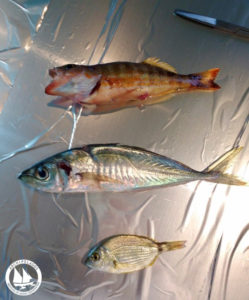
 

Figure 1.Some of the samples used for the experiment: three fish species on the left (from top to bottom: S. cabrilla, T. mediterraneus, D. annularis)
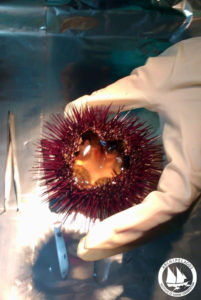
Figure 2. Sample used for the experiment: a sea urchin (P. lividus) on the right.

Between January and February 2018, part of the Microplastics Team was involved with the collection and study of six commercial fish species (Sarda sarda, Sphyraena viridensis, Boops boops, Diplodus annularis, Serranus cabrilla, Trachurus mediterraneus) and two edible invertebrate species which are also commonly consumed (the purple sea urchin Paracentrotus lividus and the European flat oyster Ostrea edulis). The methodology adopted for this study involved dissecting the specimens collected, extracting and preserving their gastro-intestinal tract in saline solution, filtrating the samples (Figure 3) and analysing their microplastics content under the microscope.
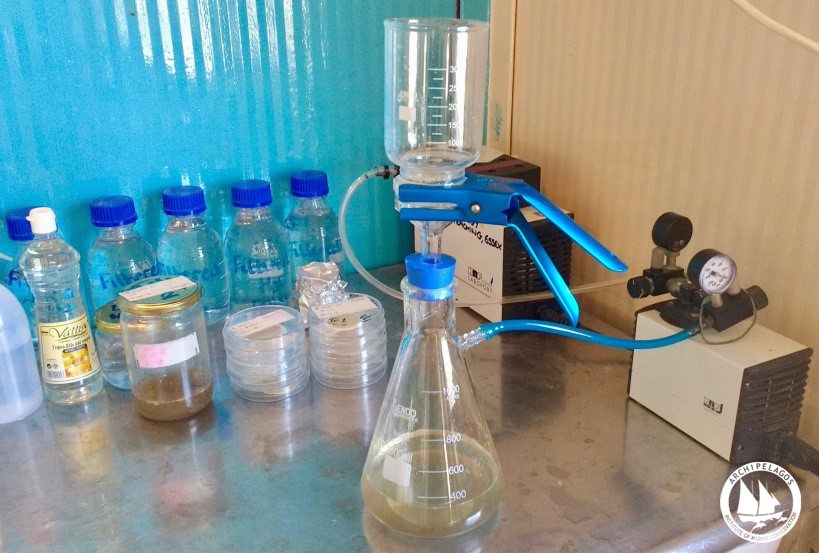
 

Figure 3. Filtration system used to filter the gastro-intestinal tract of the samples, previously digested and preserved in saline solution to allow microplastic fragments to float on the top and be easily detected.
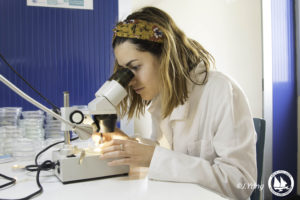
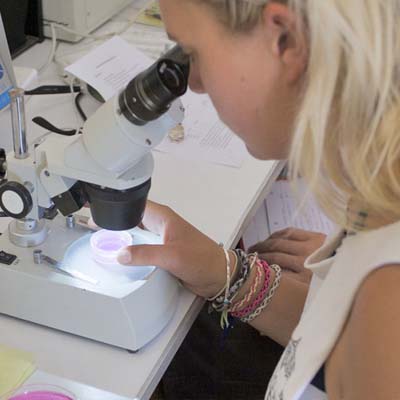
Figure 5. Lab tech inspecting a microplastic sample

Twenty-seven samples, including fish species and invertebrate species, were analysed in total. All individuals showed sign of plastic contamination, with a total of 1302 microplastic items recorded between all samples. The most interesting findings also showed that the species reporting the highest amount of microplastics was B. boops (Figure 4), a semi-pelagic, omnivorous fish, possibly implying that both its broad habitat range and feeding preferences might result in higher chances of ingesting microplastics. Among other types of microplastics detected (hard fragments, beads, pellets, plastic sheet, foam), fibres were the most abundant category, (Figure 4, 5, 6). A possible explanation to this finding is that commercial fish species are exposed to intense fishing activities and the use of fishing lines and nets might increase the chances of microplastic ingestion and contamination.
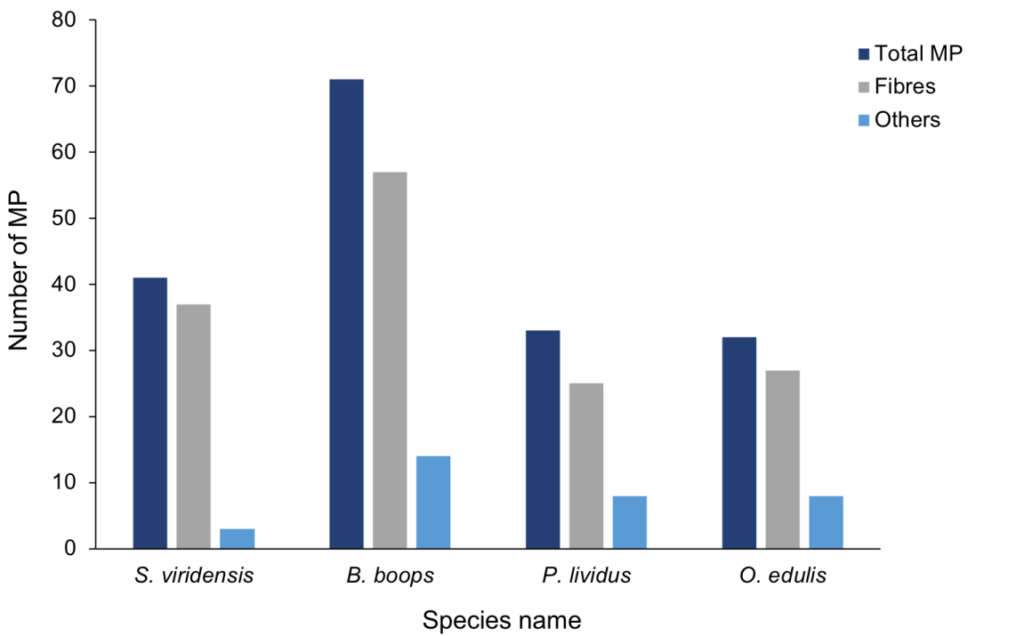
Figure 4. Average number of microplastics found in two fish species (S. viridensis, B. boops) and two invertebrate species (P. lividus, O. edulis). Fibres were the most abundant type of microplastic detected in all samples.
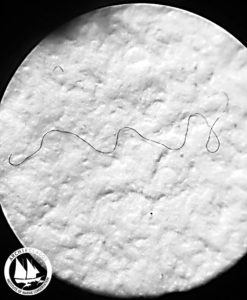
 

Figure 5. Black plastic fibre as observed under the microscope lens.
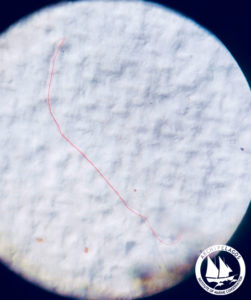
Figure 6. Red fibre as observed under the microscope lens.

The research carried out so far on microplastics provides the evidence that marine plastic debris is ubiquitous across all levels of the water column and throughout the trophic chain. Prompt actions and management strategies need to be taken not just to safeguard the outliving of marine organisms, but also the health of seafood consumers who are indirectly exposed to microplastics contamination. It is essential to keep investigating the distribution and abundance of microplastics among local marine species in order to collect additional data which will enhance the ability to raise public awareness on global issues such as plastic pollution. With this knowledge, Archipelagos Institute of Marine Conservation has the potential to strongly impact both locally and internationally in order to limit and reduce the amount of plastic use, which is causing irreversible damage to the biodiversity of our seas.
Eleonora Faraggiana

BSc in Ecological and Environmental Sciences

University of Edimburgh
0
0
0
0
0

What you can read next

Posidonia Oceanica Mapping in the Southeastern Aegean Sea
Μapping of Posidonia oceanica using a Drone
Protecting the Nobel Pen shell (Pinna nobilis) in the Easter Aegean Sea

HIGHLIGHTS

  • International Visitors at the Aegean Marine Life Sanctuary Project

    International Visitors at the Aegean Marine Life Sanctuary Project

    1 June 2021
    At Archipelagos Institute of Marine Conservation an important visit took …
  • The Efkranti Award was Granted to the Archipelagos Institute of Marine Conservation

    The Efkranti Award was Granted to the Archipelagos Institute of Marine Conservation

    27 July 2020
    It was a great honor but also great moral support …
  • The President of the Hellenic Republic’s visit to Archipelagos research vessel, the Aegean Explorer

    The President of the Hellenic Republic’s visit to Archipelagos research vessel, the Aegean Explorer

    30 June 2020
    Yesterday, during the President of the Republic’s visit to the …
  • Award to Archipelagos: Best Heroic Act of Environmental Stewardship

    Award to Archipelagos: Best Heroic Act of Environmental Stewardship

    19 February 2020
    The Short Documentary Film presenting the Aegean Marine Life Sanctuary, …
  • Award to Archipelagos Institute from the International Propeller Club of the United States

    Award to Archipelagos Institute from the International Propeller Club of the United States

    6 February 2020
    We would like to thank the International Propeller Club of …

Recent Posts

  • Photo-ID & Behavioral Assessments of Delphinus delphis in the Northern Aegean Sea

    Photo-ID & Behavioral Assessments of Delphinus delphis in the Northern Aegean Sea

    2 November 2023
    Yasas! Intern Alannah from the Marine Mammal Field here, currently …
  • Experiences After Work at Archipelagos

    Experiences After Work at Archipelagos

    2 November 2023
    Hi, I’m Ella and I completed a 6-week internship on …
  • Hands-on Projects with the Marine Mammal Research & Conservation Team

    Hands-on Projects with the Marine Mammal Research & Conservation Team

    2 November 2023
    My name is Sjoerd and I am in the last …
  • Planting Underwater Gardens of Posidonia seagrass- a new innovative planting process

    Planting Underwater Gardens of Posidonia seagrass- a new innovative planting process

    29 June 2023
    An innovative process of planting underwater gardens of Posidonia oceanica …
  • A special three-day research expedition to the Ikaria Trench

    A special three-day research expedition to the Ikaria Trench

    19 May 2023
    Archipelagos Marine Mammal Research team took part in a very …
  • Aegean Islet Conservation Project in cooperation with the University of Toronto’s Faculty of Architecture

    Aegean Islet Conservation Project in cooperation with the University of Toronto’s Faculty of Architecture

    17 May 2023
    A new cycle of interdisciplinary on-site research of the Aegean …
  • Mutilated Striped Dolphin Stranded on the shores of Samos Island

    Mutilated Striped Dolphin Stranded on the shores of Samos Island

    12 May 2023
    A mutilated striped dolphin was found stranded on the north …

Subscribe to Our Newsletter

Archipelagos Institute of Marine Conservation is committed to researching and defending the biodiversity of the Greek seas and islands.

Our action is possible only with your help!

donate
  • Contact us
  • Placements

Archipelagos - Institute of Marine Conservation © All Rights Reserved || Developed Fekas Brothers

TOP