
Archipelagos

  • English
  • Ελληνικα
Who We Are
The TeamThe Team
Research BasesResearch Bases
Research BoatsResearch Boats
Our EquipmentOur Equipment
PartnersPartners
SupportersSupporters
Fields of Action
Marine ConservationMarine Conservation Fisheries Shipping Risks Seagrass Meadows Coralligene Conservation Littoral Ecosystems Invasive Species Jellyfish Sea Turtles
Marine MammalsMarine Mammals Dolphins and Porpoises Whales Seals
Terrestrial ConservationTerrestrial Conservation Island Fauna Forests & Flora Freshwater Ecosystems Aegean Seed Bank
Laboratory ResearchLaboratory Research Microplastics Water Analysis Soil Quality
Projects
Aegean Marine Life Sanctuary
Eco-Navigation
FIsh4Life
Save the Aegean
Join Us
Internships in the Aegean
Remote Internships
Interns Experiences
Field Courses
News
Planting Underwater Gardens of Posidonia seagrass- a new innovative planting process
Aegean Islet Conservation Project in cooperation with the University of Toronto’s Faculty of Architecture
Mutilated Striped Dolphin Stranded on the shores of Samos Island
Posidonia Seagrass Fruits Wash up on Our Shores – A Rare Phenomenon
View All...
Contact us
Publications
Videos
Awareness Material
Donate
Menu

Evaluation of Macroplastic Debris on two Beaches of Samos Island

Evaluation of Macroplastic Debris on two Beaches of Samos Island

by Kleopatra Delaveri / Tuesday, 25 July 2017 / Published in Intern Experience, Marine Conservation Team, Microplastic Team, Work Journal

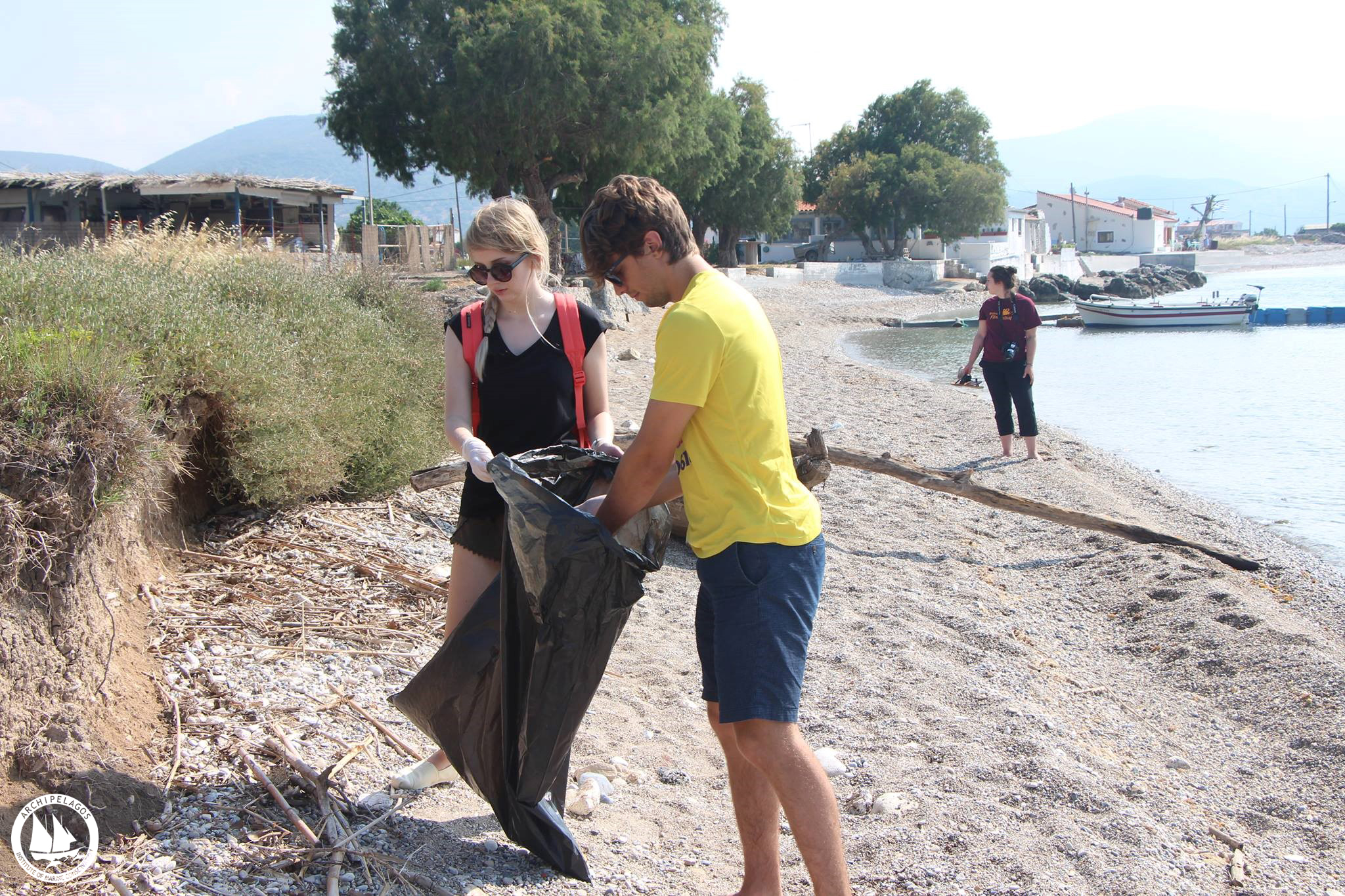
The macro-plastic project primarily focuses on measuring the influx of waste items into the Aegean Sea onto specified beaches at the main Archipelagos Base. It is a renowned fact that human activity has had, an is continuing to have, a significant impact on the health of the environment and functioning of both marine and terrestrial ecosystems.
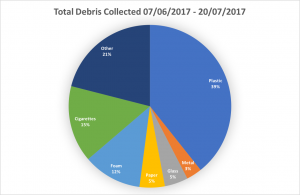
Over the last month, the team has completed daily beach cleans on two local beaches aiming to pick up as many identifiable forms of macroplastics as possible. In this sense, a macroplastic can be defined as a moderately large particle of plastic found in close proximity to a marine environment. Despite having said this, the team conducted a general beach clean, not only checking for macroplastics, but also for aluminium, paper, glass etc.  Back at the Archipelagos Marine Research Base, the contents of each clean up were analysed and cataloged into data sets over a period of time in order to establish a pattern of macroplastics and other debris found in accordance with the health of marine ecosystems.
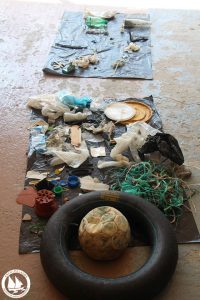
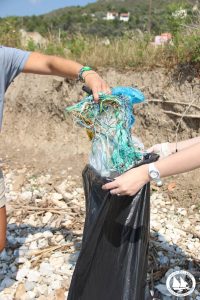
An accumulation of debris can create inhospitable habitats for a range of marine species, and may force populations out of their natural environments. Additionally, toxic fragments may become implemented into the mass food chain and cause a ripple effect of unhealthy fish populations. This could lead to negative effects within the human population due to becoming integrated into fishing networks and humans eventually consuming toxic sea food. As a result of this, the project also aims to increase public awareness about the detrimental effects of littering on beaches and aims to increase awareness on a wider scale.
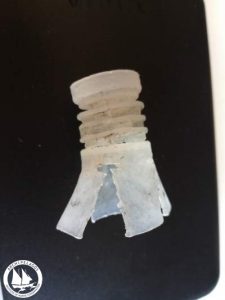
It is hoped that in the near future, the macroplastic team will coordinate with the microplastic team who analyse and perform necropsies on the gastrointestinal tracts of stranded mammal species; the team aim to develop a correlation between the macroplastic data found and the contents of the stomachs of specimens analysed by the microplastic team. If a correlation is found between the type of plastic found on the beaches, and in the stomachs of stranded animals, further advances can be made to mitigate against such littering of macroplastics on beaches around the Eastern Aegean Sea.

Clemency Carroll, Bournemouth University
0
0
0
0
0

What you can read next

Working on Dolphins’ Behaviour in Archipelagos
Quantification of Microplastics in Dolphin Digestive Systems
Behavioral Study of Cetaceans in the Aegean

HIGHLIGHTS

  • International Visitors at the Aegean Marine Life Sanctuary Project

    International Visitors at the Aegean Marine Life Sanctuary Project

    1 June 2021
    At Archipelagos Institute of Marine Conservation an important visit took …
  • The Efkranti Award was Granted to the Archipelagos Institute of Marine Conservation

    The Efkranti Award was Granted to the Archipelagos Institute of Marine Conservation

    27 July 2020
    It was a great honor but also great moral support …
  • The President of the Hellenic Republic’s visit to Archipelagos research vessel, the Aegean Explorer

    The President of the Hellenic Republic’s visit to Archipelagos research vessel, the Aegean Explorer

    30 June 2020
    Yesterday, during the President of the Republic’s visit to the …
  • Award to Archipelagos: Best Heroic Act of Environmental Stewardship

    Award to Archipelagos: Best Heroic Act of Environmental Stewardship

    19 February 2020
    The Short Documentary Film presenting the Aegean Marine Life Sanctuary, …
  • Award to Archipelagos Institute from the International Propeller Club of the United States

    Award to Archipelagos Institute from the International Propeller Club of the United States

    6 February 2020
    We would like to thank the International Propeller Club of …

Recent Posts

  • Photo-ID & Behavioral Assessments of Delphinus delphis in the Northern Aegean Sea

    Photo-ID & Behavioral Assessments of Delphinus delphis in the Northern Aegean Sea

    2 November 2023
    Yasas! Intern Alannah from the Marine Mammal Field here, currently …
  • Experiences After Work at Archipelagos

    Experiences After Work at Archipelagos

    2 November 2023
    Hi, I’m Ella and I completed a 6-week internship on …
  • Hands-on Projects with the Marine Mammal Research & Conservation Team

    Hands-on Projects with the Marine Mammal Research & Conservation Team

    2 November 2023
    My name is Sjoerd and I am in the last …
  • Planting Underwater Gardens of Posidonia seagrass- a new innovative planting process

    Planting Underwater Gardens of Posidonia seagrass- a new innovative planting process

    29 June 2023
    An innovative process of planting underwater gardens of Posidonia oceanica …
  • A special three-day research expedition to the Ikaria Trench

    A special three-day research expedition to the Ikaria Trench

    19 May 2023
    Archipelagos Marine Mammal Research team took part in a very …
  • Aegean Islet Conservation Project in cooperation with the University of Toronto’s Faculty of Architecture

    Aegean Islet Conservation Project in cooperation with the University of Toronto’s Faculty of Architecture

    17 May 2023
    A new cycle of interdisciplinary on-site research of the Aegean …
  • Mutilated Striped Dolphin Stranded on the shores of Samos Island

    Mutilated Striped Dolphin Stranded on the shores of Samos Island

    12 May 2023
    A mutilated striped dolphin was found stranded on the north …

Subscribe to Our Newsletter

Archipelagos Institute of Marine Conservation is committed to researching and defending the biodiversity of the Greek seas and islands.

Our action is possible only with your help!

donate
  • Contact us
  • Placements

Archipelagos - Institute of Marine Conservation © All Rights Reserved || Developed Fekas Brothers

TOP