Archipelagos

  • English
  • Ελληνικα
Who We Are
The TeamThe Team
Research BasesResearch Bases
Research BoatsResearch Boats
Our EquipmentOur Equipment
PartnersPartners
SupportersSupporters
Fields of Action
Marine ConservationMarine Conservation Fisheries Shipping Risks Seagrass Meadows Coralligene Conservation Littoral Ecosystems Invasive Species Jellyfish Sea Turtles
Marine MammalsMarine Mammals Dolphins and Porpoises Whales Seals
Terrestrial ConservationTerrestrial Conservation Island Fauna Forests & Flora Freshwater Ecosystems Aegean Seed Bank
Laboratory ResearchLaboratory Research Microplastics Water Analysis Soil Quality
Projects
Aegean Marine Life Sanctuary
Eco-Navigation
FIsh4Life
Save the Aegean
Join Us
Internships in the Aegean
Remote Internships
Interns Experiences
Field Courses
News
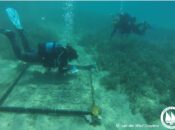
Planting Underwater Gardens of Posidonia seagrass- a new innovative planting process
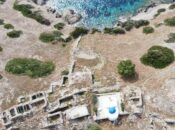
Aegean Islet Conservation Project in cooperation with the University of Toronto’s Faculty of Architecture
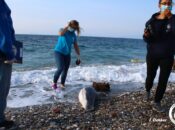
Mutilated Striped Dolphin Stranded on the shores of Samos Island
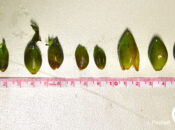
Posidonia Seagrass Fruits Wash up on Our Shores – A Rare Phenomenon
View All...
Contact us
Publications
Videos
Awareness Material
Donate
Menu

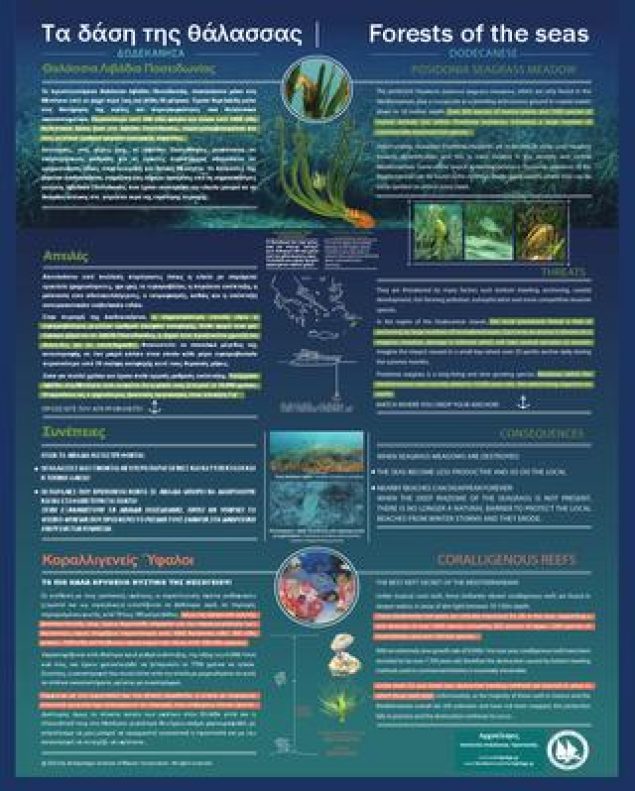
Forests of the seas

POSIDONIA SEAGRASS MEADOW

The protected Posidonia oceanica seagrass meadows, which are only found in the Mediterranean, play a crucial role as a breeding and nursery ground in coastal waters down to 50 metres depth.  Over 300 species of marine plants and 1000 species of marine animals live within Posidonia meadows, including a large number of commercially important ­sh species.

Unfortunately, nowadays Posidonia meadows are in decline, in some cases heading towards deserti­cation and this is more evident in the western and central Mediterranean. Some of the largest remaining extensive Posidonia meadows of the Mediterranean can be found in the northern Dodecanese waters, where they can be easily spotted on almost every coast.


THREATS

They are threatened by many factors such bottom trawling, anchoring, coastal development, ­ sh farming pollution, eutrophication and more competitive invasive species.

In the region of the Dodecanese islands, the most prominent threat is that of anchoring by large numbers of recreational boats. Each time an anchor is thrown on a seagrass meadow, damage is in‑icted which will take several decades to recover.

Imagine the impact caused in a small bay where over 20 yachts anchor daily during the summer months.

Posidonia seagrass is a long-living and slow growing species. Meadows within the Mediterranean were recently dated to 10,000 years old – the oldest living organism on earth!

WATCH WHERE YOU DROP YOUR ANCHOR!


CONSEQUENCES

When seagrass meadows are destroyed:

The seas become less productive and so do the local

Nearby beaches can disappear forever!

When the deep rhizome of the seagrass is not present, there is no longer a natural  barrier to protect the local beaches from winter storms and they erode.


CORALLIGENOUS REEFS

THE BEST KEPT SECRET OF THE MEDITERRANEAN!

Unlike tropical coral reefs, these brilliantly vibrant coralligenous reefs are found in deeper waters, in areas of dim light between 70-150m depth.

These biodiversity hot-spots are critically important for life in the seas, supporting a rich diversity of over 1600 species including 300 species of algae, 1200 species of invertebrates and over 100 ­sh species.

With an extremely slow growth rate of 0.0006-1mm per year, coralligenous reefs have been recorded to be over 7.700 years old; therefore the destruction caused by bottom trawling methods used in commercial ­shieries is essentially irreversible.

Under both EU and Greek law, destructive trawling methods are banned in areas in which these reefs exist.  Unfortunately, as the majority of these reefs in Greece and the Mediterranean overall are still unknown and have not been mapped, this protection falls in practice and the destruction continues to occur…

0
0
0
0
0
  • CATEGORY Awareness Material

HIGHLIGHTS

  • International Visitors at the Aegean Marine Life Sanctuary Project

    International Visitors at the Aegean Marine Life Sanctuary Project

    1 June 2021
    At Archipelagos Institute of Marine Conservation an important visit took …
  • The Efkranti Award was Granted to the Archipelagos Institute of Marine Conservation

    The Efkranti Award was Granted to the Archipelagos Institute of Marine Conservation

    27 July 2020
    It was a great honor but also great moral support …
  • The President of the Hellenic Republic’s visit to Archipelagos research vessel, the Aegean Explorer

    The President of the Hellenic Republic’s visit to Archipelagos research vessel, the Aegean Explorer

    30 June 2020
    Yesterday, during the President of the Republic’s visit to the …
  • Award to Archipelagos: Best Heroic Act of Environmental Stewardship

    Award to Archipelagos: Best Heroic Act of Environmental Stewardship

    19 February 2020
    The Short Documentary Film presenting the Aegean Marine Life Sanctuary, …
  • Award to Archipelagos Institute from the International Propeller Club of the United States

    Award to Archipelagos Institute from the International Propeller Club of the United States

    6 February 2020
    We would like to thank the International Propeller Club of …

Recent Posts

  • Photo-ID & Behavioral Assessments of Delphinus delphis in the Northern Aegean Sea

    Photo-ID & Behavioral Assessments of Delphinus delphis in the Northern Aegean Sea

    2 November 2023
    Yasas! Intern Alannah from the Marine Mammal Field here, currently …
  • Experiences After Work at Archipelagos

    Experiences After Work at Archipelagos

    2 November 2023
    Hi, I’m Ella and I completed a 6-week internship on …
  • Hands-on Projects with the Marine Mammal Research & Conservation Team

    Hands-on Projects with the Marine Mammal Research & Conservation Team

    2 November 2023
    My name is Sjoerd and I am in the last …
  • Planting Underwater Gardens of Posidonia seagrass- a new innovative planting process

    Planting Underwater Gardens of Posidonia seagrass- a new innovative planting process

    29 June 2023
    An innovative process of planting underwater gardens of Posidonia oceanica …
  • A special three-day research expedition to the Ikaria Trench

    A special three-day research expedition to the Ikaria Trench

    19 May 2023
    Archipelagos Marine Mammal Research team took part in a very …
  • Aegean Islet Conservation Project in cooperation with the University of Toronto’s Faculty of Architecture

    Aegean Islet Conservation Project in cooperation with the University of Toronto’s Faculty of Architecture

    17 May 2023
    A new cycle of interdisciplinary on-site research of the Aegean …
  • Mutilated Striped Dolphin Stranded on the shores of Samos Island

    Mutilated Striped Dolphin Stranded on the shores of Samos Island

    12 May 2023
    A mutilated striped dolphin was found stranded on the north …

Subscribe to Our Newsletter

Archipelagos Institute of Marine Conservation is committed to researching and defending the biodiversity of the Greek seas and islands.

Our action is possible only with your help!

donate
  • Contact us
  • Placements

Archipelagos - Institute of Marine Conservation © All Rights Reserved || Developed Fekas Brothers

TOP