
Archipelagos

  • English
  • Ελληνικα
Who We Are
The TeamThe Team
Research BasesResearch Bases
Research BoatsResearch Boats
Our EquipmentOur Equipment
PartnersPartners
SupportersSupporters
Fields of Action
Marine ConservationMarine Conservation Fisheries Shipping Risks Seagrass Meadows Coralligene Conservation Littoral Ecosystems Invasive Species Jellyfish Sea Turtles
Marine MammalsMarine Mammals Dolphins and Porpoises Whales Seals
Terrestrial ConservationTerrestrial Conservation Island Fauna Forests & Flora Freshwater Ecosystems Aegean Seed Bank
Laboratory ResearchLaboratory Research Microplastics Water Analysis Soil Quality
Projects
Aegean Marine Life Sanctuary
Eco-Navigation
FIsh4Life
Save the Aegean
Join Us
Internships in the Aegean
Remote Internships
Interns Experiences
Field Courses
News
Planting Underwater Gardens of Posidonia seagrass- a new innovative planting process
Aegean Islet Conservation Project in cooperation with the University of Toronto’s Faculty of Architecture
Mutilated Striped Dolphin Stranded on the shores of Samos Island
Posidonia Seagrass Fruits Wash up on Our Shores – A Rare Phenomenon
View All...
Contact us
Publications
Videos
Awareness Material
Donate
Menu

Quantification of Microplastics in Dolphin Digestive Systems

Quantification of Microplastics in Dolphin Digestive Systems

by Kleopatra Delaveri / Friday, 28 July 2017 / Published in Intern Experience, Marine Mammal Team, Microplastic Team, Work Journal

With the worldwide increase in the production of plastics over the last century, in combination with the overall lack of plastic waste management, the impact of plastics on marine environments has become a critical concern. Microplastics develop from the degradation of larger plastics, such as plastic bottles, bags, and many other improperly discarded objects, that eventually end up in the environment. However, they may also be manufactured as microbeads in certain cosmetic products, which are disposed of in the sea through waste water systems. The danger of plastic fragments and microplastic particles, arises from their long-term persistence in the environment and their absorbance of toxic compounds, such as persistent organic pollutants (POP) and metals. Analysis and quantification of microplastics present in marine biota has become a vital method to assess the impact of plastic pollution in marine environments and understand its trajectory through increasing tropic levels.
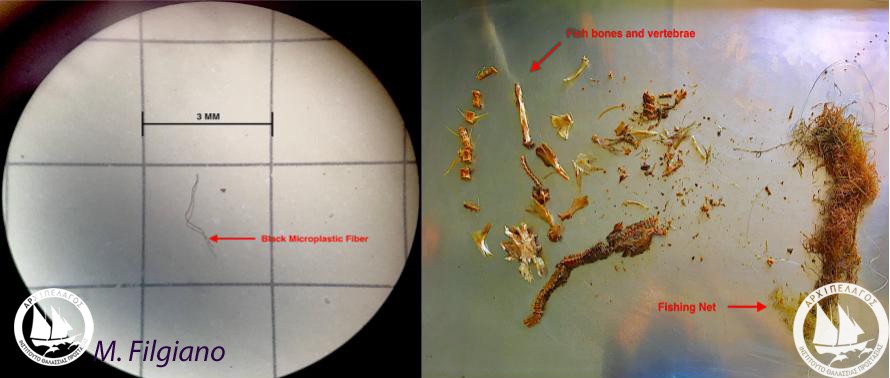
Left figure: Example of a Black Microplastic Fiber found in the Stomach Contents of a Common Bottlenose Dolphin, T. truncatus. Right figure: A Combination of Fish Bones and Fishermen’s Net found in the Oesophagus of a Common Bottlenose Dolphin, T. truncatus.

To our knowledge, no study has been conducted on the presence of microplastics in dolphin digestive systems. As top predators, dolphins prey on fish, squid, and other cephalopods and have the potential to provide critical information on the environmental health of our oceans and seas.
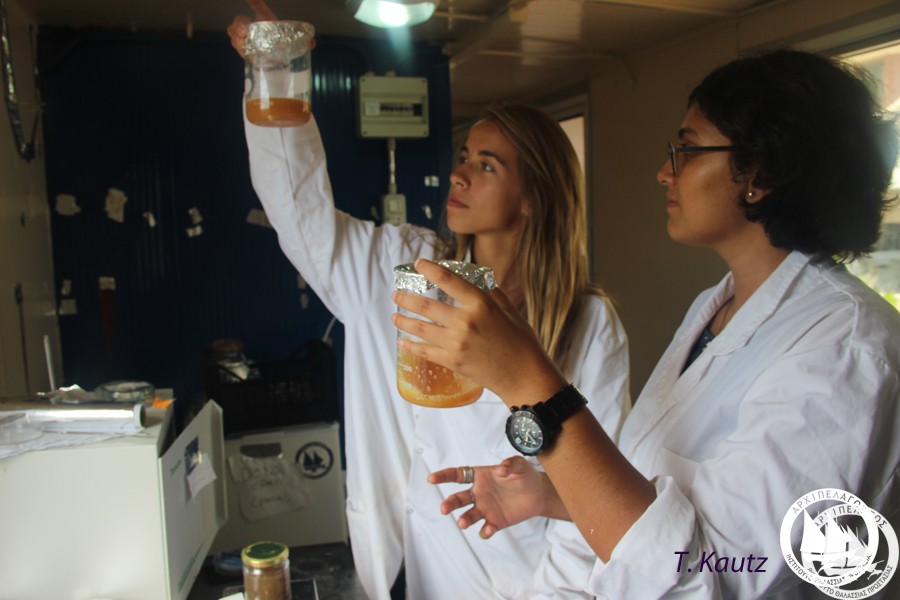
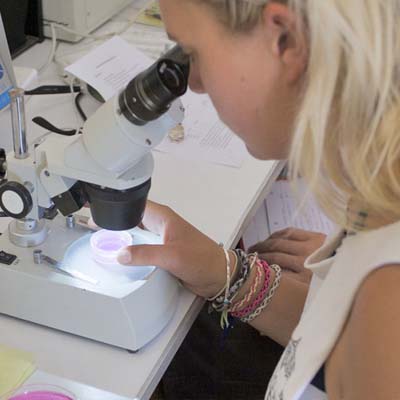
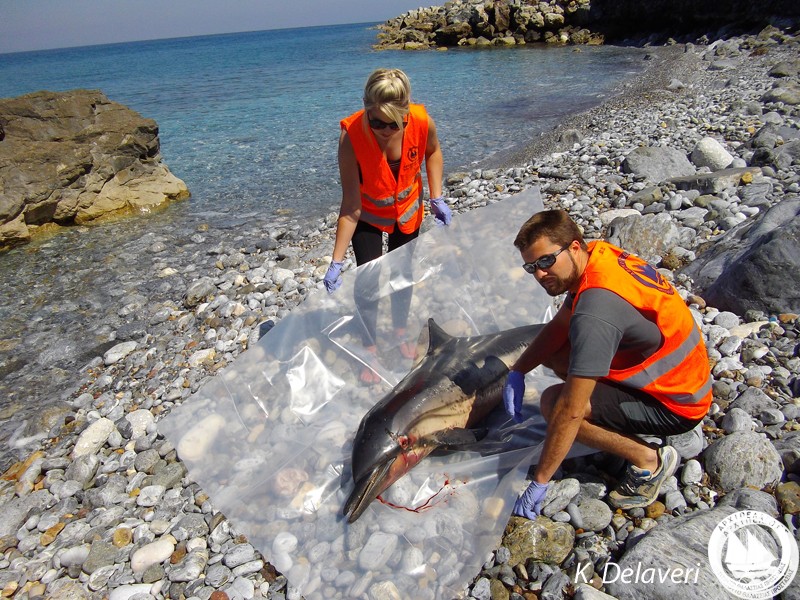
The Microplastics Team of Archipelagos Institute has been working on the dissection of eight dolphin species (5 Tursiops truncatus, 2 Delphinus delphis, 1 Stenella coeruleoalba) found in strandings around Samos Island, Greece. Parts of the gastrointestinal tracts of each dolphin have been dissected and broken down using a strong basic solution of 10% KOH.

So far, over 700 microplastic particles have been observed in only a portion of the digestive tracts of 7 out of 8 dolphins.

In other words, microplastic particles have been found in each species, with no organs found clean so far.

Our aim is quantify the full of extent of microplastics within each dolphin to inform the public on what we are throwing into our seas and how these pollutants make their way back up the food chain and to us.

Marcia Filgiano, Queens University, Canada
 

0
0
0
0
0

What you can read next

Using Imagery Analysis to Assess the Status of Vroulia Bay, Lipsi
The Importance of Scientific Illustrations
Spatial Distribution of Microplastics in Coastal Shallow Sediments in Samos Island

HIGHLIGHTS

  • International Visitors at the Aegean Marine Life Sanctuary Project

    International Visitors at the Aegean Marine Life Sanctuary Project

    1 June 2021
    At Archipelagos Institute of Marine Conservation an important visit took …
  • The Efkranti Award was Granted to the Archipelagos Institute of Marine Conservation

    The Efkranti Award was Granted to the Archipelagos Institute of Marine Conservation

    27 July 2020
    It was a great honor but also great moral support …
  • The President of the Hellenic Republic’s visit to Archipelagos research vessel, the Aegean Explorer

    The President of the Hellenic Republic’s visit to Archipelagos research vessel, the Aegean Explorer

    30 June 2020
    Yesterday, during the President of the Republic’s visit to the …
  • Award to Archipelagos: Best Heroic Act of Environmental Stewardship

    Award to Archipelagos: Best Heroic Act of Environmental Stewardship

    19 February 2020
    The Short Documentary Film presenting the Aegean Marine Life Sanctuary, …
  • Award to Archipelagos Institute from the International Propeller Club of the United States

    Award to Archipelagos Institute from the International Propeller Club of the United States

    6 February 2020
    We would like to thank the International Propeller Club of …

Recent Posts

  • Photo-ID & Behavioral Assessments of Delphinus delphis in the Northern Aegean Sea

    Photo-ID & Behavioral Assessments of Delphinus delphis in the Northern Aegean Sea

    2 November 2023
    Yasas! Intern Alannah from the Marine Mammal Field here, currently …
  • Experiences After Work at Archipelagos

    Experiences After Work at Archipelagos

    2 November 2023
    Hi, I’m Ella and I completed a 6-week internship on …
  • Hands-on Projects with the Marine Mammal Research & Conservation Team

    Hands-on Projects with the Marine Mammal Research & Conservation Team

    2 November 2023
    My name is Sjoerd and I am in the last …
  • Planting Underwater Gardens of Posidonia seagrass- a new innovative planting process

    Planting Underwater Gardens of Posidonia seagrass- a new innovative planting process

    29 June 2023
    An innovative process of planting underwater gardens of Posidonia oceanica …
  • A special three-day research expedition to the Ikaria Trench

    A special three-day research expedition to the Ikaria Trench

    19 May 2023
    Archipelagos Marine Mammal Research team took part in a very …
  • Aegean Islet Conservation Project in cooperation with the University of Toronto’s Faculty of Architecture

    Aegean Islet Conservation Project in cooperation with the University of Toronto’s Faculty of Architecture

    17 May 2023
    A new cycle of interdisciplinary on-site research of the Aegean …
  • Mutilated Striped Dolphin Stranded on the shores of Samos Island

    Mutilated Striped Dolphin Stranded on the shores of Samos Island

    12 May 2023
    A mutilated striped dolphin was found stranded on the north …

Subscribe to Our Newsletter

Archipelagos Institute of Marine Conservation is committed to researching and defending the biodiversity of the Greek seas and islands.

Our action is possible only with your help!

donate
  • Contact us
  • Placements

Archipelagos - Institute of Marine Conservation © All Rights Reserved || Developed Fekas Brothers

TOP