
Archipelagos

  • English
  • Ελληνικα
Who We Are
The TeamThe Team
Research BasesResearch Bases
Research BoatsResearch Boats
Our EquipmentOur Equipment
PartnersPartners
SupportersSupporters
Fields of Action
Marine ConservationMarine Conservation Fisheries Shipping Risks Seagrass Meadows Coralligene Conservation Littoral Ecosystems Invasive Species Jellyfish Sea Turtles
Marine MammalsMarine Mammals Dolphins and Porpoises Whales Seals
Terrestrial ConservationTerrestrial Conservation Island Fauna Forests & Flora Freshwater Ecosystems Aegean Seed Bank
Laboratory ResearchLaboratory Research Microplastics Water Analysis Soil Quality
Projects
Aegean Marine Life Sanctuary
Eco-Navigation
FIsh4Life
Save the Aegean
Join Us
Internships in the Aegean
Remote Internships
Interns Experiences
Field Courses
News
Planting Underwater Gardens of Posidonia seagrass- a new innovative planting process
Aegean Islet Conservation Project in cooperation with the University of Toronto’s Faculty of Architecture
Mutilated Striped Dolphin Stranded on the shores of Samos Island
Posidonia Seagrass Fruits Wash up on Our Shores – A Rare Phenomenon
View All...
Contact us
Publications
Videos
Awareness Material
Donate
Menu

Videos reveal the secrets of the Eleonora’s falcon

Videos reveal the secrets of the Eleonora’s falcon

by Archipelagos / Thursday, 18 December 2014 / Published in Island Fauna, Mass Media, Terrestrial Conservation

Published in ScienceNordic/ By Tommy Immanuel & Alvestad Wiik

Every fall, Eleonora’s falcons nest by the Mediterranean, preying on migrant birds coming from the north. A Norwegian scientist has filmed the species over a long period to study the bird’s diet and activity.

About four-fifths of the global population of Eleonora’s falcons (Falco eleonorae) nest in Greece. Their numbers have been in decline and the bird is considered a regional responsibility species in Greece. The Eleonora’s falcon is also found on the International Union for Conservation of Nature’s Red List.

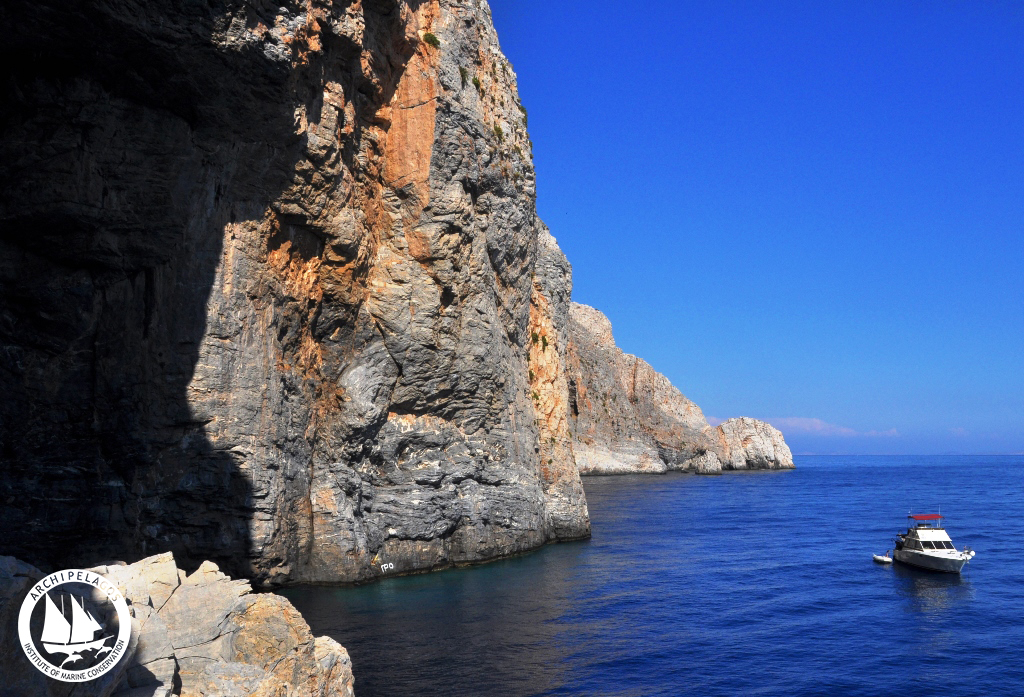
Ronny Steen, a senior engineer at the Norwegian University of Life Sciences (NMBU), has studied the birds on a rocky island in the Dodecanese archipelago in Greece. He has used cameras to study birds of prey in Norway for several years, and in 2010 he handed in his doctoral thesis in behavioural ecology about kestrels.

Now, with more than 1,000 hours of footage from a hidden camera, Steen, in cooperation with a Greek NGO called Archipelagos, has studied the behaviour and diet of the Eleonora’s falcon.

The study will probably be published in the first half of 2015.

Chance encounter

The Eleonora’s falcon is medium-sized and is known to cover long distances. It is 36-42 centimetres long, with a wingspan of 87-104 centimetres, according to Wikipedia. It captures and kills prey in the air, an act that can be quite spectacular to observe, according to Steen. The bird winters in Madagascar before nesting in the Mediterranean.

“This study will, hopefully, last for a significant period. We capture what the falcon eats on video. It is quite interesting, since very little research has been done on this topic. The use of cameras has made the investigation much easier,” Steen told forskning.no.

According to the IUCN Red List, the Eleonora’s falcon has been hunted by locals. In addition, in recent times, tourism disturbs the birds during the nesting process. Rats are a problem, and the species is also vulnerable to the development of wind power.

According to Steen, grazing animals destroy nests and vegetation that provide shade for Eleonora’s falcons. He wants to keep grazing animals away from important nesting areas in Greece during the birds’ nesting period.

Archipelagos, the NGO Steen is working with, was founded in 1998. It is based on Samos, where it works to promote research on and conservation of biodiversity in Greece. The organization has succeeded in sharing knowledge on conservation issues with the Greek population.

“Archipelagos has made information posters and approached local media with information about the falcon,” says Steen. He hopes the monitoring project will grow and gain recognition.

Vacation turned into research

During Easter holidays in 2013, Steen was in Greece and attended a guided tour organized by Archipelagos. The guides were very interested in Steen’s experience and research methods, in particular the use of camera equipment. Steen says that the Eleonora’s falcon is interesting because it has a different biology than other birds of prey.

Therefore, he returned to Greece – with equipment – a few months later.

“I often visit researchers on my travels, and I am always on the lookout for species that are characteristic of the places I visit,” says Steen.

After the first research trip, Steen applied for funding for travel and equipment from The Nansen Fund. The application was successful, and he went back to Greece in September, carrying twelve cameras.

Steen wants to investigate what kind of migratory birds the falcon preys on, and what time of day it eats. He also measures the wind to see if weather conditions lead to a change in diet. He points out that there may be fewer migratory birds when there is little wind.

“The most important goal is to look at changes over time, if there are annual variations. Initially we might be talking about a decade,” says Steen.

A more common method

Steen says that in the 70s, scientists would camp out with binoculars to observe the bird. This was challenging, particularly in the heat of summer. The digital equipment makes it possible to capture hundreds of hours of video of the animal without being on site physically.

Steen has used film as a method of investigation since 2003. Since then, it has become more and more common.

“On-site observation can also affect bird behaviour,” says Steen.

Sometimes the falcon’s prey is quite damaged, making it difficult to identify the species. But with help from colleagues at NMBU, all of the prey in the video footage has been identified using both video and images.

Steen says that the current study is important to understand the biology of the falcon. Increased awareness of this species is crucial to show the locals how unique it is.


Source: sciencenordic.com/videos-reveal-secrets-eleonoras-falcon

0
0
0
0
0

What you can read next

Distinction of Archipelagos in the International Competition for Space Applications
Creative cooperation with the journalist Panos Haritos and his film crew from Greek public TV ET1
North Aegean Authorities Visit

HIGHLIGHTS

  • International Visitors at the Aegean Marine Life Sanctuary Project

    International Visitors at the Aegean Marine Life Sanctuary Project

    1 June 2021
    At Archipelagos Institute of Marine Conservation an important visit took …
  • The Efkranti Award was Granted to the Archipelagos Institute of Marine Conservation

    The Efkranti Award was Granted to the Archipelagos Institute of Marine Conservation

    27 July 2020
    It was a great honor but also great moral support …
  • The President of the Hellenic Republic’s visit to Archipelagos research vessel, the Aegean Explorer

    The President of the Hellenic Republic’s visit to Archipelagos research vessel, the Aegean Explorer

    30 June 2020
    Yesterday, during the President of the Republic’s visit to the …
  • Award to Archipelagos: Best Heroic Act of Environmental Stewardship

    Award to Archipelagos: Best Heroic Act of Environmental Stewardship

    19 February 2020
    The Short Documentary Film presenting the Aegean Marine Life Sanctuary, …
  • Award to Archipelagos Institute from the International Propeller Club of the United States

    Award to Archipelagos Institute from the International Propeller Club of the United States

    6 February 2020
    We would like to thank the International Propeller Club of …

Recent Posts

  • Photo-ID & Behavioral Assessments of Delphinus delphis in the Northern Aegean Sea

    Photo-ID & Behavioral Assessments of Delphinus delphis in the Northern Aegean Sea

    2 November 2023
    Yasas! Intern Alannah from the Marine Mammal Field here, currently …
  • Experiences After Work at Archipelagos

    Experiences After Work at Archipelagos

    2 November 2023
    Hi, I’m Ella and I completed a 6-week internship on …
  • Hands-on Projects with the Marine Mammal Research & Conservation Team

    Hands-on Projects with the Marine Mammal Research & Conservation Team

    2 November 2023
    My name is Sjoerd and I am in the last …
  • Planting Underwater Gardens of Posidonia seagrass- a new innovative planting process

    Planting Underwater Gardens of Posidonia seagrass- a new innovative planting process

    29 June 2023
    An innovative process of planting underwater gardens of Posidonia oceanica …
  • A special three-day research expedition to the Ikaria Trench

    A special three-day research expedition to the Ikaria Trench

    19 May 2023
    Archipelagos Marine Mammal Research team took part in a very …
  • Aegean Islet Conservation Project in cooperation with the University of Toronto’s Faculty of Architecture

    Aegean Islet Conservation Project in cooperation with the University of Toronto’s Faculty of Architecture

    17 May 2023
    A new cycle of interdisciplinary on-site research of the Aegean …
  • Mutilated Striped Dolphin Stranded on the shores of Samos Island

    Mutilated Striped Dolphin Stranded on the shores of Samos Island

    12 May 2023
    A mutilated striped dolphin was found stranded on the north …

Subscribe to Our Newsletter

Archipelagos Institute of Marine Conservation is committed to researching and defending the biodiversity of the Greek seas and islands.

Our action is possible only with your help!

donate
  • Contact us
  • Placements

Archipelagos - Institute of Marine Conservation © All Rights Reserved || Developed Fekas Brothers

TOP