







Title:
Is all seagrass habitat equal? Seasonal, spatial, and interspecific variation in productivity dynamics within Mediterranean seagrass habitat.
Authors:
Ward, E. A.1,2,3*, Aldis, C.1, Wade, T.1, Milliou, A.2*, Tsimpidis, T. 2, Cameron, T. C.1*
Abstract:
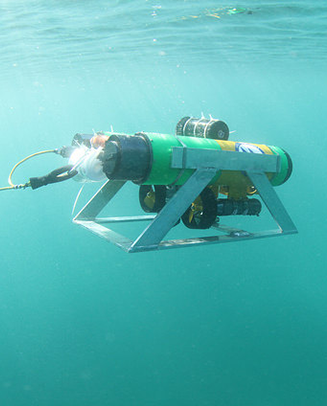
Seagrass meadows’ ability to capture carbon through actively sequestering autochthonous carbon via photosynthesis means they represent a nature-based solution to rising carbon emissions. In multispecies seagrass communities, and due to species introduction or predicted range shifts, it is important to know which species deliver different carbon sequestration gains to inform conservation actions. Large benthic chamber (volume = 288L) experiments assessed the seasonal and spatial metabolism dynamics of the endemic and dominant Mediterranean seagrass P. oceanica, whilst small benthic chamber (volume = 7L) experiments compared the dynamics between P. oceanica, the native C. nodosa and non-native H. stipulacea. Within shallow P. oceanica edge habitat lower Net Apparent Productivity (NAP) occurs in autumn (x̅ = 1.4, SD ± 3.24 O2 mmol m-2 d-1) compared to summer (x̅ = 10.9, SD ± 3.03 O2 mmol m-2 d-1) corresponding with periods of light limiting and light saturating conditions, but it remains overall autotrophic annually (2.6 C mol m-2 yr-1). However, spatial heterogeneity exists, core areas of P. oceanica were more productive (x̅ =21.7, SD± 4.21 O2 24 mmol m-2 d-1) compared to edge habitat with spatial changes in productivity relating to plant surface area (96%), shoot density (81%), blade length (72%) and seagrass percentage cover (64%). In fact, patchy short P. oceanica has similar NAP (x̅ = -3.6, SD ± 8.9 O2 mmol m-2 d-1) to the non-native H. stipulacea (x̅ = 2.1, SD ± 4.7 O2 mmol m-2 d-1). Yet H. stipulacea has a significant metabolic advantage over C. nodosa (NAP x̅ = 0.0004, SD ± 0.0011 O2 mmol cm-2 d-1 vs x̅ = -0.0012, SD ± 29 0.0007 O2 mmol cm-2 d-1). This study demonstrates that not all seagrass habitat is equal. If seagrass meadows are to play a part in mitigating CO2 emissions, variability in primary productivity within seagrass meadows needs to be accounted for to produce comprehensive autochthonous carbon sequestration estimates. This means seagrass meadow species composition, the condition of these species and the potential interactions between seagrass species must be better understood.
 Loading...

 Reload document
  Open in new tab